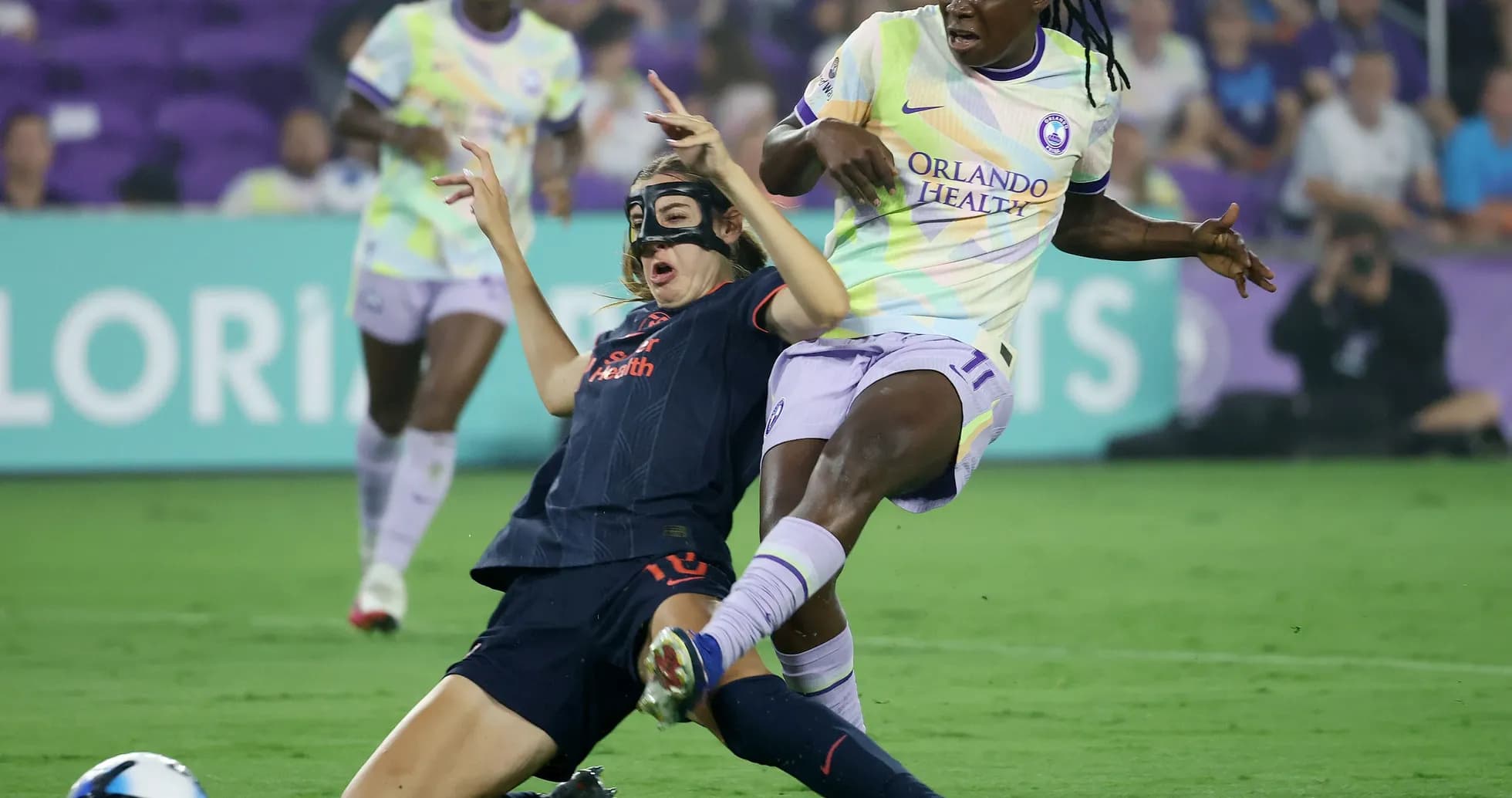
San Diego Wave W Dominates Racing Louisville W in 2-0 Victory
Lynn Family Stadium had barely settled under the Louisville lights when the story of this Group Stage clash began to write itself. Racing Louisville W, rooted in 15th place with 23 points and a goal difference of -16 (35 scored, 51 conceded overall), came into the night as a team searching for identity as much as for points. San Diego Wave W arrived in stark contrast: 2nd in the NWSL Women standings on 48 points, their positive goal difference of 11 (38 scored, 27 conceded overall) the statistical proof of a side built for the sharp end of the table.
By full time, the numbers aligned with the narrative. A 2-0 away win for San Diego, a first-half advantage extended after the break, and another reminder of the gulf between a side fighting to escape the basement and one tuning itself for play-off football.
I. The Big Picture – Systems and Season DNA
The formations on the board told you plenty about intent. Racing lined up in a 3-4-1-2 under K. Björkegren, a shape that tries to compress the middle and create vertical lanes for quick breaks. J. Bloomer anchored the back three of E. Jean, A. Wright, and M. Gacioch, with a four-woman band across midfield: R. Hill wide, L. Milliet and K. O’Kane inside, and Makenna Morris offering width and running on the opposite flank. Ahead of them, M. Hodge operated as the connector in the pocket behind the front two of S. Weber and the ever-industrious K. Fischer.
The system, though, ran against the grain of Racing’s season. At home, they average 1.5 goals scored but also 1.5 conceded per match, and overall they ship 2.0 goals per game. Their minute distribution reveals a worrying late-game vulnerability: 25.00% of their goals conceded come in the 76-90’ window, the very period when legs tire and concentration frays.
San Diego’s 4-2-3-1 under J. Eidevall looked more balanced and more rehearsed. Sandra Paños in goal sat behind a back four of A. D. Van Zanten, K. Wesley, K. McNabb, and P. Morroni. In front of them, the double pivot of K. Dali and K. Ascanio offered both control and bite, while the advanced trio of M. Barcenas, Luisa Agudelo, and G. Corley buzzed around lone striker T. Byars.
The visitors’ season profile is that of a controlled aggressor. On their travels they score 1.4 goals per match and concede just 1.0, with a defensive record that has yielded 4 away clean sheets and 7 overall. Their attacking minute map is ominous: 25.71% of their goals arrive between 76-90’, a late surge that directly intersects with Racing’s most fragile period.
II. Tactical Voids and Discipline
With no explicit injury or suspension list provided, the absences in this story are structural rather than personnel-based. Racing’s most glaring void is defensive solidity. They have not kept a single clean sheet all season, home or away, and 16.67% of their goals conceded come in the opening 15 minutes. This leaves them vulnerable both at the start and the end of matches, forcing their midfield to oscillate between damage limitation and desperate chasing.
Discipline is another undercurrent. Racing’s yellow card timing peaks between 46-60’ (27.27%), a reflection of a team often chasing the game after half-time, stepping late into duels. In that chaos, figures like M. Hodge and K. Fischer are central. Hodge has collected 6 yellow cards, but that aggression comes with value: she has blocked 5 shots this season, a rare line of resistance in front of an exposed back line. Fischer, too, walks the disciplinary tightrope with 6 yellows, her 222 duels and 26 tackles underscoring just how much defensive work is being asked of an attacking midfielder turned front-line runner.
San Diego’s disciplinary profile is more controlled but not spotless. Their yellow cards spike in the 76-90’ window at 23.08%, a sign of a team that presses and competes right to the end. A. D. Van Zanten, with 1 red card this season, and Morroni, on 6 yellows, embody a back line that defends on the front foot. Crucially, San Diego’s risk-taking has not undermined their structure: they concede only 1.0 goals per match overall and have never allowed more than 2.5 goals in a single league game this season.
III. Key Matchups – Hunter vs Shield, Engine Room vs Enforcer
The “Hunter vs Shield” duel was always going to revolve around T. Byars. With 9 goals and 2 assists in 21 appearances, she is the cutting edge of San Diego’s attack. Her 27 shots (18 on target) and a 7.01 rating speak of a forward who needs little invitation. Against a Racing defence that concedes 2.4 goals per match on their travels and 2.0 overall, she found the kind of spaces that have been available all year: between the outside centre-backs and the wing-backs, particularly when Racing’s midfield line was broken.
On the other side, Racing’s attacking hope lay in the dual creative axis of Fischer and Hodge. Fischer, with 4 goals and 4 assists, is among the league’s top assist providers, her 20 key passes and 53 dribble attempts the markers of a player willing to take responsibility. Hodge, though goalless, is a structural fulcrum: 189 passes at 77% accuracy and 13 interceptions show a player tasked with knitting transitions. Yet against San Diego’s compact 4-2-3-1, their influence was squeezed.
In the engine room, K. Dali and Luisa Agudelo tilted the game. Dali, with 1 goal, 3 assists, and a league-leading 50 key passes, is the metronome and scalpel in equal measure. Her 1,123 passes at 85% accuracy allowed San Diego to dictate tempo, particularly when Racing tried to press from their 3-4-1-2 base. Alongside her, Agudelo – 5 goals, 4 assists, 32 key passes – offered vertical thrust. She has missed 1 penalty this season, a reminder that her end product is not flawless, but in open play she repeatedly found pockets between Racing’s midfield and defence.
Out wide, the duel between Corley and Racing’s flanks was decisive. Corley’s 4 assists, 27 key passes, and 24 successful dribbles gave San Diego a persistent outlet against wing-backs who had to defend deep and run high, often at the same time. For Racing, Hill and Morris were stretched, their advanced starting positions leaving the back three exposed when possession turned over.
IV. Statistical Prognosis and Tactical Verdict
Overlaying the season’s numbers onto this 2-0 result, the pattern is almost inevitable. San Diego’s away scoring profile – with 20.00% of their goals between 46-60’ and 25.71% between 76-90’ – directly targets Racing’s soft spots: 22.92% of Racing’s concessions arrive between 46-60’ and 25.00% in the final quarter-hour. That critical intersection of late attacking surge versus late defensive collapse is the spine of this fixture’s story.
From an xG-style perspective, the underlying trends are clear even without explicit figures. Racing’s matches are more likely to go under higher goal thresholds: only 5 of their 26 league games have gone over 2.5 goals, a reflection not of defensive solidity but of attacking inconsistency. San Diego, meanwhile, have gone over 1.5 goals in 15 of 26 fixtures, a steady, controlled output that matches a side with a positive goal difference and 7 clean sheets.
San Diego’s penalty record is a curious blemish: 2 penalties taken, 2 missed, 0 scored. It underscores that their attacking efficiency is built from open play combinations and structured pressure rather than reliance on spot-kicks. Racing, conversely, are perfect from the spot this season, scoring all 4 of their penalties, yet that isolated efficiency cannot mask a broader structural fragility.
Following this result, the tactical verdict is unforgiving for Racing Louisville W. The 3-4-1-2 offers theoretical attacking promise, but without clean sheets, with no defensive platform, and with late-game collapses baked into their season pattern, it becomes a high-risk, low-reward gamble. San Diego Wave W, by contrast, look every inch a play-off contender: a stable 4-2-3-1, a balanced goals-for and goals-against profile, and a squad where Byars, Dali, Agudelo, and Corley each carry distinct attacking threats.
On a night when the league’s second-best side visited the league’s strugglers, the numbers, the shapes, and the narrative all converged. The 2-0 scoreline was not an upset; it was the logical expression of two seasons moving in opposite directions.