NWSL Women: Orlando Pride W Tops Bay FC W 3-1 in Tactical Clash
Under the lights at PayPal Park, the Group Stage rhythm of the NWSL Women delivered a sharp reminder of the gulf between efficiency and fragility. Bay FC W, in a 4-3-3, struck first and went to the break level at 1-1, but Orlando Pride W’s 4-2-3-1 gradually imposed its will, turning a tense contest into a 3-1 away win by full time.
I. The Big Picture – Two Different Mid-Table Stories
Heading into this game, Bay FC W were 13th with 26 points from 26 matches. Their overall goal difference stood at -10, built from 27 goals scored and 37 conceded. At home, they had played 13 times, winning 4, drawing 2 and losing 7, with 14 goals for and 17 against. The numbers told a clear story: a side that scores just 1.1 goals per game at home while conceding 1.3, constantly walking a tightrope.
Orlando Pride W arrived as a more volatile but higher-ceiling outfit. They sat 11th with 33 points from 26 matches, overall goal difference -6 (35 scored, 41 conceded). On their travels, they had 4 wins, 2 draws and 7 defeats from 13 away matches, with 15 goals scored and 21 conceded. Away they average 1.2 goals for and 1.6 against, a profile of a team that plays open, accepts risk, and trusts its forwards to outscore their defensive issues.
The league-wide scoring patterns framed the night: Bay FC W’s goals come early and in short bursts, with 27.59% of their goals between 0-15 minutes and another 24.14% in the 16-30 window. Orlando Pride W, by contrast, lean into the middle and late phases: 20.59% of their goals arrive between 31-45 minutes and 23.53% between 46-60, with a further 17.65% in the 76-90 range. This fixture would follow that script almost too perfectly.
II. Tactical Voids and Discipline – Edges at the Margins
There were no listed absentees, so both coaches essentially had their full squads. Bay FC W’s bench carried defensive steel in A. Cometti and Madeline Moreau, both prominent in the league’s disciplinary charts, while Orlando Pride W had the flexibility of players like K. Abello and N. Payne to adjust their back line.
Bay FC W’s season-long card profile hinted at a team that grows increasingly frantic as matches wear on: 25.64% of their yellow cards arrive between 76-90 minutes, with another 17.95% in 91-105. They also spread red cards across early, mid and late phases. Orlando Pride W, meanwhile, cluster 26.67% of their yellows in the 76-90 window and have a single red card in the 61-75 period. In a match where Orlando were likely to surge after the break, Bay’s late-game discipline was always going to be tested.
III. Key Matchups – Hunter vs Shield, and the Engine Room
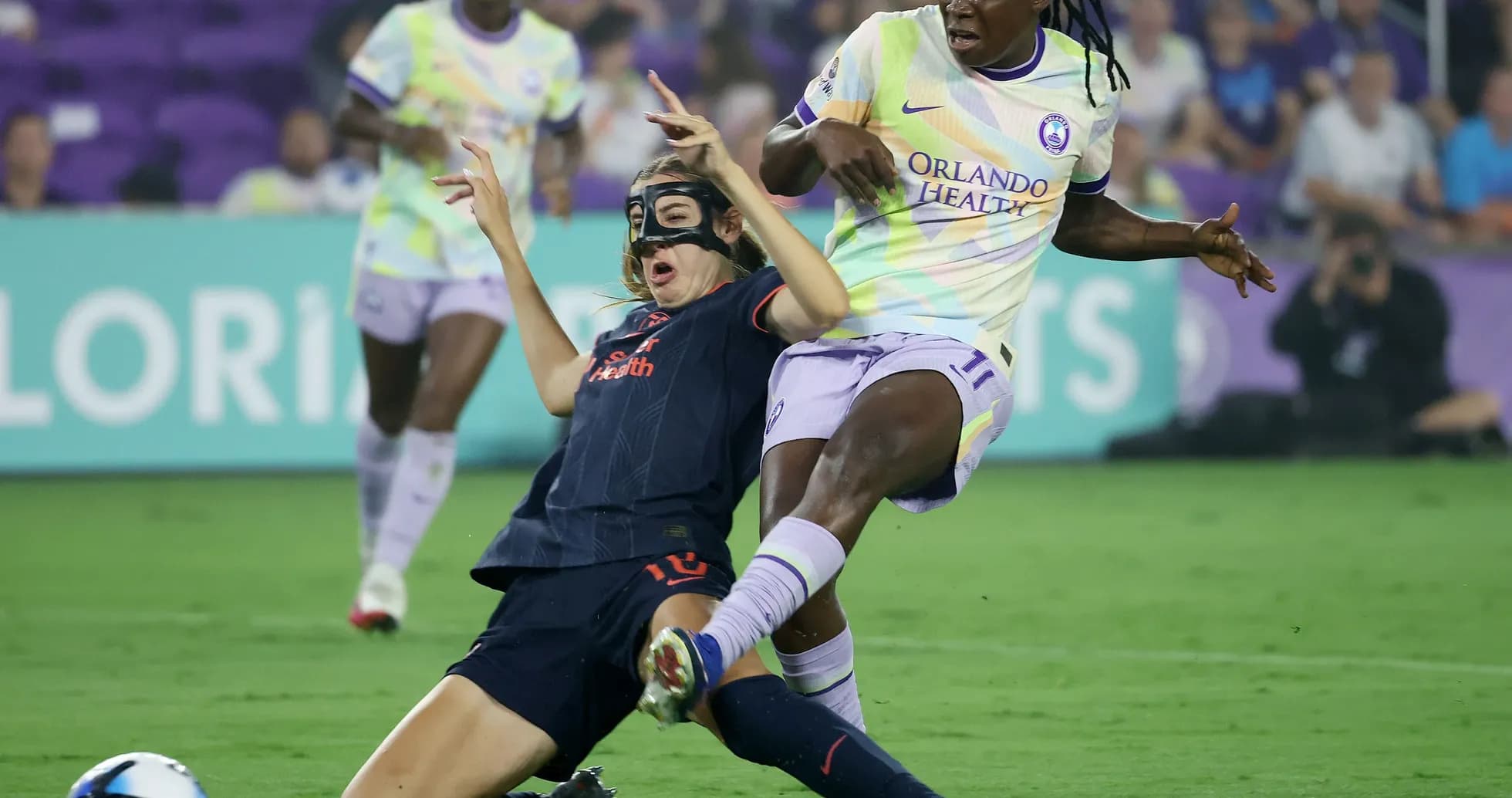
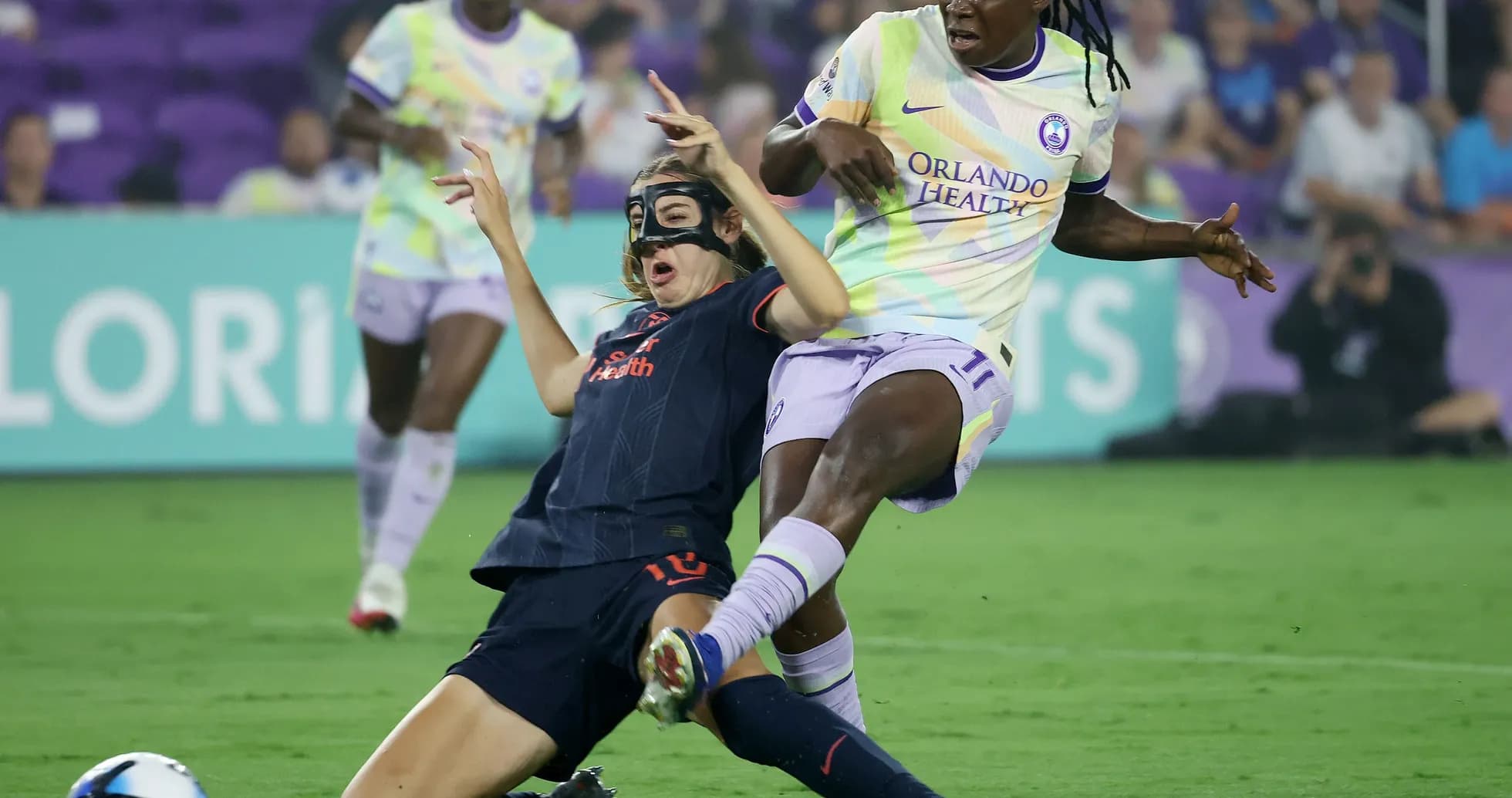
The headline duel was inevitable: B. Banda versus a Bay FC W defense that concedes 1.4 goals per game overall and 1.3 at home. Banda entered this fixture as one of the league’s most ruthless forwards: 15 goals and 3 assists in 22 appearances, with 66 shots (36 on target). Her shot volume and accuracy meant that any loose structure from Bay would be punished.
Bay FC W’s back four of S. Collins, H. Gilchrist, J. Anderson and J. Nighswonger had to contend not only with Banda’s movement but with the layered support behind her. Orlando Pride W’s 4-2-3-1 placed Luana, Marta and S. Washington in advanced midfield roles, with Angelina and H. McCutcheon deeper. McCutcheon, in particular, is a two-way force: 5 goals, 2 assists, 657 passes at 77% accuracy, 53 tackles and 10 blocked shots. She is both destroyer and tempo-setter, screening the back four and launching transitions.
Opposite her, Bay FC W’s midfield trio of C. Hutton, T. Huff and H. Bebar carried the responsibility of resisting that tide. Hutton, one of the league’s most combative midfielders, had 74 tackles, 7 blocked shots and 45 interceptions in 25 appearances, plus 2 goals and 2 assists. Her 5 yellow cards underline how aggressively she defends space. Huff adds vertical energy and end product with 2 goals, 2 assists and 19 shots, while Bebar offers connective passing lanes.
Yet structurally, Bay FC W’s season trends set up a dangerous intersection. They concede heavily at the start and end of halves: 22.86% of their goals against between 0-15 minutes, 20.00% between 46-60, and another 22.86% in the 76-90 window. Orlando Pride W’s attacking peaks land exactly on those pressure points, especially in the 31-60 and 76-90 ranges. Once Orlando rode out Bay’s early surge and equalized before the break, the second half was primed for their middle-third dominance to tilt the game.
Out wide, Oihane Hernández and H. Mace provided Orlando’s full-backs with license to advance, pinning Bay’s wide forwards A. Pfeiffer and K. Lema deeper than they would have liked. That blunted Bay FC W’s front three, isolating R. Kundananji and forcing her to work off scraps rather than structured service.
IV. Statistical Prognosis and Post-Match Verdict
From a statistical lens, Orlando Pride W were always slightly favored to edge a chaotic game. Their overall scoring rate of 1.3 goals per match, combined with Bay FC W’s 1.4 goals conceded per game, pointed toward Orlando finding multiple chances. Bay FC W, averaging just 1.0 goals overall and 1.1 at home, needed to be close to perfect defensively to turn an early lead into points.
Orlando’s penalty record added a note of volatility: 4 penalties taken this season, with only 2 scored and 2 missed. That 50.00% conversion rate meant set-piece pressure did not guarantee goals, but the volume of entries into the box from Banda, Marta and Luana made it likely they would at least threaten from the spot. Bay FC W, by contrast, had taken just 1 penalty and scored it, but rarely lived in the opposition box long enough to draw more.
Following this result, the story is one of profiles confirmed rather than rewritten. Bay FC W’s fragility in key phases, their late-game disciplinary risk and their limited attacking ceiling at home all resurfaced. Orlando Pride W, for all their defensive looseness, leaned into their identity: a side that trusts its attacking structure, rides out turbulence, and uses the middle third of games to break opponents open.
On the night, the formations told the tale. Bay FC W’s 4-3-3 promised front-foot football but lacked the control to sustain it. Orlando Pride W’s 4-2-3-1, anchored by McCutcheon and Angelina and crowned by Banda, had more balance, more vertical threat, and ultimately, more answers.