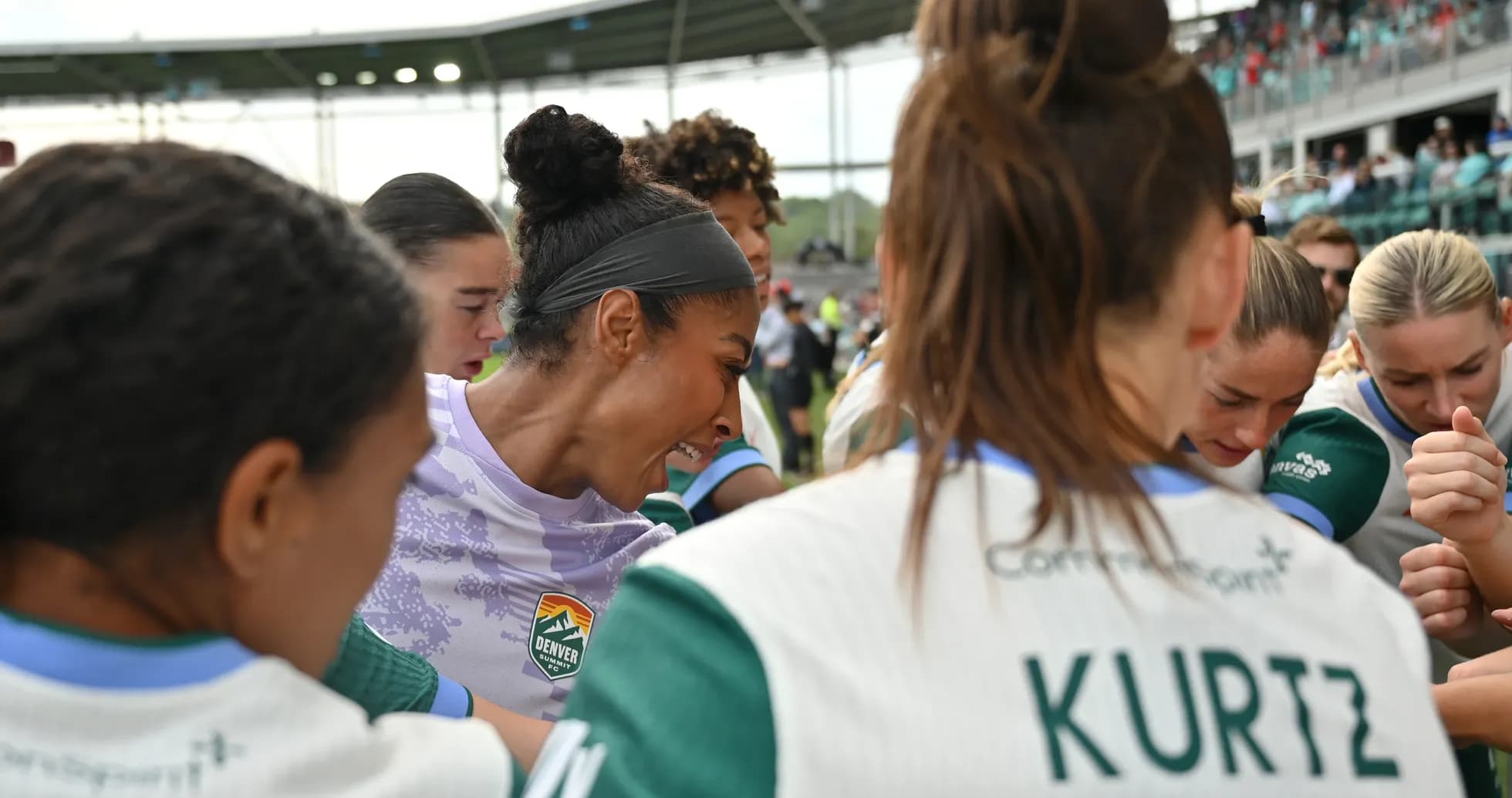
Kansas City W Dominates Denver Summit W 4–1 in NWSL Showdown
Under the Kansas City lights at CPKC Stadium, this Group Stage meeting in the NWSL Women felt less like a routine league fixture and more like a statement of identity. Kansas City W, already one of the league’s most distinct home sides, tore through Denver Summit W 4–1, turning a level half-time into a second‑half avalanche that perfectly mirrored their season’s split personality: ruthless at home, fragile on their travels.
Heading into this game, Kansas City sat 7th with 41 points from 26 matches, their overall goal difference a precise +6, built on 43 goals scored and 37 conceded. The split told the story: at home they had 9 wins, 4 draws and 0 defeats from 13 matches, scoring 32 and conceding 13. That home average of 2.5 goals for and 1.0 against underpinned a side that, in Kansas, expects to dictate. Denver arrived 10th on 35 points from 26, with a +5 goal difference overall (42 for, 37 against). Their away record was more modest: 3 wins, 4 draws, 6 defeats, with 17 goals scored and 19 conceded, an away scoring rate of 1.3 and 1.5 against.
Both coaches rolled out mirrored 4‑2‑3‑1 shapes, but the systems carried very different personalities.
For Kansas City, Lorena anchored the side in goal behind a back four of E. Ball, G. Robinson, K. Sharples and I. Rodriguez. In front of them, the double pivot of L. LaBonta and V. DiBernardo provided the hinge between control and chaos, freeing an aggressive line of three: M. Cooper to the right, Debinha central, and T. Chawinga from the left, all feeding into lone forward H. Hopkins.
It was a selection that leaned hard into Kansas City’s attacking DNA. Across the season, they had averaged 1.7 goals per match overall, but that climbed to 2.5 at home. They had never failed to score at CPKC Stadium in the league, with 0 “failed to score” results at home, and their biggest home win – 5–1 – hinted at exactly the kind of high‑ceiling performance they delivered here.
The absence of L. Rouse from the starting XI was notable in a different way. Her season had been defined by edge: 41 tackles, 3 blocked shots and 27 interceptions, but also a red card and 2 yellows. Kansas City’s disciplinary profile already carried a late‑game edge, with 23.81% of their yellow cards arriving between 76–90 minutes and a red in that same window. Without Rouse, the back line gained a little composure but lost some bite, putting more onus on Sharples and Robinson to defend front‑foot without tipping into chaos.
Denver’s 4‑2‑3‑1, meanwhile, was built around craft and range. A. Smith started in goal, protected by a back four of A. Oke, Eva Gaetino, K. Kurtz and J. Beckie. In midfield, E. Regan and D. Sheehan formed the double pivot, with Y. Yamamoto, L. Horan and Y. Ryan supporting central forward N. Flint.
The spine of Denver’s attacking threat ran through Ryan, Beckie and Flint. Ryan had quietly put together a complete season: 6 goals and 5 assists in the league, 47 key passes, and 62 dribble attempts with 21 successful. She was both their top creator and a genuine scoring threat from midfield. Beckie, starting nominally at left‑back here, brought an attacker’s instincts and delivery: 6 goals, 5 assists, 35 key passes and a passing accuracy of 75%. Flint, with 5 goals and 4 assists, was the third piece of a creative triangle that had helped Denver reach 42 goals overall, 1.6 per match.
Yet structurally, Denver walked into a trap. Kansas City’s preferred 4‑2‑3‑1 has been their go‑to in 20 league matches, and the pattern is clear: they want to press high, win the ball in advanced areas and feed runners. Their minute‑by‑minute card profile shows a team that stays aggressive into the final quarter, with 23.81% of yellows between 61–75 minutes and another 23.81% from 76–90, suggesting intensity rather than drift as legs tire.
Denver, by contrast, tend to live on the edge after the break. A combined 52.18% of their yellow cards arrive between 46–60 and 76–90 minutes, and they have already suffered a red card between 16–30 minutes this season. Against a side that thrives on late surges, that discipline curve is dangerous.
The “hunter vs shield” matchup was always going to be Temwa Chawinga against Denver’s defensive structure. Chawinga came into this fixture with 11 league goals and 3 assists from 14 appearances, taking 31 shots with 18 on target. Her directness and volume made her the league’s third‑ranked attacker by rating. Denver’s away defence, conceding 1.5 goals per match, was solid but not impermeable, and their biggest away defeat – 4–1 – foreshadowed how quickly things could unravel if Kansas City’s wide overloads began to bite.
Behind Chawinga, the “engine room” duel pitted Debinha and LaBonta against Ryan and Horan. Debinha, operating as a roaming 10, had the freedom to drift between lines, link with Hopkins and combine with Cooper on the right. LaBonta and DiBernardo, meanwhile, were tasked with screening Ryan’s passing lanes and denying Horan the time to dictate tempo. Kansas City’s season‑long creativity had also been supercharged by Croix Bethune, whose 10 assists and 4 goals from midfield made her the league’s leading creator; even though she did not appear in this starting XI, her influence on the team’s patterns is clear, and Cooper’s 5 goals and 5 assists showed how that ethos has spread across the line of three.
For Denver, Ryan versus LaBonta was the key hinge. Ryan’s 679–685 completed passes and 47 key passes speak to a player who can break lines from deep or between the lines. If she escaped Kansas City’s counter‑press, Denver could turn Kansas’s aggressive shape against them. But once Kansas City’s front four began to swarm, Denver’s double pivot looked increasingly stretched, forced to choose between stepping out to meet Debinha or tracking the diagonal runs of Chawinga and Hopkins.
Set pieces and penalties offered another layer of tactical narrative. Kansas City had earned 4 penalties this season but scored only 1, missing 3 for a conversion rate of just 25.00%. That inefficiency meant they could not rely on spot‑kicks to tilt tight matches. Denver, by contrast, were perfect from the spot, scoring all 3 of their penalties. Yet in open play at CPKC Stadium, it was Kansas City’s wave‑after‑wave pressure that rendered those margins irrelevant.
In the end, the 4–1 scoreline felt like a crystallisation of the numbers. A home side averaging 2.5 goals at CPKC, undefeated in 13 home league matches, against an away team conceding 1.5 on their travels and already familiar with a 4–1 road defeat. The statistical prognosis before a ball was kicked pointed toward a Kansas City win with a high‑scoring tilt; the match simply coloured in the outline.
Following this result, Kansas City’s home aura hardens into something close to fortress status, their attacking core of Chawinga, Hopkins, Debinha and Cooper now fully aligned with the league’s most prolific creator in Bethune. Denver leave with a reminder that their creative class – Ryan, Beckie, Flint – needs a sturdier platform away from home. In tactical terms, this was less an upset than a confirmation: when Kansas City get to play their 4‑2‑3‑1 on their own stage, few visiting sides can survive the full 90 minutes.