San Diego Wave W vs Orlando Pride W: Tactical Clash in NWSL Group Stage
Under the San Diego lights at Snapdragon Stadium, this Group Stage meeting in the NWSL Women felt like a clash of evolving identities rather than a simple 0–1 away win. Following this result, Orlando Pride W’s narrow victory over San Diego Wave W sharpened the contrast between a side learning to live with expectation and another quietly mastering the art of away-day control.
San Diego arrived as a top-three outfit, sitting 3rd with 22 points and a goal difference of 4 (17 scored, 13 conceded) over 12 matches. Their seasonal profile is clear: overall they average 1.4 goals for and 1.1 against, but that masks a split personality. At home they score 1.2 and concede 0.8 on average; on their travels those numbers jump to 1.7 scored and 1.3 conceded. Snapdragon, for all its noise, has not yet become an impregnable fortress: 3 wins and 3 defeats from 6, with 7 home goals for and 5 against.
Orlando, by contrast, came in as the chasers. They sit 8th with 14 points and a goal difference of -1 (15 for, 16 against) across 11 games. Yet their away record is quietly robust: 2 wins, 1 draw, 3 defeats, 8 goals scored and 8 conceded, with an away scoring average of 1.3 and an away defensive average of 1.3. Four clean sheets overall – three of them on their travels – underline a team that is increasingly comfortable suffering without the ball.
Both coaches doubled down on a mirrored 4-2-3-1. Jonas Eidevall set San Diego up with D. Haracic in goal behind a back four of A. D. Van Zanten, K. Wesley, K. McNabb and K. Pickett. The double pivot of K. Ascanio and K. Dali was tasked with threading the ball into an attacking band of G. Corley, L. E. Godfrey and Dudinha, all feeding the direct running of Ludmila.
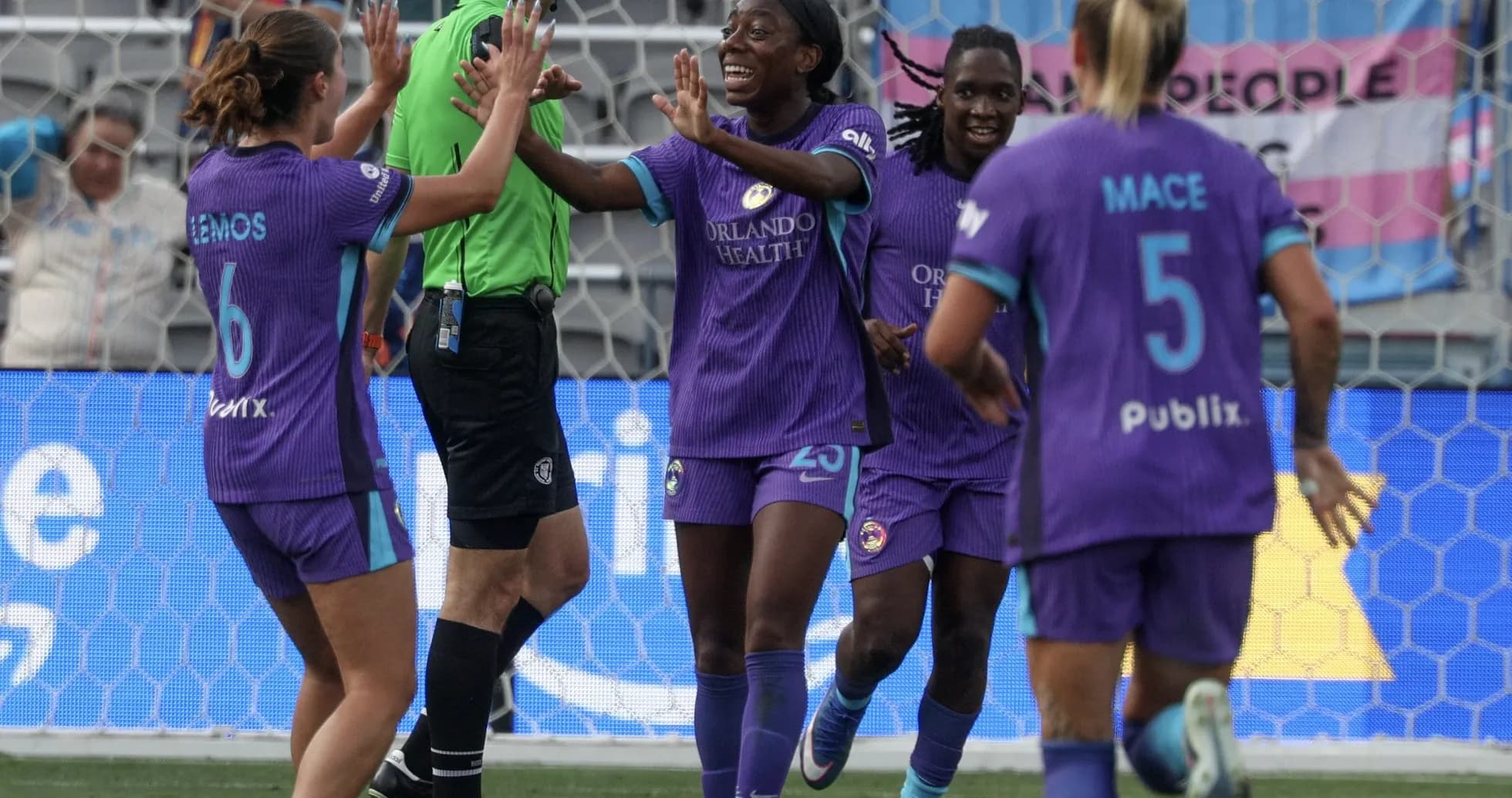
Seb Hines matched that shape: A. Moorhouse in goal; a back line of H. Mace, C. Dyke, Rafaelle Souza and O. Hernandez; H. McCutcheon and A. Lemos as the screening pair; and a creative three of N. Payne, Luana Bertolucci and J. Doyle supporting the league’s most ruthless finisher, B. Banda.
The tactical void for San Diego was less about missing personnel and more about structural sharpness. Their season-long form line (LWWWWWLLWWDL) hints at volatility, and the numbers back it up: in total they have failed to score 4 times in 12 league games, 3 of those blanks coming at home. This night added another chapter to that pattern. The 4-2-3-1 that has served them best (used 7 times this season) produced good territory but not incision; Ludmila’s presence high on the last line demanded service into space, but Orlando’s back four rarely let the game become stretched.
Orlando’s absences did not dominate the narrative either, but their disciplinary profile always loomed. Across the season, 28.57% of their yellow cards come in the 61–75 minute window and 21.43% between 76–90, with a red-card spike in the 61–75 range as well. They are a side that lives on the edge when games open up late. Yet here, the Pride managed that risk impressively, tightening the block instead of lunging into the kind of late duels that have cost them before.
In “Hunter vs Shield” terms, this fixture was defined by one matchup: B. Banda against a San Diego defence that, heading into this game, conceded 1.1 goals per match overall and just 0.8 at home. Banda came in as the league’s most productive attacker: 8 goals in 11 appearances, with 41 shots (23 on target) and a strong 7.58 average rating. Her duel volume – 102 contests, 44 won – underlines how much of Orlando’s attacking identity is built around her willingness to fight for every ball.
San Diego’s answer was a centre-back pairing of K. Wesley and K. McNabb, supported by full-backs Van Zanten and Pickett. Their season numbers suggest a back line that bends but rarely breaks, especially at home. But the first-half pattern told a different story: Orlando’s verticality through Luana Bertolucci and J. Doyle repeatedly isolated Banda against one centre-back, and one of those moments produced the decisive strike before the interval. The 0–1 half-time scoreline reflected Orlando’s capacity to turn limited possession into high-value chances.
The “Engine Room” duel was equally compelling. For San Diego, Dudinha is both creator and cutter of lines: 4 goals and 4 assists in 12 appearances, 42 dribble attempts with 26 successful, and 15 key passes from 197 total. Operating from the left half-space in this 4-2-3-1, she is the hinge between San Diego’s midfield and Ludmila’s runs. Alongside her, L. E. Godfrey adds end product and control – 4 goals, 2 assists, 17 key passes, and an 80% passing accuracy – making the Wave’s left-sided channel their most dangerous avenue.
Orlando’s counterweight came in the form of A. Lemos at the base and Luana Bertolucci higher up. Lemos is a classic enforcer-playmaker hybrid: 19 tackles, 12 interceptions, and 19 key passes from 367 total passes. Her disciplinary record, including 2 yellow cards and 1 penalty missed this season, speaks to the fine line she walks between aggression and overreach. On this night, though, she largely won the argument, disrupting Dudinha’s rhythm and forcing San Diego’s creators to receive with their backs to goal.
Card risk shaped the tempo. San Diego’s yellow-card distribution is remarkably even from 31–90 minutes (each of the 31–45, 46–60, 61–75 and 76–90 ranges sits at 18.18% of their total yellows), suggesting a side that sustains its bite across the full match. Orlando, by contrast, normally spike in that 61–75 window. The fact that the second half did not devolve into a card-strewn scramble was a testament to Hines’ game management: the block dropped five to ten yards, the double pivot sat tighter on the Wave’s No. 10 space, and the full-backs chose containment over adventure.
From an xG and defensive-solidity standpoint, the prognosis emerging from this contest is nuanced. San Diego’s underlying attacking profile – 1.4 goals per game overall, 1.2 at home, multiple high-quality creators in Dudinha and Godfrey – suggests that on most nights they generate enough chances to score. Their issue is conversion in tight, tactical games where the opponent is comfortable defending deep. Orlando, with 1.4 goals for and 1.5 against overall, have often lived in the chaos zone, but their four clean sheets (three away) indicate a ceiling as a compact, counter-punching unit.
Following this result, the story is of a Pride side increasingly adept at turning their 4-2-3-1 into a travelling fortress, built around Banda’s ruthless efficiency and Lemos’ control of the central lane. San Diego, still very much a play-off calibre squad, are left to solve a familiar riddle: how to translate territorial dominance and creative talent into goals against disciplined, low-error defences. In a league where margins are thin and knockout football looms, this night in San Diego felt like a rehearsal for the kind of chess matches that will decide the season’s biggest prizes.