Orlando Pride W vs Houston Dash W: Tactical Showdown in NWSL
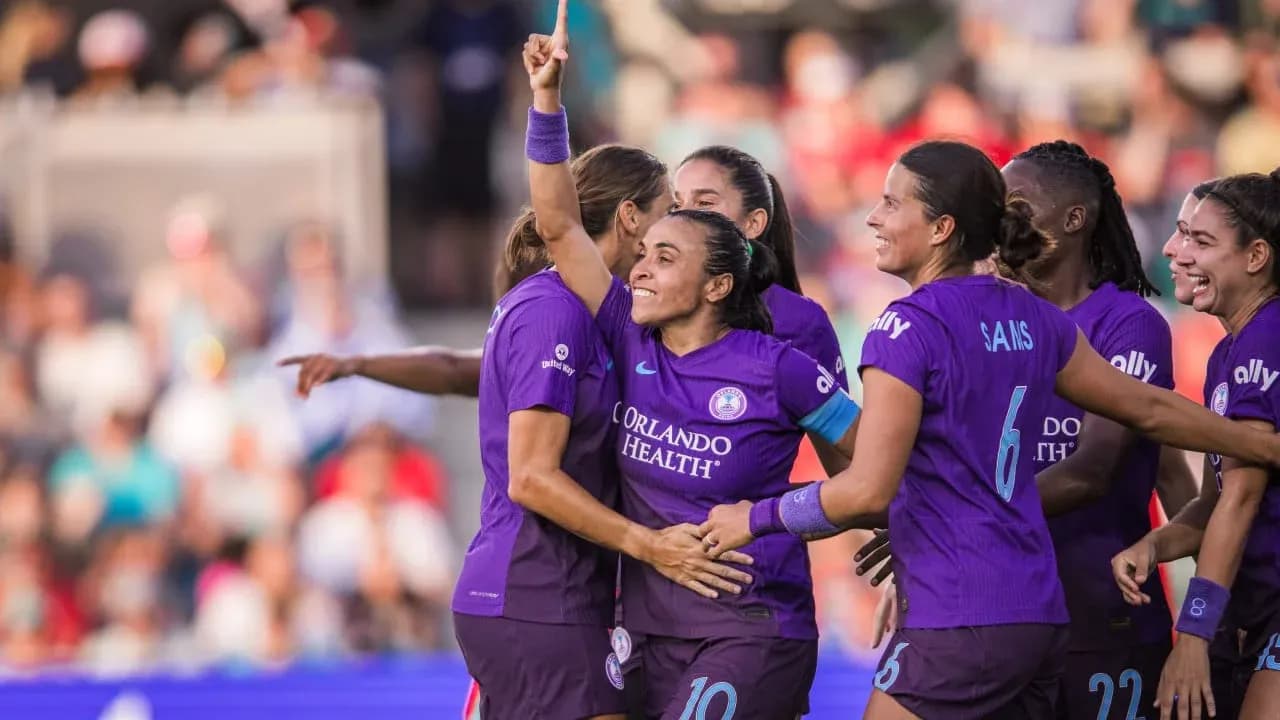
Under the Orlando lights at Inter&Co Stadium, this Group Stage meeting in the NWSL Women felt less like a mid-table skirmish and more like a statement game. Orlando Pride W, 11th in the table on 29 points with a goal difference of -5 (29 scored, 34 conceded overall), hosted 12th-placed Houston Dash W, who arrived on 26 points with a goal difference of -4 (29 for, 33 against overall). The Pride’s 3–1 win after a 2–0 half-time lead was not just a result; it was a tactical reassertion of who they want to be at home.
I. The Big Picture: Identities Colliding
Heading into this game, Orlando’s season had been defined by volatility. Overall they had won 9 of 23, with a sharp split between a relatively strong home record and fragile away form. At home they had scored 19 and conceded 16, averaging 1.6 goals for and 1.3 against. On their travels, they had managed only 10 scored and 18 conceded, with a 0.9 goals-for average. This is a team that leans on Orlando’s energy to tilt the field.
Houston, meanwhile, were the mirror image: more comfortable in Texas than on the road. Overall they had 7 wins from 23, but on their travels only 2 wins, 2 draws and 8 defeats, with 10 goals scored and 20 conceded away from home. Their away average of 0.8 goals for and 1.7 against painted a clear picture: when the Dash leave home, their attacking rhythm often stutters and their back line is exposed.
The league-wide numbers underlined the parity: both sides had scored 29 overall. But the distribution of those goals and the home/away split set the stage for Orlando to impose themselves.
II. Tactical Voids and Discipline
Yolanda Thomas rolled out a 4-4-2, leaning into directness and vertical threat. C. Morche in goal sat behind a back four of H. Mace, H. Anderson, C. Dyke and O. Hernandez. The midfield band of four – H. McCutcheon, A. Lemos, Angelina and S. Yates – was built to compress space horizontally, while up front L. Ovalle supported the league’s headline act: Barbra Banda.
Thomas’ choice of 4-4-2 is notable given Orlando’s season-long tactical profile. Across the campaign, their most-used shape has been 4-2-3-1 (14 times), with 4-4-2 only appearing in 3 previous matches. Shifting to a front two at home signaled an intent to pin Houston’s back line deep and create more central occupation around Banda.
Fabrice Gautrat answered with a 4-2-3-1 for Houston Dash W, a structure they have leaned on 8 times this season, slightly less than their preferred 4-4-2. J. Campbell anchored a back four of C. Hardin, L. Klenke, N. M. Bain and Avery Patterson. In front, the double pivot of D. Colaprico and M. Graham was tasked with screening, while the attacking trio of M. Ivanovic, K. Rader and P. K. Nielsen supported lone forward K. Faasse.
Discipline loomed as a sub-plot. Orlando’s season data shows a clear yellow-card surge from 61–75 minutes, where 25.00% of their cautions arrive, and another spike between 76–90 minutes (21.43%). They also have a red-card history concentrated between 61–75 minutes, with 100.00% of their dismissals in that window. Angelina, starting in midfield, personified that edge: 2 yellows and 1 red this season, a player who tackles aggressively and lives close to the line.
Houston, for their part, carry their own disciplinary weight. Patterson entered as one of the league’s most carded defenders, with 6 yellows and a reputation for front-foot defending – 44 tackles, 6 successful blocks and 24 interceptions this season. Colaprico adds another 4 yellows, with 32 tackles and 10 blocks. Houston’s yellow cards are spread, but they peak in the 16–30 and 76–90 windows (both 19.35%), which often coincide with pressing phases and late-game desperation.
Penalties added another layer of risk. Orlando had earned 4 penalties overall but only converted 2; with 2 missed, their season from the spot was split at 50.00%. Houston were more clinical: 5 penalties taken, 4 scored, 1 missed, for an 80.00% conversion. Any foul in the box against Banda or Rader threatened to swing momentum.
III. Key Matchups: Hunter vs Shield, Engine Room vs Enforcer
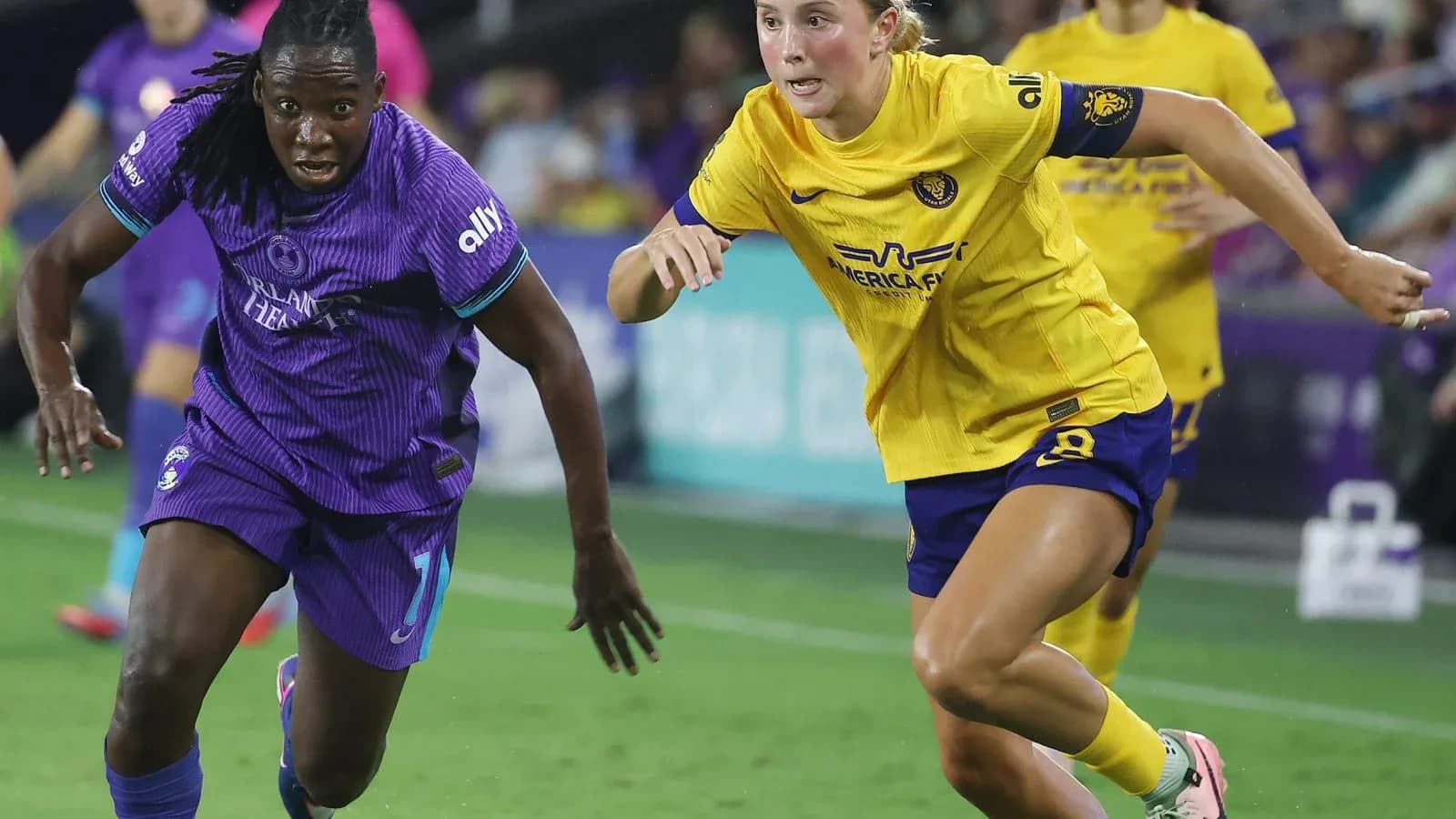
The headline duel was Barbra Banda against the Houston defensive unit. Banda came into the fixture as one of the league’s elite forwards: 12 goals and 1 assist in 19 appearances, averaging 7.64 in rating, with 53 shots (30 on target) and 17 key passes. She is not just a finisher but a chaos engine, drawing 29 fouls and winning 1 penalty.
Facing her was a Dash back line that, away from home, had conceded 20 goals in 12 matches. Patterson, with her 165 duels and 91 won, plus 6 blocks, is the natural “shield” in this matchup. But Banda’s blend of physicality (138 duels, 60 won) and dribbling volume (39 attempts, 16 successful) meant that any one-v-one was a calculated risk for Houston.
Behind Banda, L. Ovalle’s role as a second forward was to occupy N. M. Bain and L. Klenke, preventing them from stepping out to double-team. The wide pairing of McCutcheon and Yates stretched Houston’s full-backs, forcing Patterson and Hardin into constant decisions: track wide runners or collapse centrally on Banda?
In the “engine room”, the battle between Orlando’s central trio – A. Lemos and Angelina in particular – and Houston’s double pivot of Colaprico and M. Graham was decisive. Angelina’s season numbers (481 passes at 78% accuracy, 22 tackles, 13 interceptions) highlight a midfielder who can both circulate and disrupt. Her presence helped Orlando compress the middle third, starving Rader of time on the ball.
Rader, however, is Houston’s creative and scoring heartbeat: 8 goals, 1 assist, 31 shots with 20 on target, and 24 key passes across 23 appearances. Operating from the line of three behind Faasse, she looks to find pockets between the lines. Orlando’s 4-4-2 meant the central midfield two had to be compact, while the wide midfielders tracked Houston’s advanced midfielders. Whenever Rader drifted inside, she ran into Angelina’s tackling and Lemos’ screening.
Out wide, P. K. Nielsen and M. Ivanovic tried to isolate Orlando’s full-backs. But H. Mace and O. Hernandez, protected by the flat midfield four, could defend narrower than usual, knowing the Pride’s home attacking output (19 goals at 1.6 per game) would give them license to transition quickly once they won the ball.
IV. Statistical Prognosis and Tactical Verdict
Even before a ball was kicked, the numbers leaned toward a high-impact Orlando performance. At home, they averaged 1.6 goals scored and 1.3 conceded; Houston away, 0.8 scored and 1.7 conceded. The intersection of Orlando’s home attacking peak and Houston’s away defensive frailty pointed toward the kind of game we saw: the Pride building an early lead (2–0 by half-time) and managing the margin thereafter.
From a structural perspective, Orlando’s decision to lean into 4-4-2, rather than their more common 4-2-3-1, amplified Banda’s threat and simplified their defensive responsibilities. Two banks of four behind a mobile front pair gave them clear reference points against Houston’s 4-2-3-1, ensuring that Rader’s influence was contested in every zone.
Discipline remained a lurking danger – particularly in Orlando’s notorious 61–75-minute window – but the Pride navigated those phases without catastrophic damage, even as the Dash chased the game. Houston’s profile as a side that can keep matches competitive at home but struggles to control away fixtures played out again. Their away goal average of 0.8 was reflected in the single strike they managed; their away concession rate of 1.7 was slightly exceeded as Orlando hit three.
Following this result, the tactical story is clear. Orlando Pride W have a home blueprint that works when they trust their front line and compress the middle of the pitch. Houston Dash W, meanwhile, remain a side whose away structure cannot consistently protect their penalty area against elite forwards like Banda, especially when their own creative hub, Rader, is forced to operate under constant pressure.