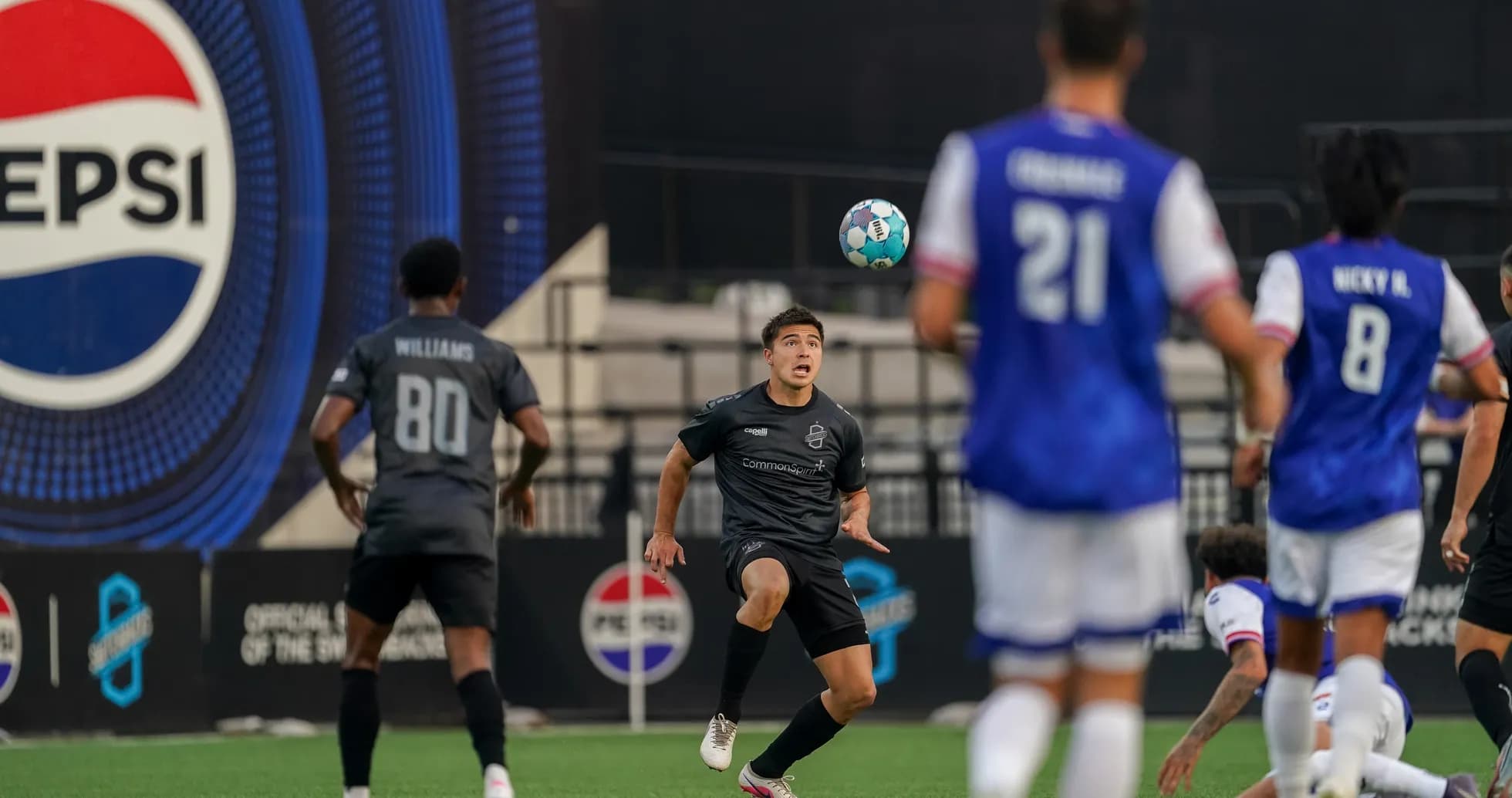
Monterey Bay's Tactical Victory Over El Paso Locomotive
Under the lights at Cardinale Stadium, Monterey Bay’s 1–0 victory over El Paso Locomotive felt like more than just three points; it read as a tactical correction to an uneven season. In the context of a USL Championship Group Stage where margins are thin, this was a night when a fragile home specialist met a dangerous away side and, for once, imposed its own script.
Match Context
Heading into this game, the standings painted a clear contrast. Monterey Bay sat 12th in USL 1 with 14 points from 14 matches, their overall goal difference at -8, the product of 14 goals scored and 22 conceded. The pattern was stark: at home they had been relatively efficient, with 4 wins from 8, scoring 10 and conceding 8; on their travels they were winless, with 4 goals for and 14 against. El Paso arrived in 9th place on 16 points from 13 matches, their overall goal difference exactly balanced at 0 after 23 goals for and 23 against. Their away profile was impressive: 3 wins, 2 draws and only 2 defeats, with 13 goals scored and just 7 conceded away, built on an average of 1.9 away goals for and 1.0 away goals against.
Tactical Overview
That context shaped the tone of the contest. Monterey Bay, coached by Alex Covelo, leaned into their identity as home specialists. Without an explicit formation listed, the selection still hinted at a compact, hard‑working spine. J. Jackson anchored from the back, with N. Gordon and Z. Farnsworth as key pillars in the defensive line, supported by the energy of O. Glasgow and J. Garcia in wide or hybrid roles. In midfield, the presence of R. Nakamura and N. Ross suggested a double‑pivot or a staggered central unit designed to both screen and spring counters, while A. Saidi and W. Leggett offered legs and width around the creative fulcrum S. Lletget. Up front, I. Paul was the reference point, the first defender and the final outlet.
On the opposite bench, Junior Gonzalez’s El Paso Locomotive came in with the confidence of a side that travels well. S. Mora-Mora in goal fronted a back line built around the experience of Tony Alfaro and the athleticism of K. Twumasi and N. Cardona. Gabriel Torres and A. Quezada added flexibility in the wide and half‑spaces, while the midfield triangle of A. Mendez, R. Coronado and E. Calvillo offered control and passing range. R. Avila and R. Rubin gave El Paso their cutting edge, combining movement between the lines with penalty‑box instincts.
Game Dynamics
If there were tactical voids on the night, they were less about absences and more about tendencies. Monterey Bay’s season profile showed a team that can shut games down at Cardinale Stadium: 3 home clean sheets in 8, and only 1.0 home goals conceded on average. Yet overall, they had failed to score in 5 of 14 league matches, underlining a chronic lack of cutting edge. El Paso, conversely, had failed to score just once in 13 matches overall, and away they had kept 2 clean sheets, suggesting a side comfortable in low‑margin games on the road.
Disciplinary trends added another layer. Monterey Bay’s yellow‑card curve is heavily back‑loaded: 28.21% of their yellows arrive between 61–75 minutes, with another 23.08% from 76–90. Their only red card this season also came in the 61–75 window. El Paso’s discipline is even more volatile: 27.27% of their yellows fall in each of the 46–60 and 61–75 ranges, and their reds are scattered early and mid‑game, with 20.00% in 0–15, 40.00% in 16–30, and further reds in 46–60 and 61–75. This is a team that often walks the line just as matches open up.
Key Matchups
Within that framework, the key matchups were clear. The “Hunter vs Shield” duel pitted El Paso’s away attack, averaging 1.9 goals on their travels, against Monterey Bay’s home defence, conceding only 1.0 per game at Cardinale Stadium. Over 90 minutes, Monterey Bay’s back unit, marshalled by Jackson with Gordon and Farnsworth in front of him, won that battle comprehensively. The visitors, who had previously scored 4 away in their biggest win and averaged 1.8 goals overall, were held scoreless.
In the “Engine Room” battle, S. Lletget’s role as Monterey Bay’s on‑ball organiser was central. With Nakamura and Ross providing the legs and defensive coverage, Lletget could connect thirds, threading passes into Leggett, Saidi and Paul. Against them, Calvillo and Mendez were tasked with dictating tempo and feeding Rubin and Avila. Yet Monterey Bay’s compactness and willingness to suffer without the ball blunted El Paso’s rhythm, forcing more hopeful deliveries than incisive combinations.
Aftermath
Following this result, the numbers tell a story of a home side rediscovering its defensive identity. Monterey Bay’s overall goal difference tightens, and the home ledger becomes even more pronounced: the 1–0 full‑time score adds another clean sheet to a ground where they already conceded only 8 in 8 prior home fixtures. For El Paso, the defeat dents what had been a strong away record, undercutting an away defensive average of 1.0 goals conceded and an attacking pattern that had produced 13 away goals from 7 matches.
From an xG and defensive‑solidity perspective, Monterey Bay’s template is now unmistakable. They are built to keep games narrow, rely on structure, and trust that a moment from Lletget, Leggett or Paul can tilt the balance. El Paso, by contrast, remain a high‑variance side: capable of explosive away performances, but vulnerable when denied early control and forced into riskier phases where their disciplinary profile becomes a liability.
As the Group Stage narrative unfolds, this match will be remembered as a night when Monterey Bay’s home fortress held firm against one of the league’s most dangerous travelling attacks, and as a quiet warning that, at Cardinale Stadium, the margins will always be dictated by the hosts.