Marcus Rashford's Uncertain Future: Waiting for the Next Move
Marcus Rashford is about to live a footballer’s worst summer: waiting.
Waiting to find out which club will claim the next chapter of a career that has veered from Old Trafford prodigy to elite-level loan specialist. Waiting to learn where he will return after a World Cup in which he is expected to start England’s opener against Croatia in Dallas on 17 June. Waiting, above all, for someone to decide if they truly believe in him.
For a forward entering what should be his prime, this is a strange kind of limbo.
From Amorim’s exile to a Catalan tease
The uncertainty really began in brutal fashion. In December 2024, then-Manchester United head coach Ruben Amorim simply cut Rashford from his first-team plans. No soft landing, no half-measures. Out.
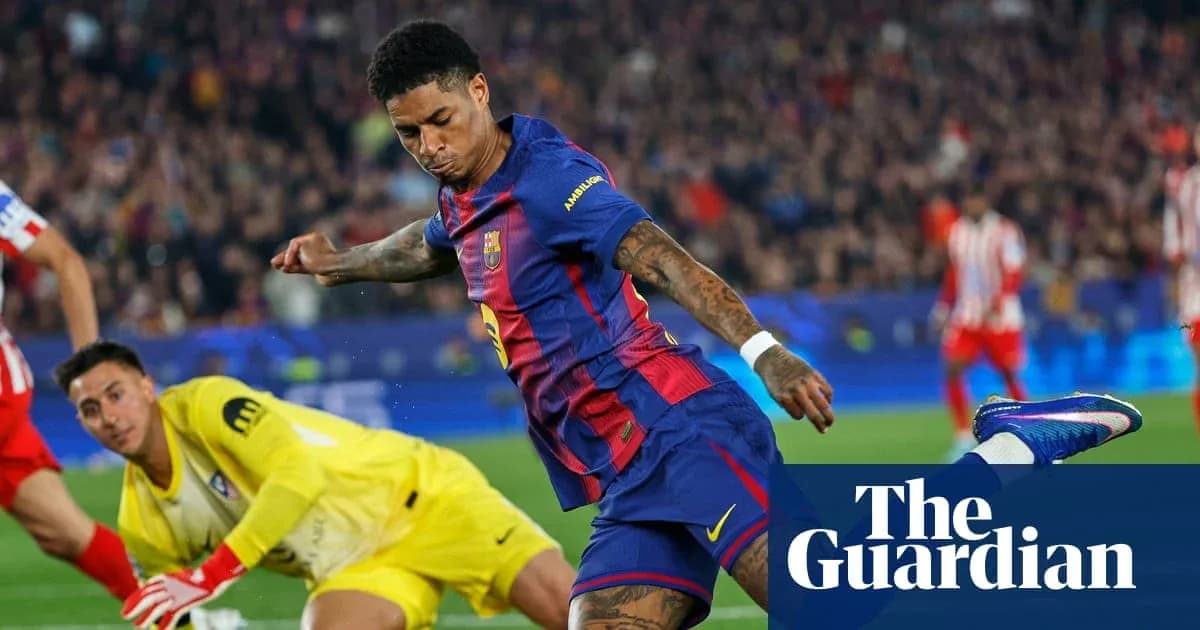
Loans to Aston Villa and Barcelona followed, each offering a glimpse of stability without ever quite delivering it. At Barça, Rashford looked at times like a man who had finally found a home. He scored a free-kick against Real Madrid in the clásico earlier this month, a strike that proved pivotal in clinching La Liga. That is the sort of moment players build legacies on in Catalonia. It is the sort of moment that usually secures a permanent deal.
Yet here he is, still wondering if he will be allowed to put down roots in Barcelona at all.
Under Hansi Flick last season, Rashford’s spell was broadly successful and his preference is clear: he wants to stay. “I am not a magician but if I was, I would stay,” he said after scoring against Real on 10 May. “We will see.” For now, that “we will see” hangs over everything.
Barcelona’s stance is far less clear.
Anthony Gordon’s £69m arrival from Newcastle last week muddied the waters even more. Gordon, like Rashford, operates primarily off the left. The message is hard to miss. If Barça want Rashford, it would likely be on another loan, not the permanent commitment he craves. United, by contrast, are insisting on a £26m permanent fee as they try to bank money on an academy product whose contract runs until May 2028.
The salary that shapes the saga
The relatively low asking price for a 28-year-old forward in his peak years tells its own story. Behind the fee lurks the real issue: Rashford’s £17.5m-a-year salary, with around £35m still to pay on his current deal.
United want that wage off their books. Completely.
Any club taking him on loan would be expected to shoulder all or most of that cost. Any permanent move would almost certainly involve a pay rise on top. As it stands, Barcelona do not look inclined to lock themselves into that kind of long-term financial commitment, no matter how fondly they remember that free-kick against Madrid.
So the stalemate persists. United holding out for a fee. Barça hesitating over wages. Rashford caught in the middle.
No way back at United
What, then, are his options?
The door at Old Trafford appears bolted. Even with Amorim gone and Michael Carrick appointed as permanent successor, Rashford remains frozen out at the very top of the club. Sir Jim Ratcliffe, United’s minority owner and the man steering football policy, does not see a future for him. Nor do Jason Wilcox, the director of football, or Omar Berrada, the chief executive.
Persona non grata. At his boyhood club.
When his loan at Villa ended last summer, Rashford’s aim was simple: join a Champions League club, but avoid London. That was then. If that stance has softened, Arsenal suddenly come into sharp focus.
Mikel Arteta would surely view Rashford as an upgrade on Leandro Trossard and Gabriel Martinelli on the left for the Premier League champions. His ability to play as a No 9 adds another layer to an attack already featuring Kai Havertz and Viktor Gyökeres. For a manager who loves tactical flexibility, Rashford’s profile is tempting.
The same logic applies at Liverpool. Cody Gakpo is their only senior, natural left-sided option and his output last season was, at best, middling. If Liverpool decide they need a sharper edge from that flank, the question becomes a different one: would Rashford’s disillusionment with United burn hot enough for him to cross one of English football’s fiercest divides and walk into Anfield?
Old flames and foreign glances
A return to Aston Villa would not be hard to sell. Under Unai Emery, Rashford lit up Villa’s attack, particularly in the Champions League, where his pace and directness gave them a cutting edge on the biggest stage. Villa can offer him European football, a defined role, and a manager who has already unlocked him once.
Another move abroad also sits on the table, even if the options at the very top end are limited. Paris Saint-Germain have long admired Rashford, but the dynamic has shifted. With Khvicha Kvaratskhelia operating on the left and firmly established as world-class, a major push for Rashford feels unlikely.
Bayern Munich have Luis Díaz in that position. Real Madrid have Vinícius Júnior. The elite left-wing slots across Europe’s superclubs are largely taken.
So the market narrows. The finances complicate things further. And the clock ticks towards the opening of the transfer window on 15 June.
A slow-burn market around an enigma
Rashford’s next move should begin to crystallise once the window opens, but this is unlikely to be a quick, clean deal. Too many competing agendas are in play. United want a fee and wage relief. Interested clubs must weigh his salary, his form and their existing options. Rashford, for his part, retains the power to veto any move he does not want.
United can block any transfer they dislike. Rashford can block any destination that does not convince him. Somewhere in between, a solution has to be found.
The numbers from last season do not make the decision easier. Eight goals and nine assists in La Liga is a respectable return, but not the sort of explosive output that forces Barcelona to tear up their plans and pay whatever it takes. That helps explain their caution. It does not, however, close the door entirely.
Because one tournament can change everything.
Imagine an England World Cup campaign ignited by Rashford, his goals and surging runs dragging Gareth Southgate’s side deep into the competition. In that scenario, a £26m fee for a 28-year-old forward with his pedigree, even on a high-end salary, suddenly looks less like a risk and more like an opportunity.
For now, Rashford remains what he has been for too long: an enigma with a highlight reel that outstrips his consistency, a talent caught between clubs, countries and competing visions of what he should be.
The next few months will decide whether he becomes a centrepiece again, or stays trapped as the luxury option nobody quite dares to own.