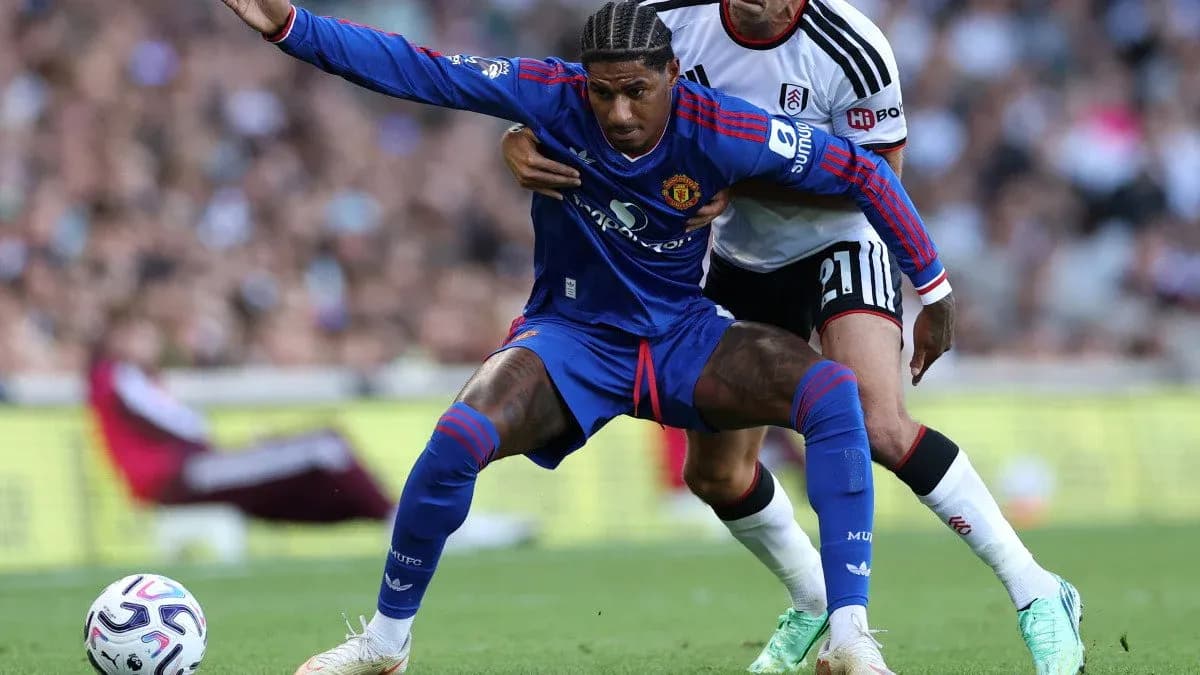
Manchester United vs Nottingham Forest: Premier League Showdown
Old Trafford stages a high‑stakes meeting on 17 May 2026 as Manchester United host Nottingham Forest in the Premier League’s penultimate round. With United sitting 3rd on 65 points and Forest 16th on 43, the incentives are clear: the home side are closing in on Champions League qualification, while the visitors are trying to lock in safety and potentially climb a congested lower mid‑table.
Context and stakes
In the league, Manchester United have put together a strong campaign. Third place, a +15 goal difference and an 18‑11‑7 record across all phases underline a side that has found enough consistency to stay in the Champions League places. Their recent league form reads “DWWWL”, suggesting one setback but generally positive momentum coming into matchweek 37.
Forest, by contrast, have had a more volatile season. They arrive in Manchester 16th, with 43 points and a goal difference of -2. An 11‑10‑15 record across all phases shows a team that has flirted with danger but, crucially, has found timely results of late; their form line of “DWWWD” is one of a side grinding out points when it matters most.
The fixture also pits one of the division’s strongest home sides against one of its more effective travellers. United’s home record (12 wins, 3 draws, 3 defeats from 18, 36 goals for and 22 against) has been the platform for their top‑four push. Forest, however, have quietly built an away profile that commands respect: 7 wins, 3 draws and 8 defeats, with 26 scored and 25 conceded, is the record of a team not easily intimidated on the road.
Tactical outlook: United’s structure vs Forest’s flexibility
Across all phases, Manchester United have split their season evenly between a back three and a back four, lining up 18 times in a 3‑4‑2‑1 and 18 times in a 4‑2‑3‑1. That tactical duality has given them options: the back three offers more protection for a defence that still concedes 1.3 goals per game, while the 4‑2‑3‑1 has often been used to squeeze more attacking threat out of their front line.
United average 1.8 goals per game in the league, rising to 2.0 at Old Trafford, and their biggest home win of 4-2 illustrates a willingness to trade chances. They have only failed to score twice at home across all phases, but they also concede 1.2 per home game, suggesting this is rarely a low‑event venue.
Forest are more of a tactical chameleon. Their most-used shape has been 4‑2‑3‑1 (29 matches), but they have also deployed 5‑3‑2, 4‑4‑2, 3‑4‑3, 4‑5‑1 and even 3‑4‑2‑1. That flexibility can be a strength away from home, allowing them to match up with different opponents, but it also hints at a team still searching for its most stable identity.
They score 1.3 goals per game across all phases (1.4 away) and concede 1.3 (1.4 away). The away numbers are notable: Forest’s attack travels relatively well, while their defence is only marginally more porous on the road. Their biggest away win, 0-5, shows they can be ruthless when the game opens up, but the 3-0 away defeat in their heaviest loss underlines the risk of being too expansive.
Discipline could also be a factor. United’s yellow card distribution spikes between minutes 46‑60 and 76‑90, while Forest’s is highest between 46‑60 and 61‑75. With both teams prone to picking up bookings in the second half, a tight game could become increasingly scrappy after the interval.
Key players and attacking threats
For Nottingham Forest, Morgan Gibbs-White is the clear reference point. The midfielder has 13 league goals and 4 assists in 35 appearances, with a strong all‑round statistical profile: 46 key passes, 52 dribble attempts (25 successful) and 39 fouls drawn. He is Forest’s creative and scoring hub, operating between the lines and carrying much of their attacking responsibility. He has also converted 1 penalty from 1 this season, underscoring his composure in decisive moments.
Manchester United’s goal threat is more spread, but Benjamin Šeško and Bryan Mbeumo stand out in the data. Šeško has 11 goals and 1 assist from 30 appearances, despite starting only 17 times, with 34 of his 51 shots on target. His efficiency and impact as both starter and substitute make him a central piece of United’s penalty‑box threat, though he is listed as “Questionable” with a leg injury for this fixture.
Mbeumo has contributed 9 goals and 3 assists in 31 games, with 46 key passes and 30 shots on target from 54 attempts. His blend of chance creation and finishing makes him a key figure in United’s wide or half‑space roles. He has won 1 penalty this season but has not scored from the spot (0 penalties scored, 0 missed recorded), so there is no evidence of him being a primary taker.
Behind them, Casemiro has chipped in with 9 goals and 2 assists, while anchoring midfield with 88 tackles, 27 blocks and 30 interceptions. His ability to break up play and contribute in the box at both ends is central to United’s control of games, particularly against a Forest side that often looks to transition quickly through Gibbs-White.
Injuries and selection issues
Manchester United are definitely without M. de Ligt due to a back injury, which affects their options if they opt for a back three. B. Šeško (leg injury) and M. Ugarte (back injury) are both listed as “Questionable”, potentially impacting both their attacking depth and midfield balance.
Forest’s absentee list is longer. W. Boly, C. Hudson-Odoi, John Victor and N. Savona are all ruled out, stripping depth from their defence and wide areas. A further cluster of players are “Questionable”: Z. Abbott (concussion), O. Aina (injury), M. Gibbs-White (head injury), Murillo (muscle injury) and I. Sangare (injury). The status of Gibbs-White and Murillo, in particular, could be decisive. If Gibbs-White does not start, Forest lose their leading scorer and primary creator; if Murillo is absent, their defensive structure is weakened against a high‑scoring home side.
Both teams have spotless penalty records at team level this season (United 4 scored from 4, Forest 3 from 3), and individual data show Gibbs-White at 1 from 1. There is no evidence of missed penalties in the player data provided.
Head-to-head: Forest’s recent edge
The last five competitive meetings between these sides (four Premier League, one FA Cup) show a surprisingly strong recent record for Forest:
- 01 November 2025, Premier League at the City Ground: Nottingham Forest 2-2 Manchester United – draw.
- 01 April 2025, Premier League at the City Ground: Nottingham Forest 1-0 Manchester United – Forest win.
- 07 December 2024, Premier League at Old Trafford: Manchester United 2-3 Nottingham Forest – Forest win.
- 28 February 2024, FA Cup 5th Round at the City Ground: Nottingham Forest 0-1 Manchester United – United win.
- 30 December 2023, Premier League at the City Ground: Nottingham Forest 2-1 Manchester United – Forest win.
Across these five, Forest have 3 wins, Manchester United 1, with 1 draw. Notably, Forest have won on their last league visit to Old Trafford by 2-3.
The verdict
On paper, Manchester United’s superior league position, strong home record and higher scoring rate make them clear favourites. Averaging 2.0 goals per home game across all phases against a Forest side conceding 1.4 away suggests the hosts are well placed to create and convert chances, particularly if Mbeumo and Casemiro are available and influential.
Forest, however, travel with confidence from recent form (“DWWWD”) and a genuinely impressive recent head‑to‑head record. Their away numbers (7 wins, 26 goals scored) and tactical flexibility mean they are capable of unsettling United, especially if Gibbs-White is fit to start and exploit spaces between United’s lines.
If United’s attacking injuries clear up and they can field close to a first‑choice front line, the balance tilts strongly towards a home win, likely in a game with goals at both ends given United’s defensive record and Forest’s away threat. Should Forest be without Gibbs-White or several of their “Questionable” defensive pieces, their chances of repeating past upsets diminish sharply.
Overall, the data points towards Manchester United taking a high‑scoring home victory, but Forest’s recent history in this fixture and solid away profile mean an upset cannot be ruled out if key doubts in red recover in time.