Liverpool's Eye-Catching Ownership Deal with Bezos, Bhatia, and Saverin
Liverpool stand on the brink of one of the most eye-catching ownership deals football has ever seen – and this time the money is coming from the very top of the global rich list.
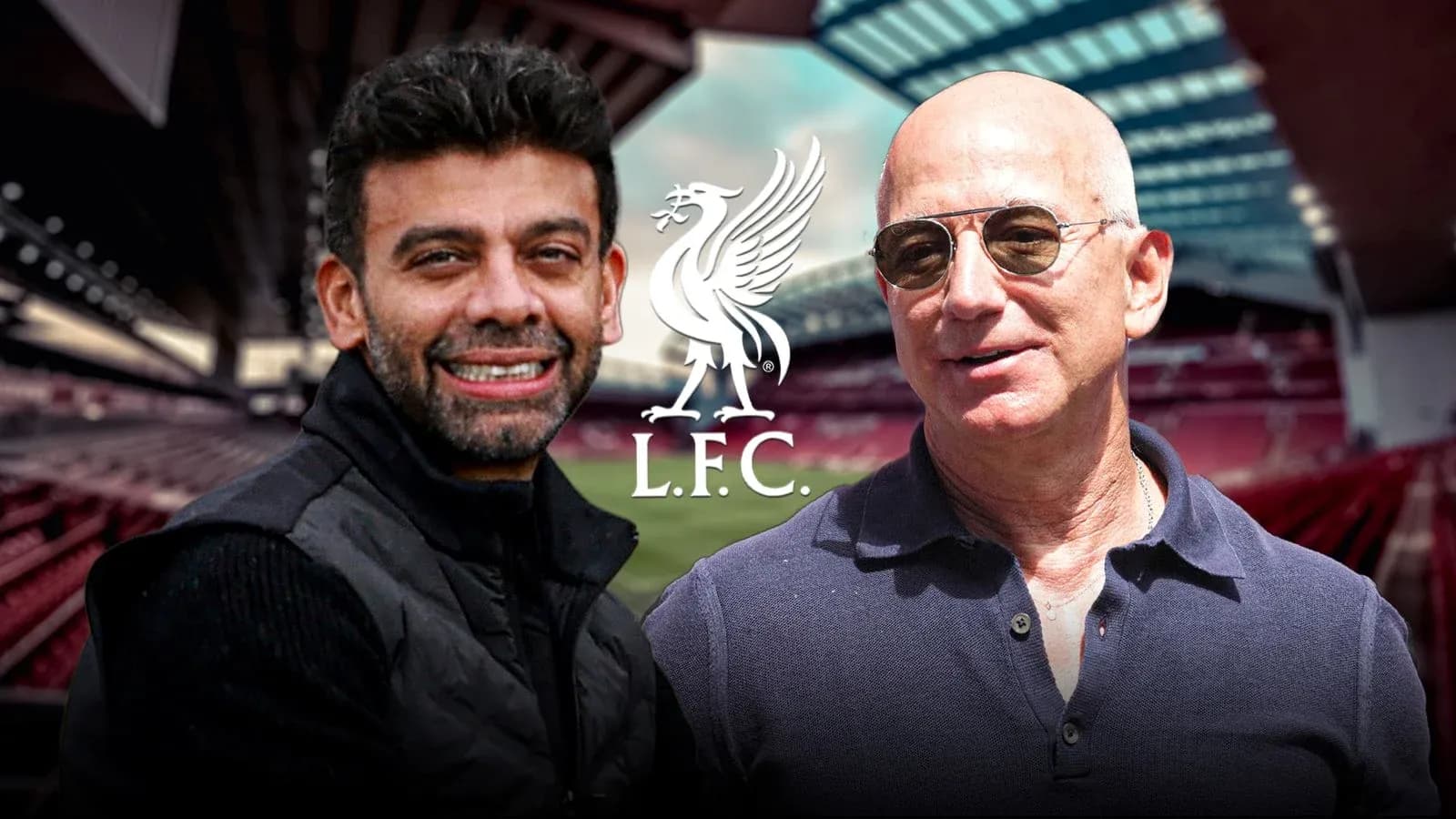
Fenway Sports Group (FSG) are close to selling a significant minority stake in the club to a heavyweight tech-and-finance consortium fronted by former QPR co-owner Amit Bhatia and featuring Amazon founder Jeff Bezos and Facebook co-founder Eduardo Saverin.
If completed, the deal will hand Liverpool fresh financial muscle and value the club at around £4.4bn ($6bn), one of the richest transactions the sport has known.
Bezos, Bhatia, Saverin: Silicon Valley meets Anfield
This is not just another private equity fund buying into a Premier League giant. The names involved are as big as it gets.
Jeff Bezos, the man who built Amazon from a garage in Seattle in 1994 into one of the world’s dominant companies, is the headline figure. Forbes puts his personal fortune at roughly $281bn (£209bn), ranking him as the third-richest person on the planet, behind Elon Musk and Google co-founder Larry Page.
His portfolio stretches from e-commerce to space. Blue Origin, his aerospace company, is racing in the commercial space industry, while Nash Holdings controls The Washington Post. Now, attention is turning towards Anfield.
Amit Bhatia is the public face of the consortium. A 46-year-old British-Indian entrepreneur with an investment banking background, he runs AyBe Capital, a multi-asset investment firm with interests across technology, media, property and real estate, consumer retail, and health.
He is also deeply plugged into global wealth. Bhatia is married to Vanisha Mittal Bhatia, daughter of steel magnate Lakshmi Mittal. Forbes values Mittal’s fortune at about £23.2bn, placing him among the world’s richest individuals.
Eduardo Saverin, the 44-year-old Facebook co-founder, brings another layer of tech-era capital and experience. He previously surfaced in English football circles as part of a consortium that tried, unsuccessfully, to buy Chelsea during the 2022 sale triggered by sanctions on Roman Abramovich.
The full list of investors behind the group has not yet emerged. For now, Bezos, Bhatia and Saverin are the marquee names.
From Loftus Road to Anfield: Bhatia’s sporting track record
Bhatia is no stranger to the football boardroom.
He arrived at QPR in 2007 at just 28, joining the board and becoming vice-chairman after the Mittal family acquired a 20 per cent stake. He shared ownership with Bernie Ecclestone and Flavio Briatore in a turbulent, ambitious era for the London club.
Bhatia later served as QPR chairman from 2018 to 2023, overseeing the club’s attempts to stabilise in the Championship. He remained a director and co-owner until earlier this week, when he transferred his stake to majority owner Ruben Gnanalingam, clearing the decks just as this Liverpool deal accelerated.
His sporting portfolio extends beyond football. Through AyBe Capital, Bhatia has invested in TGL – the tech-driven golf league fronted by Rory McIlroy and Tiger Woods, which blends virtual and live elements in a team-based, season-long format. His firm also backs Switch Hitter, the Kevin Pietersen-founded media brand that focuses on high-end cricket content.
The Mittal family, too, are active in sport. Earlier this year, Lakshmi Mittal bought a 75 per cent stake in Indian Premier League side Rajasthan Royals, underlining the family’s growing presence in elite sport.
Bezos, by contrast, has so far stayed on the fringes of ownership. A keen American football fan, he has previously explored bids for the Washington Commanders and the Seattle Seahawks but has yet to take a significant stake in any team or league.
That may be about to change.
Why would FSG cash in now?
FSG are not under financial pressure. They have overseen one of the most successful eras in Liverpool’s modern history since buying the club for £300m in October 2010, then operating under the New England Sports Ventures banner.
Under their stewardship, Liverpool have lifted every major trophy available: the Premier League, Champions League, FA Cup, League Cup, Club World Cup and UEFA Super Cup. Anfield has been expanded, the training ground modernised, and the club transformed into a global commercial powerhouse.
So why sell?
The answer lies in timing and scale. FSG signalled in 2022 that they were open to fresh investment. A smaller stake went to Dynasty Equity in 2023, in a deal that injected £164m and valued the club at more than $4.5bn.
Now, with valuations soaring and state-backed rivals reshaping the financial landscape, FSG appear ready to bank a huge profit on their original outlay while bringing in partners capable of funding the next phase of growth.
Mission accomplished, in one sense. But also a chance to reload.
The numbers: a one‑third slice of a £4.4bn giant
Sky News reports that the Bezos–Bhatia–Saverin consortium is closing in on the purchase of roughly a one-third stake in Liverpool.
At a club valuation of £4.4bn, that slice would represent one of the most lucrative minority deals in football history, underlining Liverpool’s position as the fourth most valuable club in the world.
FSG would retain full control, but the ownership structure would become even more layered. RedBird Capital and Arctos Sports Partners already hold minority stakes, while Dynasty Equity remain passive investors.
For FSG, who bought in at £300m, the numbers tell their own story. Even offloading a portion of their holding at a £4.4bn valuation locks in a staggering return.
When could it happen?
There is no fixed deadline. The deal first surfaced publicly at the end of last month, but negotiations have accelerated in recent days.
An announcement could come as early as this week. It may slide into next week. Either way, the pace of movement suggests serious intent on all sides.
The precise role Bezos and his fellow investors will play in Liverpool’s day-to-day operations remains to be seen. This is not a full takeover, and FSG are expected to stay in charge of strategic direction.
But the symbolism is clear. One of the world’s richest men, one of India’s most connected business families by association, and a founding figure of Facebook are lining up behind Liverpool.
For a club that has always married local identity with global reach, it raises a sharp, modern question: what does Anfield look like when big tech money walks through the Shankly Gates?