Tottenham vs Everton: A Tactical Showdown in the Premier League
Under a grey London sky, the Premier League season closed at Tottenham Hotspur Stadium with a game that felt more like a referendum on two projects than a dead‑rubber. Following this result, Tottenham finished 17th on 41 points, Everton 13th on 49, and the 1–0 scoreline told only part of the story of two squads shaped by injuries, tactical compromise and very different emotional trajectories.
I. The Big Picture – Two 4-2-3-1s, Two Very Different Stories
Both sides lined up in a 4-2-3-1, but the shapes carried contrasting intentions.
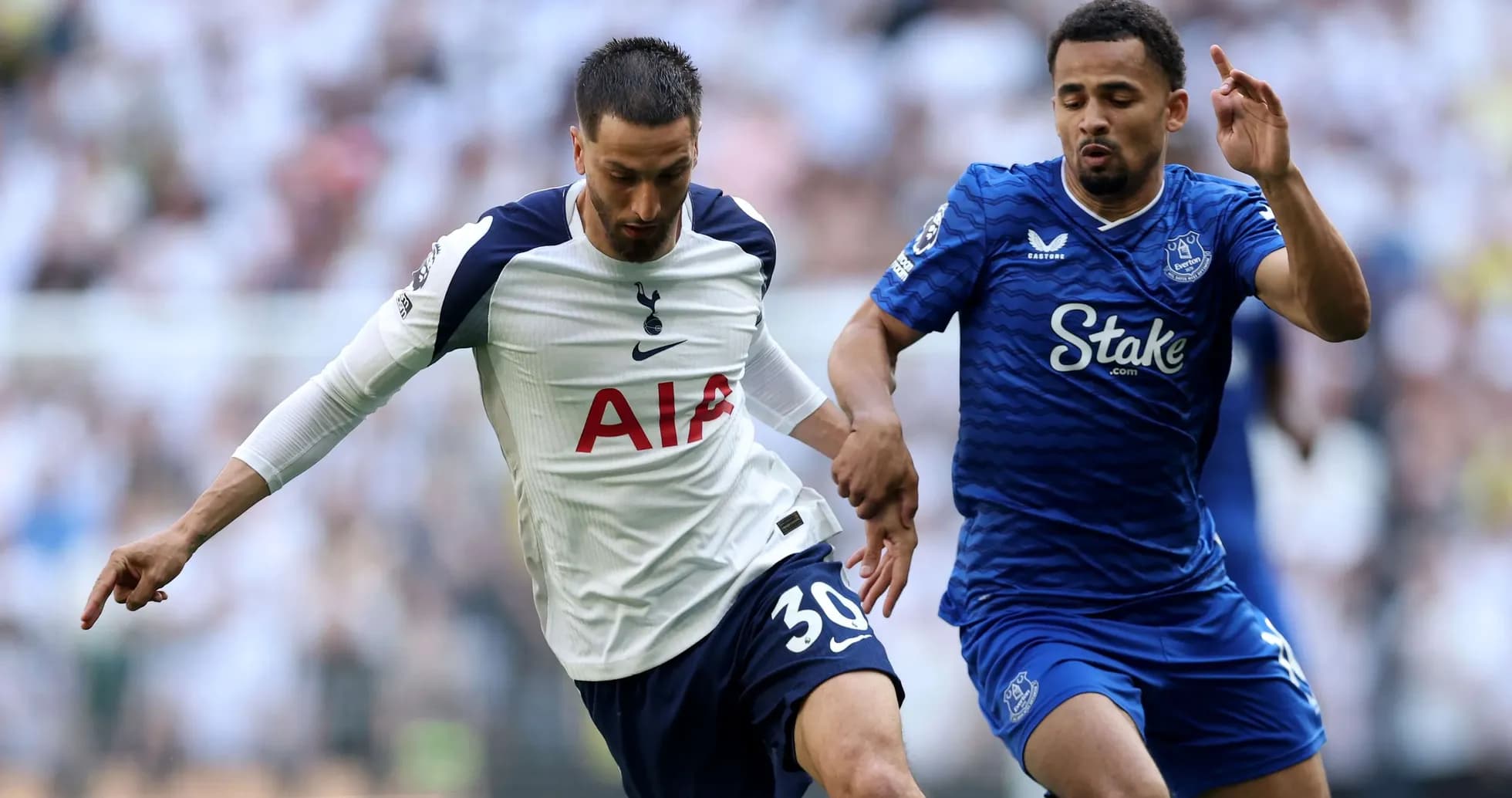
Tottenham, under Roberto De Zerbi, leaned into an aggressive, front‑foot version of the system. A. Kinsky started in goal behind a back four of P. Porro, K. Danso, M. van de Ven and D. Udogie. In front, R. Bentancur and J. Palhinha formed the double pivot, with a fluid band of three – D. Spence, C. Gallagher and M. Tel – operating behind lone striker Richarlison.
Everton, guided by Leighton Baines, mirrored the formation structurally but not in spirit. J. Pickford was protected by J. O'Brien, J. Tarkowski, M. Keane and V. Mykolenko. The double pivot of J. Garner and T. Iroegbunam sat deeper, with M. Rohl, I. Ndiaye and K. Dewsbury-Hall supporting young forward T. Barry.
The table contextualises the tension. Overall this campaign Tottenham’s goal difference was -9 (48 scored, 57 conceded) from 38 matches, a stark return for a side built to attack. Their home record was fragile: only 3 wins from 19, with 22 goals for and 31 against, averaging 1.2 scored and 1.6 conceded at home. Everton, by contrast, were quietly solid: overall 47 scored and 50 conceded for a goal difference of -3, with a balanced away record of 7 wins, 5 draws and 7 defeats, scoring 21 and conceding 23 on their travels.
In that context, the narrow home win felt less like dominance and more like Tottenham finally bending a tight margin in their favour.
II. Tactical Voids – Absences That Bent the Game’s Shape
The team sheets were defined as much by who was missing as who started.
Tottenham’s casualty list was brutal and concentrated in high‑impact zones. C. Romero, X. Simons, D. Kulusevski, M. Kudus, W. Odobert and B. Davies all missed out, several with knee issues. That stripped De Zerbi of his most aggressive ball‑winning centre‑back, his primary dribbling 10, and two wide forwards who normally stretch the pitch. It forced a more conservative back pairing of Danso and van de Ven and pushed creativity onto Gallagher and Tel between the lines.
Everton had structural losses of their own. J. Branthwaite’s hamstring injury removed their most progressive left‑sided centre‑back, while I. Gueye’s absence robbed the midfield of its most experienced ball‑winner. J. Grealish, usually a key carrier and foul magnet, was also out with a foot injury. In response, Baines leaned on the work‑rate of Ndiaye and Dewsbury-Hall and asked Garner to shoulder both build‑up and disruption.
Disciplinary profiles shaped the risk thresholds. Heading into this game, Tottenham’s season card map showed a pronounced yellow‑card surge between 61–75 minutes, where 24.75% of their yellows arrived, and another spike in the 31–45 and 76–90 ranges (both 16.83%). Red cards were clustered before the break (50.00% between 31–45). Everton, meanwhile, were slow burners: 20.27% of their yellows came between 46–60 minutes, 21.62% between 76–90, and a further 16.22% in added time (91–105). Their reds were late‑game events too, with 50.00% between 76–90.
That disciplinary DNA underpinned a match that tightened rather than opened as it wore on. Both benches knew the second half was the danger zone for rash tackles and momentum‑killing cards, and the tactical edges were trimmed accordingly.
III. Key Matchups – Hunter vs Shield, Engine Room vs Enforcer
Hunter vs Shield
Richarlison entered as Tottenham’s leading scorer, with 11 league goals and 4 assists in 32 appearances. His profile is combative: 47 shots (26 on target), 20 key passes and 325 duels, of which he won 137. He is less a poacher and more a chaos agent, constantly pinning centre‑backs and opening lanes for runners.
Against him, Everton deployed a central axis of Tarkowski and Keane, flanked by O'Brien and Mykolenko. Heading into this game, Everton were conceding 1.2 goals per match away and 1.3 overall – not elite, but structurally sound. O'Brien’s season numbers underline his defensive weight: 57 tackles, 16 blocked shots and 15 interceptions, with 317 duels and 194 won, plus the edge of having already taken a red card this season. He is aggressive in contact, and that aggression framed the duel with Richarlison.
The decisive pattern here was not simply Richarlison vs one defender, but Richarlison constantly rotating onto whichever centre‑back was least comfortable stepping high. With Tottenham averaging 1.3 goals overall and Everton conceding 1.3, the expectation was a narrow, low‑margin contest. The 1–0 outcome fit that statistical equilibrium almost perfectly.
Engine Room – Playmaker vs Enforcer
In midfield, the clash of identities was sharp. For Everton, J. Garner is both metronome and battering ram. Across 38 appearances he produced 7 assists, 56 key passes and 1792 total passes at 87% accuracy, while also making 120 tackles, 10 blocked shots and 57 interceptions. He is also the league’s leading yellow‑card collector with 12, the embodiment of controlled (and sometimes uncontrolled) aggression.
Opposite him, Tottenham built a double pivot around Palhinha and Bentancur. Palhinha, a pure ball‑winner, anchored the structure, allowing Bentancur to connect with Gallagher and Tel between the lines. The absence of Simons meant Gallagher had to become the primary high‑energy connector: pressing Garner’s first touch, then sprinting beyond Richarlison when space opened.
This engine‑room battle defined Everton’s attacking ceiling. Without Gueye, Iroegbunam’s role was reactive, leaving Garner to do too much: initiate build‑up, break lines and still protect the back four. Tottenham’s strategy was clear – overload Garner’s zone, force him into duels, and exploit any late‑game fatigue where Everton’s card profile historically spikes.
IV. Statistical Prognosis – xG in Disguise and Defensive Solidity
There is no explicit xG in the data, but the season numbers offer a proxy. Tottenham, overall, averaged 1.3 goals scored and 1.5 conceded; Everton 1.2 scored and 1.3 conceded. That projects a marginal Everton defensive edge and a game trending towards a one‑goal margin either way or a draw.
The clean‑sheet data reinforces that. Tottenham kept 9 clean sheets overall (3 at home), Everton 11 (5 away). On their travels, Everton’s blend of a compact 4-2-3-1 and a disciplined back line meant they were more likely than not to keep matches in the 0–1 or 1–1 band.
Following this result, the narrative crystallises: Tottenham’s 1–0 win is less an attacking explosion and more a rare alignment of their pressing intensity with defensive concentration. Van de Ven’s season profile – 22 blocked shots and 23 interceptions, plus the ability to defend large spaces – helped compensate for Romero’s absence and underpinned a rare home clean sheet. Kinsky, stepping in as the last line, benefited from a structure that finally held its nerve in the final quarter‑hour, the very period where Tottenham’s season‑long yellow‑card surge usually invited chaos.
Everton, for their part, played true to type: structured, combative, but short of incision without Grealish and with Barry still learning how to manage elite‑level centre‑backs. Their season‑long 100.00% penalty conversion remained unused; no spot‑kick arrived to tilt the balance.
In tactical terms, this was a match where the numbers foretold a knife‑edge and the squads delivered exactly that. Tottenham’s hunter found just enough space, their shield finally held, and in a season defined by fragility at home, the final act at Tottenham Hotspur Stadium felt, belatedly, like a template rather than an autopsy.