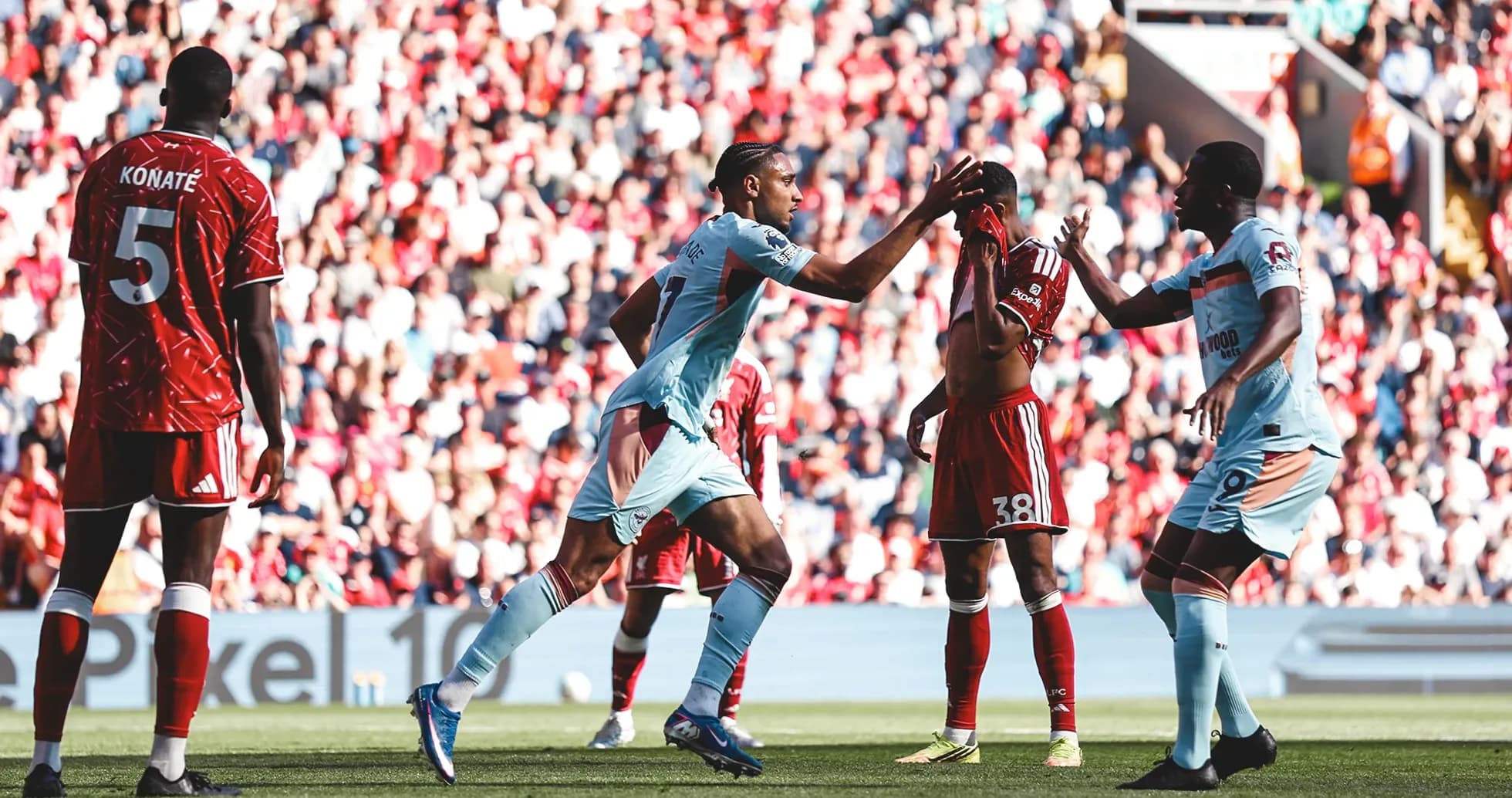
Liverpool and Brentford: Tactical Analysis of the 2025–26 Season Finale
Anfield’s final act of the 2025–26 Premier League season ended with a stalemate that said as much about Liverpool’s evolving identity under Arne Slot as it did about Brentford’s growing maturity. The 1–1 draw preserved Liverpool’s place in 5th on 60 points, with a goal difference of 10 after scoring 63 and conceding 53 in total. Brentford, meanwhile, closed out a quietly impressive campaign in 9th on 53 points, their total goal difference a tight 3 from 55 scored and 52 conceded overall.
Both sides arrived with the same structural idea – a 4‑2‑3‑1 – but very different seasonal DNA. Heading into this game, Liverpool at home had been a front‑foot side: 34 goals for and 20 against at Anfield, averaging 1.8 goals for and 1.1 against at home. Brentford on their travels were more cautious and opportunistic, with 22 away goals for and 31 against, averaging 1.2 goals scored and 1.6 conceded away.
Over 90 minutes, that statistical backdrop played out in microcosm: Liverpool carrying more of the initiative, Brentford absorbing, countering, and trusting the ruthless edge of Igor Thiago.
Tactical Voids and Selection Choices
The absentees shaped the tone before a ball was kicked. Liverpool were without S. Bajcetic (hamstring), C. Bradley (knee), H. Ekitike (Achilles), and G. Leoni (knee). The loss of Ekitike, an 11‑goal contributor in total this season, removed a vertical, penalty‑box presence from Slot’s bench. It forced a more fluid, interchanging front line with Cody Gakpo as the nominal striker and Mohamed Salah, Dominik Szoboszlai and the young R. Ngumoha rotating behind him.
For Brentford, F. Carvalho (knee), R. Henry (hamstring) and A. Milambo (knee) were missing. Henry’s absence, in particular, nudged Keith Andrews into a slightly improvised back four, with K. Lewis‑Potter operating as a left‑back. That choice underlined Brentford’s willingness to suffer without the ball but still have an aggressive outlet from deep.
Discipline across the season framed the emotional undercurrent. Liverpool’s yellow cards peaked late, with 31.58% of their bookings coming between 76–90 minutes, hinting at a side that often lives on the edge as matches stretch. Their only red card in the league came in the 91–105 minute window, a late‑game flashpoint that underlines how emotionally charged their finales can be.
Brentford, too, are no strangers to late‑game tension. In total, 26.09% of their yellow cards arrived in the 76–90 minute range, with another 21.74% between 61–75. Their single red card in the league came just before the interval, in the 31–45 minute band, a reminder that their high‑intensity transitions can sometimes spill over.
At Anfield, those trends produced a match that grew increasingly fractured as time ticked on, with both teams walking the disciplinary tightrope but ultimately keeping eleven on the pitch.
Key Matchups
The headline duel was always going to be Brentford’s leading scorer Igor Thiago against Liverpool’s defensive axis of Virgil van Dijk and Ibrahima Konaté. Thiago’s season has been devastating: 22 goals in total, 67 shots with 43 on target, and a penalty record of 8 scored from 9, having missed once. He thrives on minimal service, making the most of his 524 total duels, winning 202, and using his 191‑centimetre frame to pin centre‑backs and create chaos.
Against him, Liverpool’s “shield” was not just the centre‑backs but the entire home defensive record at Anfield: only 20 goals conceded at home in total, with 5 clean sheets. Slot’s 4‑2‑3‑1 – used 34 times this season – depends on the double pivot, here A. Mac Allister and R. Gravenberch, to screen space and prevent direct service into the striker. The battle became a question of whether Liverpool could compress the central lanes enough to starve Thiago, or whether Brentford could engineer the one or two clean looks he usually needs.
The creative nexus for Liverpool ran through Szoboszlai and Salah. Szoboszlai’s season has been that of a true conductor: 7.19 average rating, 2,184 passes in total at 87% accuracy, 78 key passes and 6 goals with 7 assists. He also does the dirty work – 55 tackles, 8 blocked shots and 30 interceptions – making him both architect and enforcer in midfield.
Salah, listed as a midfielder here, remains the primary chaos agent between the lines. In total he produced 7 goals and 7 assists, with 49 key passes and 45 shots (19 on target). His presence on the right of the three behind Gakpo stretched Brentford’s back four horizontally, constantly asking M. Kayode and S. van den Berg to choose between stepping out or holding the line.
For Brentford, the counterweight in the engine room was the double pivot of J. Henderson and V. Janelt. Henderson’s role was to dictate tempo and help Brentford play through Liverpool’s first press, while Janelt’s task was to track runners like Szoboszlai and Mac Allister, limiting their ability to receive on the half‑turn.
On the flanks, K. Schade offered Brentford’s vertical thrust. His season numbers – 8 goals, 3 assists, 75 dribbles attempted with 20 successful, and 429 total duels with 188 won – paint a picture of a winger who lives in one‑v‑one scenarios. He also brings an edge: 6 yellow cards and 1 red in total, plus 2 penalties won, one of which he failed to convert, having missed from the spot once. His duel with Andrew Robertson on Liverpool’s left was a pure footrace between aggression and control.
Statistical Prognosis and Tactical Verdict
Following this result, the numbers reaffirm each side’s trajectory. Liverpool’s overall scoring rate of 1.7 goals per game in total, combined with 1.4 conceded, underlines a side that can overwhelm but is rarely watertight. Brentford’s total averages of 1.4 goals scored and 1.4 conceded speak to balance: they rarely blow teams away, but they stay in games long enough for Thiago’s efficiency to matter.
Liverpool’s 10 clean sheets overall and 4 total games failing to score suggest a high floor – they usually create enough to find a breakthrough, especially at Anfield. Brentford’s 10 clean sheets and 12 total games failing to score show a more volatile attacking profile, but when Thiago and Schade connect in transition, they are lethal.
In xG terms – even without explicit figures – the patterns hint at Liverpool generating the higher volume of chances, driven by Szoboszlai’s supply and Salah’s shot profile, while Brentford lean on the quality rather than quantity of their looks, funnelling attacks into Thiago’s feet or onto Schade’s runs.
Tactically, the 1–1 feels like the equilibrium point between Liverpool’s territorial dominance and Brentford’s ruthless punch. The home side’s late‑game card tendencies and emotional surges were present but controlled; Brentford’s willingness to defend deep and trust their striker again paid dividends.
As the curtain falls on the season, Liverpool leave Anfield knowing their structure and attacking patterns are in place but that defensive refinement – especially in managing transitions – will dictate whether they can turn a strong 5th‑place platform into a title challenge. Brentford depart with the satisfaction of a top‑half finish, a 22‑goal centre‑forward, and a tactical blueprint that travels well: compact, disciplined, and always ready to let the hunter loose against even the biggest shields.