Ronald Araujo Joins Liverpool on Loan: A Fresh Start
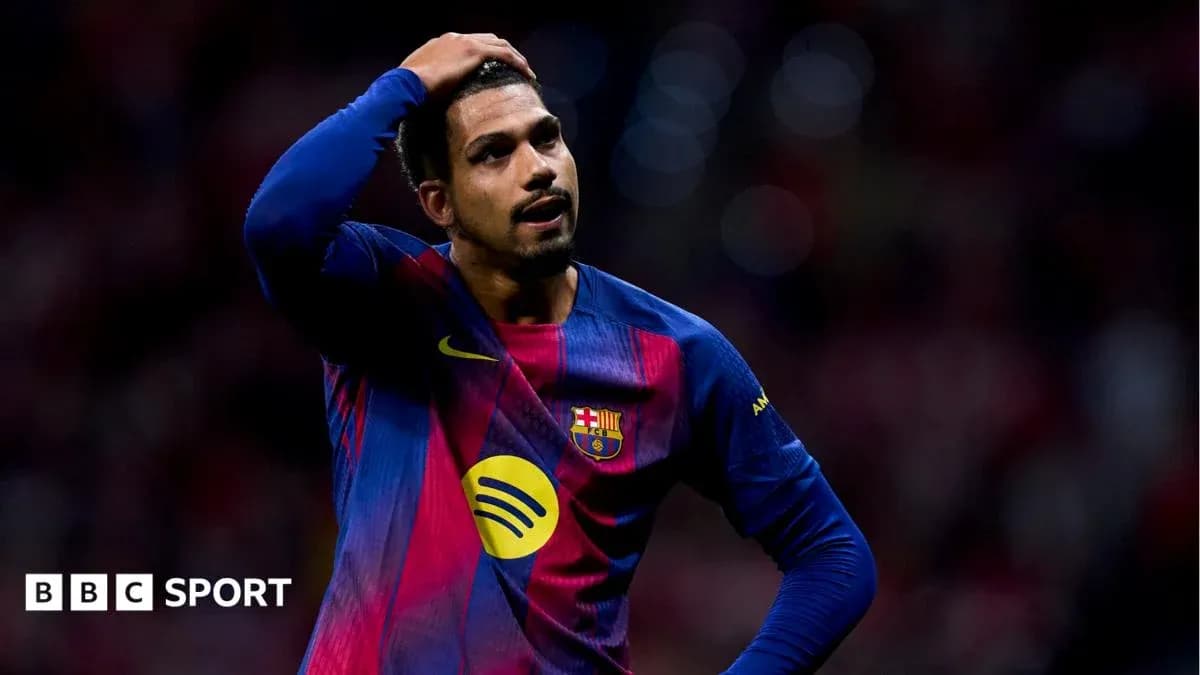
Ronald Araujo stepped off the plane on Merseyside carrying more than just a suitcase. He arrived with a reputation to repair, a point to prove and a Liverpool back line to stabilise.
The Barcelona captain has joined Liverpool on a season-long loan, a deal that includes an option to buy for 55m euros (£47.1m). For Liverpool, it is a calculated move to plug a glaring hole. For Araujo, it is a hard reset.
A short-term fix with long-term consequences
This is not a romantic, open-ended commitment. The structure of the agreement screams urgency. Liverpool have paid for a solution to a problem that could derail their season before it starts, without tying themselves to a defender for the next five years.
They will cover Araujo’s salary in full, with the Uruguay international accepting a pay cut to make the move happen. If it works, the option to buy is there. If it does not, they walk away.
The need is obvious. Ibrahima Konate has gone to Real Madrid. Conor Bradley, Joe Gomez and Giovanni Leoni are all injured. New signing Jeremy Jacquet has yet to kick a ball in pre-season. That leaves Virgil van Dijk as Liverpool’s only fit senior centre-back.
You do not compete for a Premier League title with one senior centre-back.
New head coach Andoni Iraola knew it. He gave the green light last week, spoke directly to Araujo on the phone and pushed the club towards a defender who can operate both at centre-back and right-back. In a squad suddenly stripped of defensive depth, versatility is not a luxury. It is essential.
Araujo the profile, not just the name
At Barcelona, Araujo became the prototype for the modern power defender. At 6ft 4in (1.93m), he dominated in the air, but it was his acceleration that allowed Barça to live on the edge with a high line. When others were caught square, he chased danger down.
Liverpool have built their recent success on similar principles. A high defensive line, aggressive pressing, defenders exposed in wide spaces. Araujo has lived that life at Camp Nou, for better and for worse.
He joined Barcelona from Uruguay in 2018, made his first-team debut the following year and went on to play more than 200 times for the club. Last season he wore the armband, making 38 appearances under Hansi Flick in the 2025-26 campaign.
Flick, speaking recently, captured the contradiction that has followed Araujo in Catalonia.
“He is a very good person and an exceptional player, but our style of play is slightly different,” the Barcelona coach said. “He is a footballer with great speed and power, and he is good with the ball at his feet, too. I wanted to get him involved; I think he is eager to try new things, and I believe he has also been affected by what happened in the past.
“I said goodbye to him this morning and saw that he was happy. Liverpool is a great club, and I wish him the best. You have to accept it.”
The scars of Europe
“The past” is not a vague concept in Araujo’s case. It is a catalogue of Champions League nights that turned on his mistakes.
The red card against Paris St-Germain in the 2024 quarter-finals became one of the defining moments of his Barcelona career, his dismissal swinging the tie towards PSG. A year later, in the 2025 semi-final second leg against Inter, he again found himself at the centre of the storm, heavily criticised for errors that contributed to Barça’s exit. Flick publicly defended him, but the damage to his confidence was clear.
Then came Chelsea away in last season’s Champions League. Another big stage, another low point. Araujo was sent off just before half-time, dismissed for a second yellow after a foul on Marc Cucurella in a 3-0 defeat.
A week later, Barcelona granted him a leave of absence to focus on his mental health. He received professional support and treatment to “take care of himself emotionally”, a rare and revealing admission in elite football. He returned a month on, playing 23 times in the second half of the season, starting six matches as he tried to rebuild both rhythm and belief.
Those scars travel with him to Anfield. So does the resilience required to come back from them.
Barcelona’s gain, Liverpool’s gamble
For Barcelona, the logic is brutally simple. Araujo is one of their highest earners. Liverpool are paying his full salary for the season. Even as a loan, that represents a significant financial release for a club still wrestling with long-term economic strain.
They also retain the possibility of a sizeable sale if Liverpool trigger the 55m-euro option. In a market where centre-backs of Araujo’s profile command a premium, the numbers make sense.
Liverpool, though, are not acting from a position of panic alone. Inside the club, there remains strong belief in their crop of young centre-backs. Jacquet, Leoni, Mor Talla Ndiaye and Ifeanyi Ndukwe are all viewed as players for the coming years. But youth needs a buffer. Araujo, with his experience, leadership and physical dominance, is that buffer.
He will wear the number 33 shirt, a fresh number at a club that has often embraced defenders with something to prove.
A fresh start on a demanding stage
Anfield can be unforgiving, but it can also be transformative. Araujo arrives not as a fading star, but as a 27-year-old defender still close to his physical peak, stepping into a league that will test every aspect of his game.
Liverpool need him to steady a defence stripped bare by injuries and departures. He needs Liverpool to remind the rest of Europe why he was once regarded as one of the most complete defenders on the continent.
This is not a quiet move in the shadows. It is a season-long audition, under the floodlights, in a league that exposes weakness and rewards conviction.
If Araujo can turn those painful European memories into fuel, the next chapter of his career might not be about what went wrong in Barcelona, but what he rebuilds on Merseyside.