Louisville City vs Tampa Bay Rowdies: A Tactical Showdown
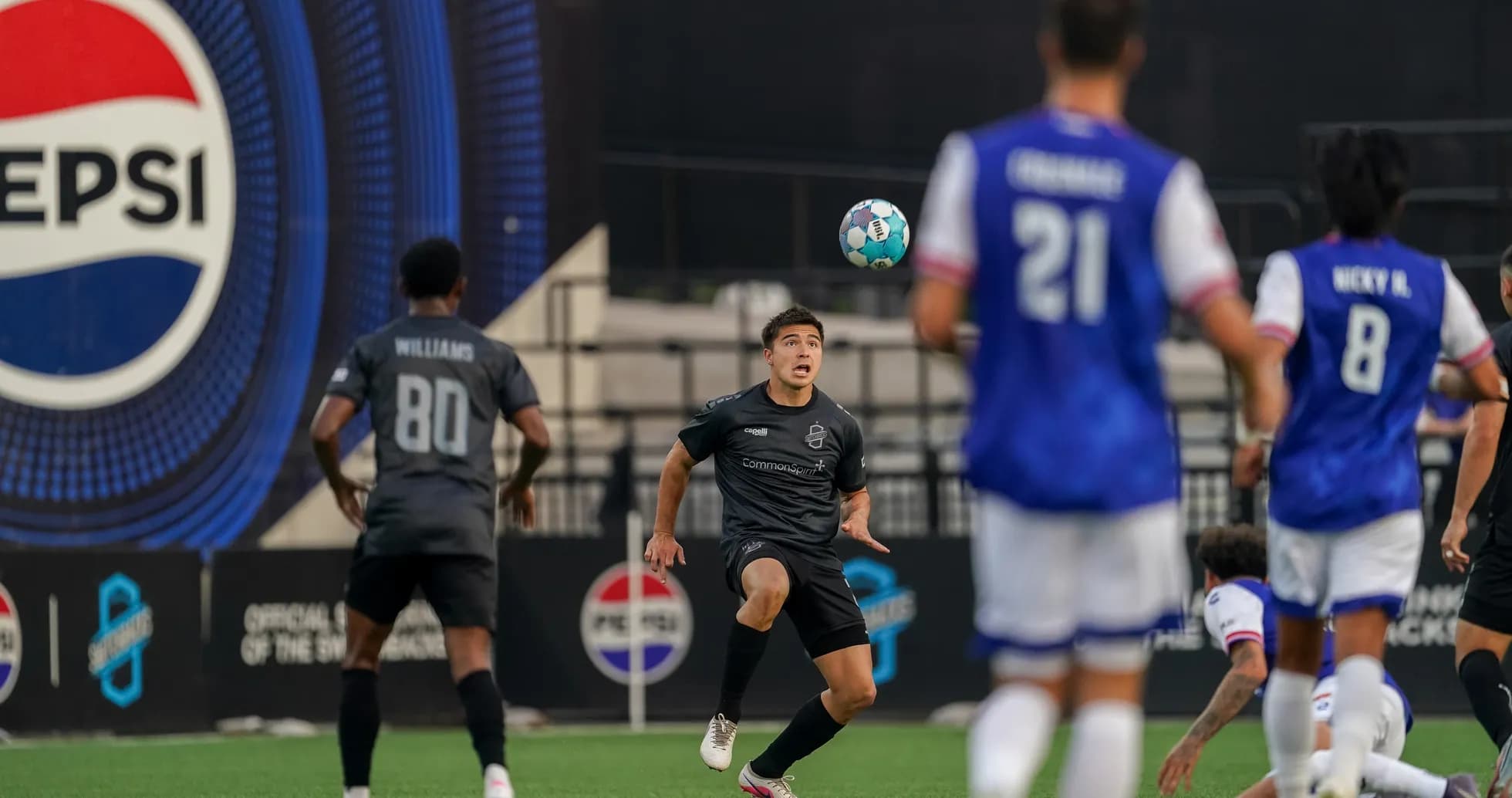
Under the Lynn Family Stadium lights, this USL Championship group-stage meeting felt less like a routine league date and more like an early play-off stress test. Following this result, the table tells a stark story: Louisville City, 6th in USL 1 with 16 points and a goal difference of 0 (19 scored, 19 conceded overall), were methodically unpicked 2-0 by a Tampa Bay Rowdies side that sits top of the section on 27 points, boasting a goal difference of 14 (19 for, 5 against overall) and still unbeaten after 11 matches.
I. The Big Picture – clash of identities
Heading into this game, Louisville’s seasonal DNA was that of volatility. Overall they had 5 wins, 1 draw and 5 defeats from 11, with a perfectly balanced goals record: 19 scored and 19 conceded in total. At home, they were sharper in front of goal but no more secure at the back: 9 goals for and 9 against at Lynn Family Stadium across 6 matches, averaging 1.5 goals both scored and conceded at home. Their form line – “WWWWLDWLLLL” – captured a side that had already ridden a four-game winning streak and then crashed into a four-game losing run.
Tampa Bay arrived as the division’s metronome. Across 11 fixtures they had 8 wins and 3 draws, 0 defeats, with 19 goals scored and only 5 conceded overall. On their travels, the Rowdies had 4 wins and 2 draws from 6, scoring 7 and conceding just 2 away, an away average of 1.2 goals scored against 0.3 conceded. They were not blowing teams away on the road; they were suffocating them.
The 0-0 half-time scoreline suggested Louisville had survived the first wave. But over 90 minutes, Tampa Bay’s structural superiority and defensive calm turned into a controlled 2-0 away victory, perfectly in tune with their season-long profile.
II. Tactical voids and discipline
With no official absentees listed, both coaches could lean on their core groups. Simon Bird’s Louisville XI, with D. Faundez in goal and a defensive group fronted by S. Totsch, J. Jones, K. Adams and A. Dia, was built to be aggressive without the ball. The double presence of T. Davila and Z. Duncan in midfield hinted at a side prepared to step into tackles and compress space, with A. McFadden and M. Akale supporting the front pairing of C. Donovan and R. Serrano.
Louisville’s season-long card map backed that up. Heading into this game, their yellow cards were spread but with a clear second-half spike: 27.78% of their yellows came between 46-60 minutes and another 22.22% between 76-90 minutes. This is a team that tends to play on the disciplinary edge as legs tire and matches stretch.
Tampa Bay, under Dominic Casciato, mirrored that edge with more control. Their yellow-card distribution was heavily back-loaded: 25.81% of bookings arrived from 76-90 minutes, and 19.35% each in the 31-45 and 61-75 windows. The Rowdies can be cynical when needed, but they choose their moments, often using late fouls to break rhythm rather than as a by-product of chaos.
Referee N. Bensalah presided over a contest where both sides’ tendencies were clear: Louisville chasing, Tampa Bay containing and countering, with the visitors better at managing the emotional and disciplinary temperature of the game.
III. Key matchups – Hunter vs Shield, Engine Room
The “Hunter vs Shield” narrative revolved around Louisville’s attacking ambition at home against Tampa Bay’s away defensive steel. Heading into this game, Louisville averaged 1.5 goals scored at home, but they had also failed to score in 3 home fixtures overall – a worrying 50% of their home matches. That fragility met a Rowdies rearguard that had kept 7 clean sheets in total, including 4 away, conceding only 2 goals in 6 away games.
J. Waite, backed by a back line featuring D. Acoff, L. Wyke, B. Schaefer and N. Dossantos, formed a compact defensive unit that rarely allows clear looks at goal. In midfield, the presence of C. Ostrem and L. Perez ahead of that line gave Tampa Bay the option to step out and press without exposing the centre. The result on the night – a clean sheet and a 2-0 win – was a pure expression of that shield: Louisville’s front trio of Donovan, Serrano and Akale were forced into hopeful movements rather than structured chance creation.
In the “Engine Room”, Louisville leaned on the energy and distribution of T. Davila and Z. Duncan to set tempo, with A. McFadden offering width and defensive cover. But Tampa Bay’s central cluster of L. Perez, S. Cruz and Pedro Becker dictated the terms. Their season-long profile – 1.7 goals scored per game overall and only 0.5 conceded in total – is built on that midfield’s ability to both recycle possession and spring transitions.
M. Myers, leading the line for the Rowdies, was the spearhead of those transitions. Supported by M. Schneider’s movement and Pedro Becker’s forward thrusts, he constantly asked questions of Totsch and Jones. The 2-0 final score reflected not just individual quality but the cumulative effect of that front unit’s pressing and channel running.
IV. Statistical prognosis – xG story in disguise
Even without explicit xG numbers, the season data frames the expected pattern. Heading into this game, Louisville’s overall averages of 1.7 goals for and 1.7 against per match suggested open, high-variance football. Tampa Bay’s 1.7 goals for and 0.5 against overall pointed to a side that consistently wins the xG battle through defensive restriction rather than sheer attacking volume.
On their travels, the Rowdies’ 1.2 goals scored and 0.3 conceded away implied that a single away goal often feels decisive. Add Louisville’s tendency to concede 1.5 at home and to fail to score in half of their home outings, and a narrow Rowdies win with a clean sheet was always the statistical favourite. The 2-0 margin simply underlined Tampa Bay’s capacity to punish when the game state tilts in their favour.
Following this result, the tactical lesson is clear for Louisville: their current balance – aggressive, streaky, and defensively porous – is ill-suited to top-tier, play-off calibre opponents like Tampa Bay. For the Rowdies, this was another away performance perfectly in character: measured tempo, ruthless efficiency, and a defensive structure that quietly strangles games long before the final whistle.