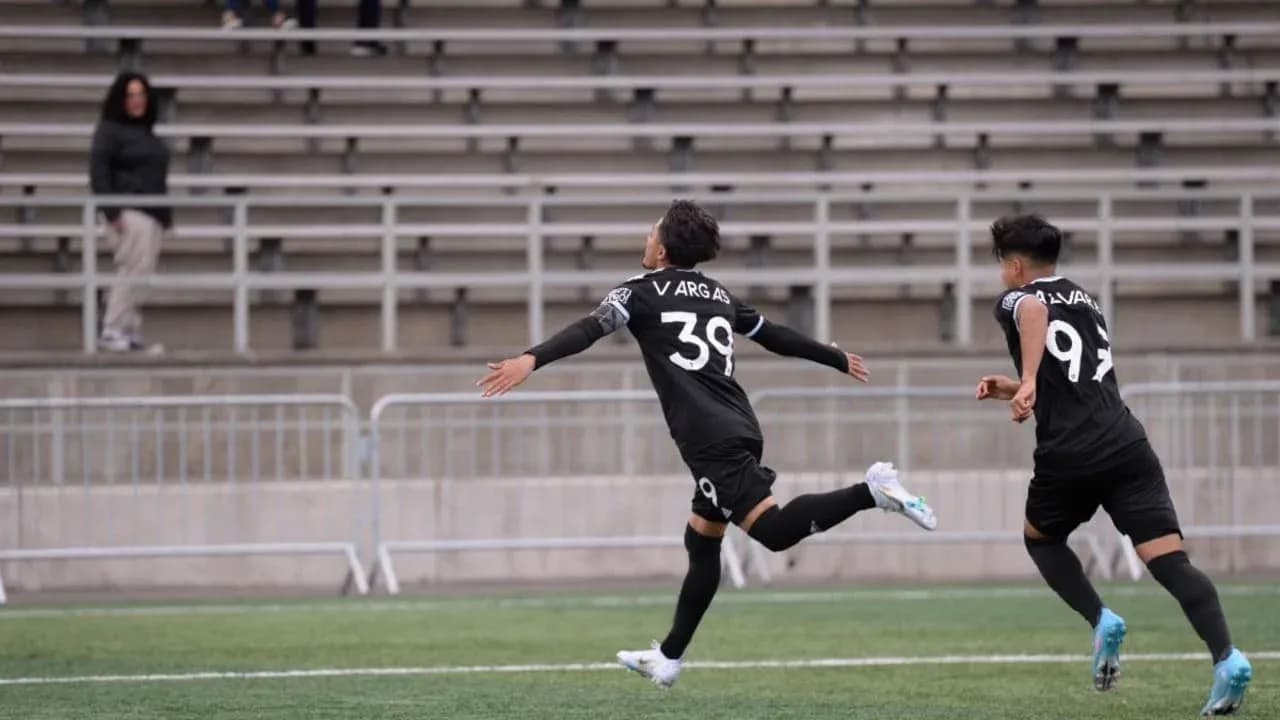
Minnesota United II vs North Texas: A Tactical Battle at Allianz Field
Under the lights at Allianz Field, Minnesota United II’s free‑wheeling, boom‑or‑bust season ran into a North Texas side that has quietly been sharpening its edges. Following this result, a 2–0 away win for North Texas, both clubs remain locked on 14 points in MLS Next Pro, but the trajectories and tactical identities feel very different.
Minnesota United II sit 4th in the Frontier Division and 7th in the Eastern Conference, a promotion play‑off spot built on volatility. Overall they have 5 wins and 4 losses from 9 league matches, with 10 goals scored and 11 conceded for a goal difference of -1. They simply do not draw games, and that all‑or‑nothing streak is underlined by a form line of WLLWLWWWL. At home they are efficient but conservative: 3 matches, 2 wins and 1 loss, with just 2 goals scored and 2 conceded. On their travels they are more expansive and exposed, with 8 goals for and 9 against across 6 away fixtures.
North Texas arrive as a mirror image in some ways. They are 5th in the Frontier Division and 8th in the Eastern Conference, also in the promotion play‑off band, with 5 wins and 5 losses from 10 matches. Overall they have scored 17 and conceded 15, a goal difference of +2 that reflects a more positive attacking tilt. At home they average 2.0 goals for and 1.7 against; away they still carry threat, with 11 goals scored and 10 conceded in 7 road games, an average of 1.6 goals for and 1.4 against away from home.
This fixture itself, a group‑stage league battle rather than a knockout 1/8 final, nevertheless carried that elimination‑game edge. North Texas struck twice before the interval and then managed the contest, leaning on a structure that has been honed through a run of LWLLWWWLLW. Minnesota, whose biggest home win in total this campaign is only 1–0 and whose heaviest home defeat is 0–2, once again found themselves on the wrong side of that narrow margin.
The tactical voids on the night were less about absences and more about profiles. Minnesota’s lineup, with K. Rizvanovich, P. Tarnue, N. Dang and J. Farris forming the spine from back to front, was light on proven home firepower. In total this campaign, they average only 0.7 goals for at home, while conceding 0.7; their attack at Allianz Field is built on fine margins and set‑piece scraps rather than sustained waves. When they fall behind, there is little historical evidence of them blowing games open.
North Texas, by contrast, spread their threat across the XI. The starting group of N. Montoya, E. Newman, S. Starnes and Alvaro Augusto at the back, with T. Ospina, I. Charles and R. Louis linking into the creative band of E. Nys, D. Garcia and N. James, gave John Gall a balanced platform. On their travels, North Texas have already scored 11 times, and their biggest away win overall is a 4–1 scoreline, proof that they can turn control into goals when the spaces appear.
Disciplinary trends added another layer. Heading into this game, Minnesota’s yellow cards were heavily clustered late in halves: 27.78% of their cautions came between 31–45 minutes and another 27.78% between 76–90, with a further 22.22% in the 61–75 window. That pattern hints at a young side that over‑commits when chasing games or tiring. North Texas, meanwhile, show an early‑half spike: 29.17% of their yellows arrive between 16–30 minutes, with 16.67% in each of the 31–45, 46–60 and 76–90 ranges. They press with aggression early, risking cards to set the tone, and their red‑card profile — one each in the 46–60, 61–75 and 91–105 ranges — underlines a combustible streak when intensity and fatigue intersect.
Within that context, the “Hunter vs Shield” duel tilted toward the visitors. North Texas’ attack, averaging 1.7 goals per game overall, ran into a Minnesota defence that concedes 1.2 in total this campaign. At Allianz Field, Minnesota’s back line has been relatively secure, allowing just 2 goals in 3 home matches, but the lack of attacking punch means that conceding first is almost fatal. North Texas’ forward line, with N. James’ movement and D. Garcia’s link play supported by the creativity of E. Nys, repeatedly asked questions of a Minnesota side that is used to defending one‑goal leads, not chasing two‑goal deficits.
In the “Engine Room”, the battle was between Minnesota’s central trio — with L. Pechota and S. Vigilante offering legs around the more experienced D. Randell — and the North Texas midfield axis of T. Ospina and I. Charles. Minnesota’s season numbers show a team that can control games in spells: they have 3 clean sheets overall and have failed to score 3 times, suggesting matches often hinge on whether their midfield can impose tempo. North Texas, with only 1 clean sheet but 17 goals scored, are more comfortable in broken, transitional contests. On this night, the visitors’ engine room won the duels that mattered, turning turnovers into direct attacks and pinning Minnesota’s full‑backs, P. Tarnue and J. Bernard, deeper than they would have liked.
Looking ahead, the statistical prognosis for both sides is clear. Minnesota United II’s total averages of 1.1 goals for and 1.2 against, combined with their streaky WLLWLWWWL form, point to a side whose xG profile is likely narrow in both directions: they do not create a flood of chances, but they also rarely collapse. To climb from 7th in the Eastern Conference play‑off line, they must either raise their home attacking output above 0.7 goals per game or lean even harder into their defensive solidity and game‑state management.
North Texas, with 1.7 goals scored and 1.5 conceded in total this campaign, project as a high‑variance, high‑ceiling outfit. Their ability to win 4–1 away, yet also lose 2–0 on their travels, suggests an xG curve that swings with their pressing success and discipline. If they can smooth out the disciplinary spikes that see 29.17% of their yellows in the 16–30 window and maintain control in the 46–75 band where their red cards cluster, their attacking structure — exemplified here by the interplay between E. Nys, D. Garcia and N. James — gives them the tools to be more than just a dangerous outsider in the promotion race.
Following this result at Allianz Field, Minnesota United II are reminded that defensive parsimony alone will not be enough in a league where North Texas and others are happy to trade blows. For the visitors, the 2–0 win is less a surprise and more a confirmation: when their front six clicks and the back line anchored by N. Montoya and S. Starnes holds firm, their numbers suggest they belong in the heart of the play‑off conversation, not merely on its fringes.