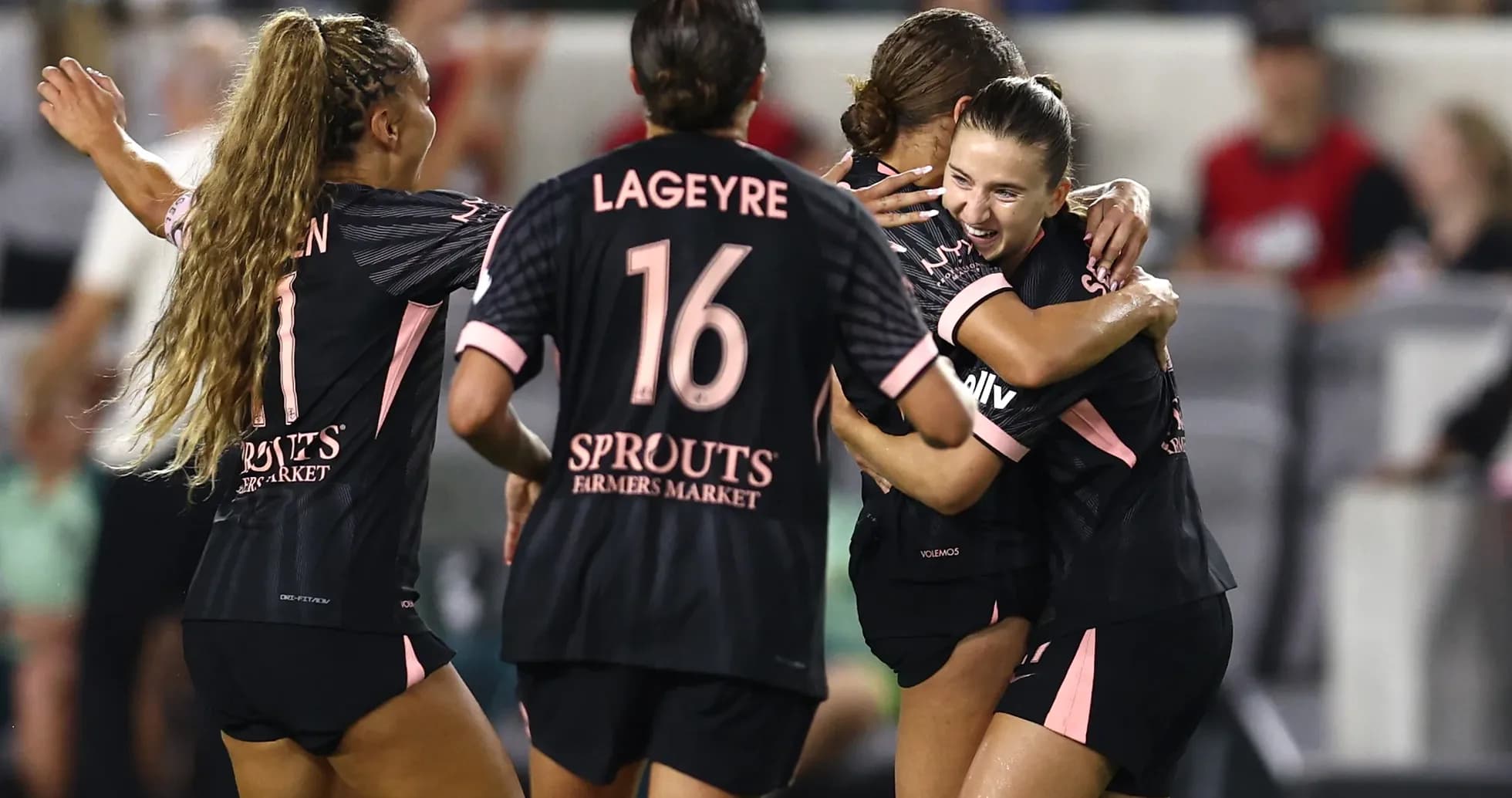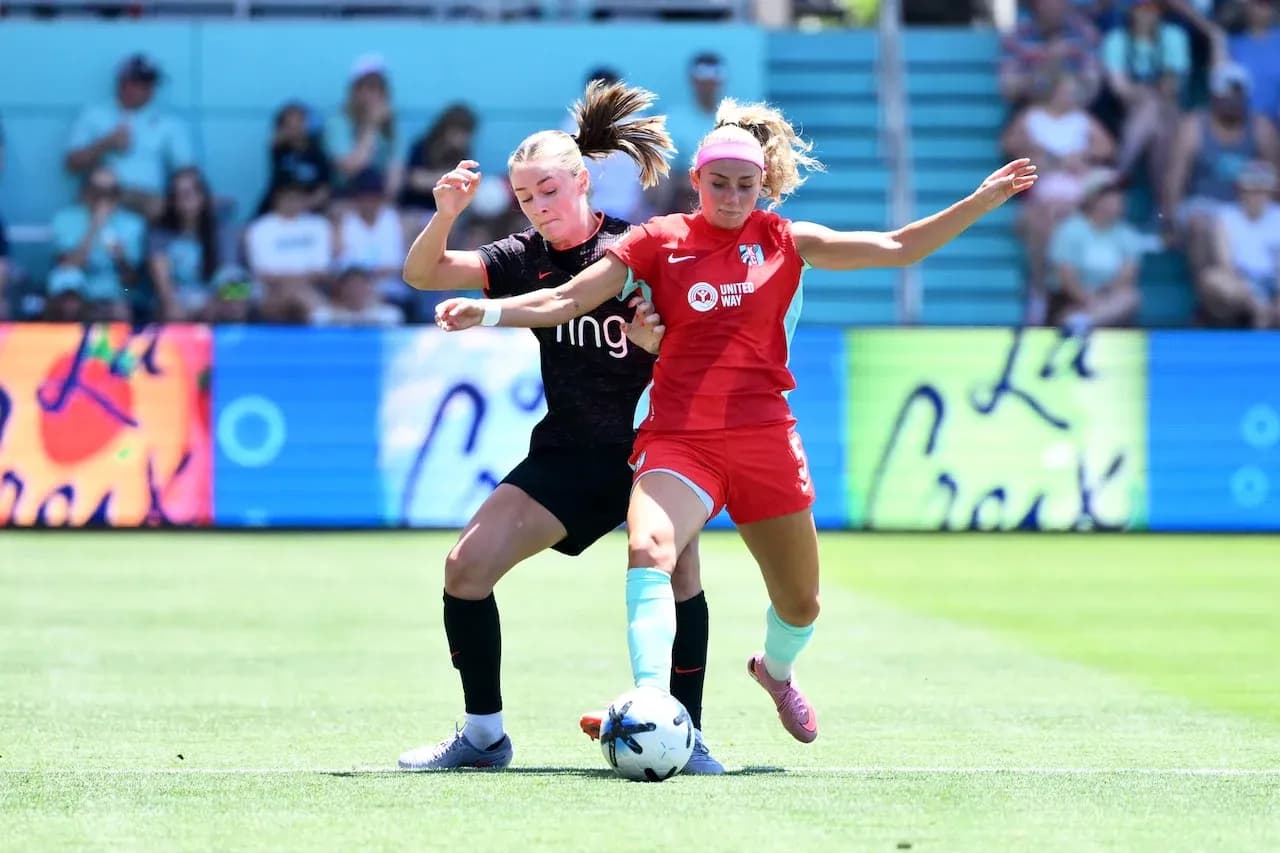
Kansas City W Defeats Portland Thorns W 3–1 in Statement Win
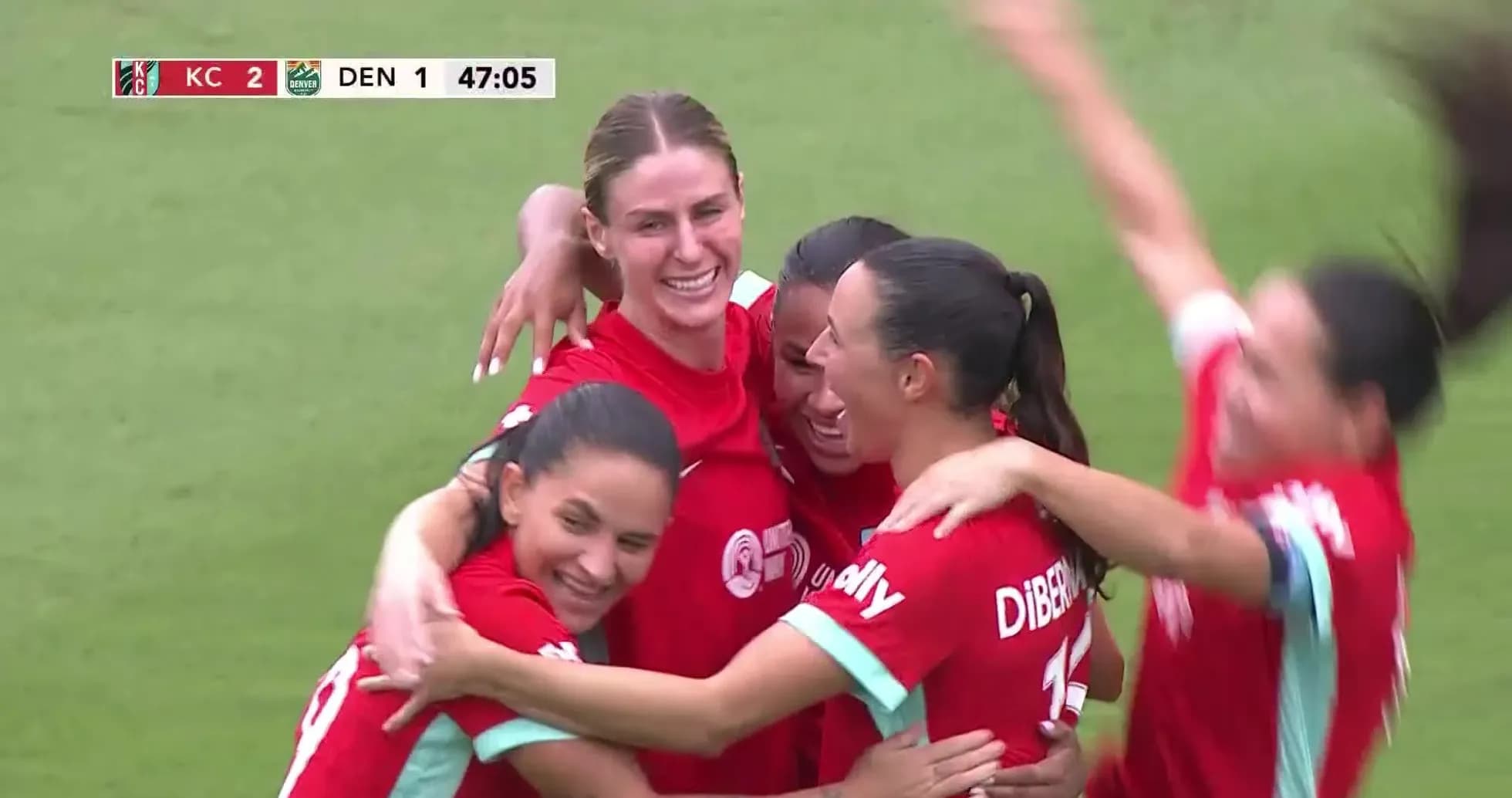
Under the late-afternoon light at CPKC Stadium, Kansas City W turned a meeting of contrasting NWSL identities into a statement win, beating Portland Thorns W 3–1 and bending the Group Stage narrative in their favour.
I. The Big Picture – Fortress vs Contender
Following this result, the table tells a compelling story. Kansas City sit 6th on 18 points after 11 matches, their overall goal difference locked at 0 from 17 goals scored and 17 conceded. The pattern is stark: at home they have been perfect, with 5 wins from 5, scoring 13 and conceding just 3. That is an attacking average at home of 2.6 goals per game against only 0.6 conceded.
Portland arrive from a different angle. They remain 2nd on 23 points from 12 matches, with a total goal difference of +6 (18 scored, 12 conceded). Their season has been built on defensive control at home – 5 clean sheets in 5, no goals conceded – but on their travels they have been more human: 3 wins, 1 draw, 3 defeats, with 10 goals for and 12 against, an away average of 1.4 scored and 1.7 conceded.
This match, then, was the league’s most ruthless home side against a top-two contender whose only real vulnerability appears away from Portland. Over 90 minutes, Kansas City leaned into that split personality of the Thorns and never let go.
II. Tactical Voids and Disciplinary Undercurrents
There were no listed absentees, so both coaches could lean into their preferred shapes and personnel. Chris Armas stayed faithful to Kansas City’s season-long template, rolling out the 4-2-3-1 that has started 8 of their 11 league games. Lorena in goal, a back four of I. Rodriguez, K. Sharples, G. Robinson and E. Bravo-Young, a double pivot anchored by L. LaBonta and B. Feist, and a fluid attacking line of M. Cooper, Croix Bethune and T. Chawinga behind A. Sentnor.
Robert Vilahamn mirrored the system with his own 4-2-3-1: M. Arnold in goal; a back line of M. Vignola, S. Hiatt, C. Calzada and R. Reyes; C. Bogere and J. Fleming as the double pivot; and an attacking trio of M. Muller, P. Tordin and R. Turner behind S. Wilson.
The disciplinary profiles of both squads subtly framed the risk landscape. Heading into this game, Kansas City’s yellow-card distribution showed a clear first-half edge: 37.50% of their cautions arriving between 31–45 minutes and 25.00% in the opening 15. They are a side that ramps up aggression as the half wears on. Yet crucially, they had no red cards at all this season.
Portland, by contrast, carried heavier disciplinary baggage. Their yellows are spread, but 27.27% land in the 76–90 minute window, a late-game spike that hints at fatigue or frustration. More concerning are their reds: one in the opening 0–15 minutes and another between 46–60. That record is embodied by two starters here. R. Reyes has already been sent off once this season, while C. Bogere’s card log includes a yellow and a yellow-red combination. Vilahamn’s double pivot, so essential to his structure, walks a fine line between control and chaos.
III. Key Matchups – Hunter vs Shield, Engine Room Battles
Hunter vs Shield was written across the flanks and half-spaces. For Kansas City, T. Chawinga arrived as one of the league’s deadliest weapons: 6 goals and 2 assists in just 7 appearances, with 10 shots and 6 on target. She is not just a scorer but a direct runner and creator, with 13 dribble attempts and 7 successes. Her presence on the left side of the three behind Sentnor posed a constant threat to Portland’s right, where R. Reyes and C. Bogere were tasked with containment.
The numbers suggested that if Chawinga could isolate Reyes, Kansas City would find joy. Reyes is a solid defender – 15 tackles, 6 successful blocks, 11 interceptions and 38 duels won – but her single red card and 7 fouls committed underline a tendency to make high-stakes challenges. Against a dribbler of Chawinga’s profile, that is a dangerous equation.
Portland’s counterpunch came through a cluster of attacking talent. S. Wilson led the line, but the real creative and scoring weight came from the second line: R. Turner, P. Tordin and, from the bench, the league’s standout playmaker O. Moultrie. Turner’s 4 goals, 96 duels and 58 duels won paint her as a two-way menace, capable of pressing high and arriving late in the box. Tordin, with 3 goals and 4 assists, is a hybrid wide forward and creator, drawing 13 fouls and winning 49 duels. Moultrie, with 4 goals, 4 assists and 24 key passes, is the conductor, and her 4 blocked shots underline how much defensive work she also puts in.
Opposite them, Kansas City’s “engine room” of LaBonta, Feist, Cooper and Bethune had to manage tempo and transitions. Cooper and Bethune are both in the league’s top bracket for assists, each with 3. Cooper’s 10 key passes and 9 successful dribbles, and Bethune’s 12 key passes and 21 successful dribbles, give Kansas City multiple ball carriers between the lines. That variety is what allows Chawinga and Sentnor to make more vertical runs without the team losing its structure.
IV. Statistical Prognosis – Why the Game Tilted
Even without explicit xG numbers, the season data sketches the underlying story of this 3–1 home win. Kansas City’s home attacking average of 2.6 goals per match against Portland’s away defensive average of 1.7 conceded sets an expectation of Kansas City generating more and better chances. Portland’s total defensive record (1.0 goals against per game overall) is strong, but it is heavily inflated by those perfect home clean sheets; on their travels, they are far more porous.
On the other side, Portland’s away attack at 1.4 goals per game was always likely to test a Kansas City defence that, at home, concedes just 0.6. That balance – a high-output home attack against a leaky away defence, and a stingy home defence against a good but not overwhelming away attack – points to Kansas City creating the higher xG profile and Portland needing near-perfect finishing to keep pace.
Discipline and late-game trends also matter. Portland’s 27.27% share of yellows in the final 15 minutes suggests that when chasing games on the road, they become stretched and reactive. Kansas City, by contrast, have shared their cautions more evenly, with no red cards to disrupt their rhythm. Over 90 minutes, that composure likely preserved their structure while Portland’s risk profile rose.
In narrative terms, this 3–1 feels less like an upset and more like the logical intersection of two season-long arcs. Kansas City’s perfect home record, diverse creative core and a ruthless finisher in Chawinga met a Portland side whose excellence has been anchored in home dominance, not road resilience. Following this result, the numbers and the story now align: CPKC Stadium is a fortress, and even a title-chasing Portland side can be made to look vulnerable inside it.