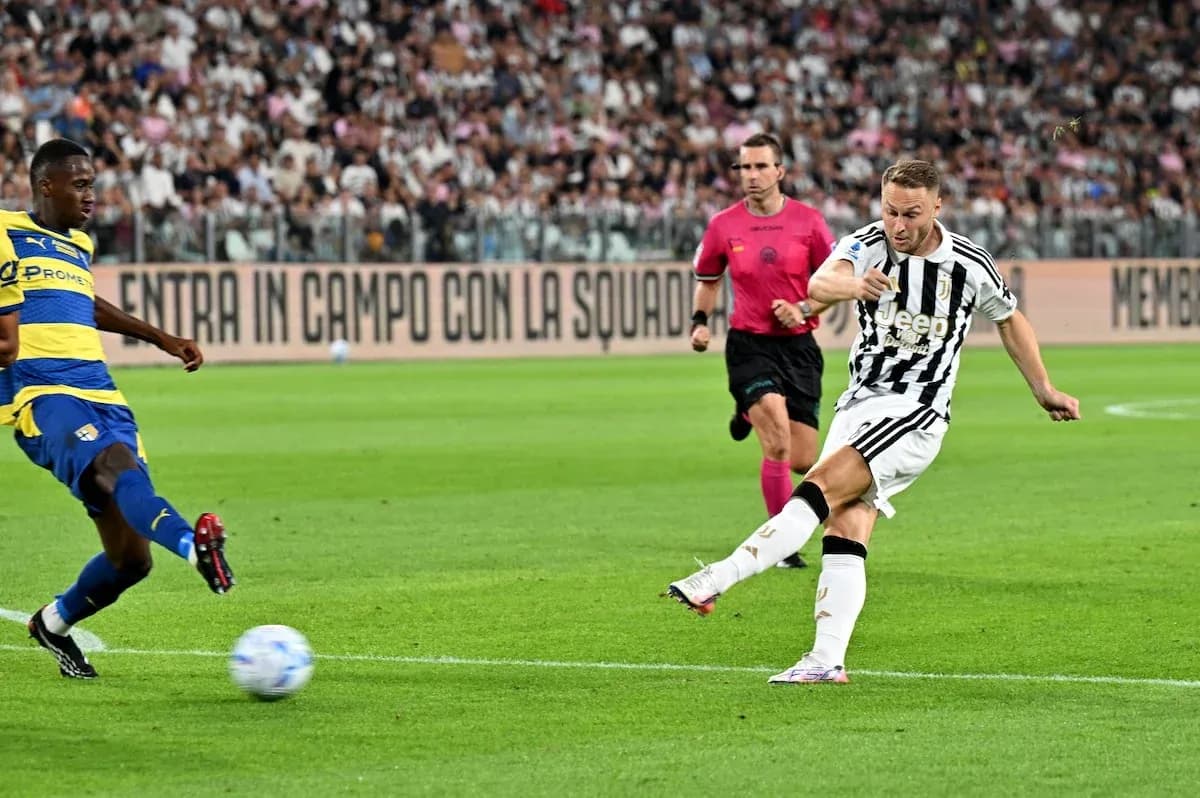
Juventus 2–0 Parma: A Tactical Analysis of Serie A Showdown
Under the Turin lights at Allianz Stadium, Juventus’ 2–0 victory over Parma felt less like an early-season skirmish and more like a manifesto. In Regular Season - 2 of Serie A, Luciano Spalletti’s side consolidated their status as early contenders, while Carlos Cuesta’s newly promoted visitors were reminded of the gulf that still separates survival projects from Champions League aspirants.
I. The Big Picture – Structure, control, and a clean defensive script
Heading into this game, Juventus were already purring: two wins from two, three goals scored overall and none conceded, with a goal difference of +3 (3 goals for, 0 against). At home they had been ruthless, averaging 2.0 goals scored and 0.0 conceded, and they reproduced that template almost to the letter here. The 4-4-2 Spalletti selected was a clear pivot from his earlier 4-2-3-1: a double-forward front line, true wingers, and a solid central pair.
Parma arrived in Turin with the opposite storyline. Two defeats from two, no goals scored overall and three conceded, their goal difference sitting at -3 (0 for, 3 against). On their travels they had already suffered a 2–0 defeat, and this night simply reinforced that pattern: away they average 0.0 goals for and 2.0 against, and Juventus never truly allowed them to rewrite that equation.
The defensive records told the tale before a ball was kicked. Juventus had kept clean sheets in both their matches overall, while Parma had failed to score in either of theirs. Once the whistle went, the patterns held: Guglielmo Vicario’s evening was about concentration more than heroics, while the Bianconeri’s back four managed the game with a calm, almost clinical detachment.
II. Tactical Voids – Who was missing, and how the teams adapted
Juventus entered this fixture without a cluster of creative and rotational options. Weston McKennie (muscle injury), Khephren Thuram (knee injury), Kenan Yildiz (foot injury), and Edon Zhegrova (muscle injury) were all ruled out. That stripped Spalletti of vertical runners from midfield and an extra dribbler between the lines, nudging him toward a more orthodox 4-4-2 rather than a fluid 4-2-3-1.
The response was telling: Manuel Locatelli and Douglas Luiz formed a disciplined central hinge, with Jeremie Boga and Francisco Conceição providing width. Without McKennie’s second-line surges or Thuram’s carrying from deep, Juventus leaned into structure and passing quality instead of chaos and overloads.
Parma’s only listed absentee was Hans Nicolussi Caviglia with a groin injury, but for a side already struggling to score, losing a technical midfielder who can connect phases is not trivial. Carlos Cuesta’s 4-4-2 here, after previously using a 4-3-3, suggested a more conservative approach: two banks of four, limited risk in build-up, and an emphasis on staying in the game rather than taking it to Juventus.
Discipline-wise, the season data painted contrasting emotional profiles. Juventus’ yellow cards have been distributed with 25.00% arriving in the opening 0–15 minutes and 25.00% in the 76–90 window, with a spike of 50.00% between 46–60 – a team that tackles aggressively right after half-time and again in the closing stretch. Parma’s cautions have been clustered late: 33.33% between 46–60, 33.33% from 76–90, and another 33.33% in stoppage time (91–105). That pattern fits a side often chasing games and arriving late into duels.
III. Key Matchups – Hunter vs shield, and the battle for midfield gravity
The front line of Randal Kolo Muani and Jonathan David gave Juventus a dual-threat axis that Parma struggled to contain. Even if neither is yet among the league’s top scorers, their movement was sharpened by the supply line behind them. With Juventus averaging 1.5 goals per game overall and Parma conceding 1.5 overall, the numbers already suggested that if the home side found rhythm, the visitors’ resistance would crack.
The true “hunter vs shield” duel, though, was structural: Juventus’ collective attack versus Parma’s central defensive pairing of Mariano Troilo and Dario Drobnic, flanked by Enrico Delprato and Enrico Valeri. Troilo, who has already blocked 2 shots and shown he can pass reliably (145 total passes with 91% accuracy), is Parma’s emerging anchor. Delprato, with 2 blocks and 3 interceptions this season, is another key piece. Yet against the layered threats of Kolo Muani, David, and the underlapping runs of Locatelli and Douglas Luiz, that shield was repeatedly stretched horizontally.
On the Juventus side, Locatelli has quietly become the league’s metronome. With 159 passes at 90% accuracy and 5 key passes overall, plus 7 interceptions and 2 tackles, he is both conductor and screen. Against Parma’s midfield, where Adrian Bernabé and Cristian Ordonez tried to stitch play together, Locatelli’s reading of passing lanes suffocated transitions before they could feed forwards El Bilal Touré and Simone Lontani.
Out wide, Francisco Conceição was the pure chaos agent. Across the season he has attempted 12 dribbles, succeeding with 6, while also producing 6 key passes and 1 assist. His ability to receive wide right, drive at Valeri, and then either slip passes inside or cut in to shoot added a dimension Parma simply could not mirror. On the opposite flank, Boga’s directness pinned back Delprato, limiting Parma’s capacity to build through their right side.
Defensively, Juventus’ full-backs were quietly decisive. Zeki Çelik, with 5 tackles and 5 interceptions overall, again played as an aggressive ball-winner on the right, stepping into midfield to compress Parma’s space and prevent them from launching counters through Keita or Britschgi. Pierre Kalulu balanced that on the other side with pace and recovery runs, ensuring that even when Parma tried to break, they rarely escaped the Juventus press.
IV. Statistical Prognosis – Why this script was always leaning Juventus’ way
Following this result, the numbers sharpen the narrative. Juventus remain perfect: 2 wins from 2, 3 goals scored, 0 conceded, and a goal difference of +3. Their home profile – 1 match, 2 goals scored, 0 conceded – matches this 2–0 win precisely. Parma, meanwhile, extend their bleak run: 2 defeats, 0 goals scored, 3 conceded overall, and away from home 2 goals conceded with no reply.
Neither side has taken a penalty this season, so there was no spot-kick volatility to skew the contest. Instead, this was about expected patterns: a home side that keeps clean sheets and averages 1.5 goals per match overall, against an away side that has yet to score and concedes 1.5 per match overall. Juventus’ defensive solidity, embodied by Vicario’s untroubled clean sheet and a back four that rarely allowed shots from prime zones, combined with a midfield that dominates both territory and tempo, made any upset highly unlikely.
In tactical terms, Spalletti’s Juventus look like a side built for the long haul: flexible in formation, anchored by a controlling six in Locatelli, enriched by a high-volume dribbler in Conceição, and protected by full-backs who defend forward rather than retreat. Parma, by contrast, are still searching for an attacking identity that can coexist with the defensive resilience they need to stay in Serie A. Until they find a way to turn Troilo’s composure and Bernabé’s technique into real chance creation for their forwards, nights like this in big stadiums will continue to follow the same script.