Golden Boot Race at the 2026 World Cup: Messi vs Mbappe
“Sometimes in football, you have to score goals.”
Thierry Henry tossed that line out in 2008. Eighteen years on, with four matches left at the 2026 World Cup, it feels less like a quip and more like a manifesto.
The trophy is the obsession for the four teams still alive. But running alongside the hunt for the World Cup is the race for the Golden Boot — a sprint that often breaks away from the path of the eventual champions. No winner has topped both podiums since 2002, when Ronaldo’s eight goals dragged Brazil to their fifth title.
Just Fontaine’s absurd 13-goal haul in 1958 still towers over the record books, a relic from another era. No one here will touch that. Yet with an expanded format — 16 extra teams, 40 extra matches compared to Qatar 2022 — this tournament has opened the floodgates. The numbers are swelling. The margins are thin. And the leading characters are exactly who you’d expect.
How the Golden Boot is decided
Since 1992, the tiebreak has been simple: if players finish level on goals, the one with the most assists walks away with the prize.
It mattered in 2010. David Villa, Diego Forlan and Wesley Sneijder all finished on five goals, the same as Thomas Muller. Muller took the Golden Boot because he created three goals, while the others managed just one each.
In 2006, another layer was added. If goals and assists are identical, the award goes to the player who needed the fewest minutes on the pitch to reach their tally. Ruthlessness, measured in time.
Messi vs Mbappe: a heavyweight duel
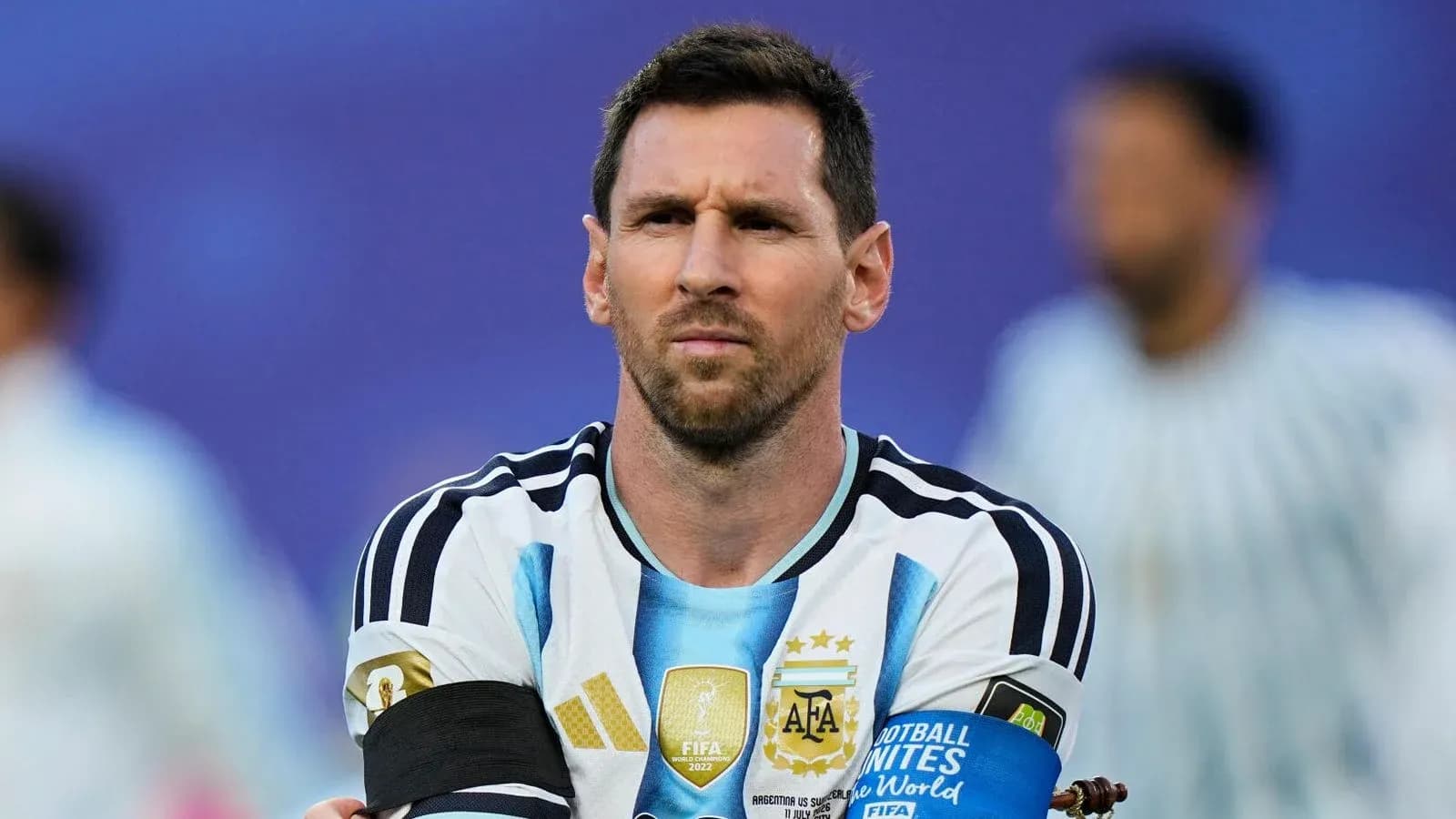
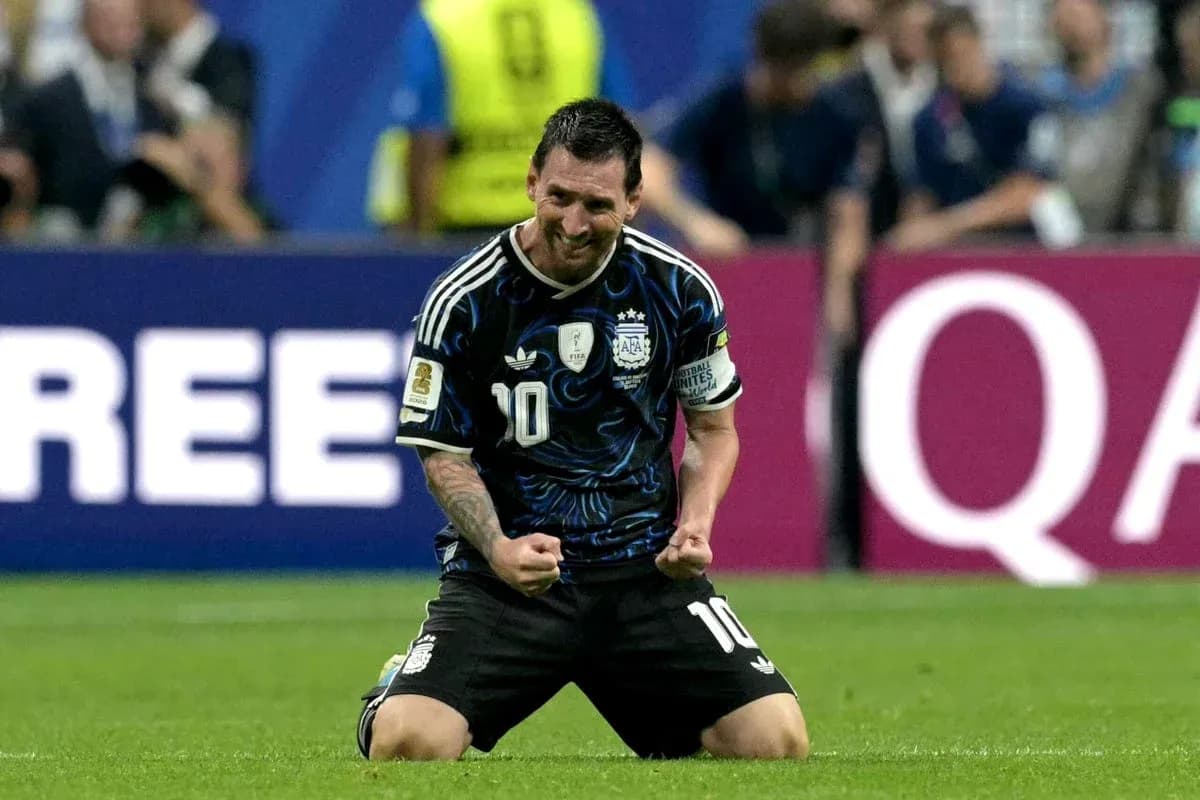
- Lionel Messi (Argentina) – 8 goals
(4 assists – 712 minutes)
Messi’s World Cup began with a false start. He thought he had opened his account against Algeria, only to see the flag go up for offside. No matter. When the ball came to him 20 yards out later in the first half, he shaped his body and whipped it in with familiar precision.
After the break, he pounced on a mistake. Luca Zidane spilled a low shot from Alexis Mac Allister and the Argentina captain, alive to everything, rolled in the rebound. The hat-trick goal was pure Messi: a curling effort from the edge of the box, passed into the far corner as if he were threading a ball to a teammate behind the net. Zidane had no chance.
His fourth arrived against Austria, only after he had already missed a penalty. Facundo Medina fizzed a pass into him and Messi, first time, guided it home. That finish pushed him clear as the men’s World Cup all-time top scorer. He wasn’t done. A scruffy, close-range effort late on against Austria made it five in two games, after his initial shot had been blocked.
He sat out the start of the final group match against Jordan, but the script still found him. With 10 minutes left, Messi bent in a trademark free kick to add another chapter to his World Cup story. Goal seven came in the round of 32 against Cape Verde, a cool finish in a pressure game. Goal eight? A dramatic late equaliser against Egypt in the following round, just when Argentina needed him to drag them back from the brink.
He leads on goals. He leads on assists. He has played more minutes than his main rival, but he remains the man everyone is chasing.
- Kylian Mbappe (France) – 8 goals
(3 assists – 666 minutes)
Mbappe’s tournament began like a warning shot. Two goals in a 3-1 win over Senegal, two reminders of his blend of timing, acceleration and cold finishing.
He struck again against Iraq, opening the scoring with a long-range drive. After a lengthy weather delay in Philadelphia, he returned to double France’s lead, as if someone had simply pressed play on a paused highlights reel.
Once the knockouts started, he kept swinging. Two fine strikes against Sweden in the round of 32. A penalty converted against Paraguay. Another goal in the quarter-final against Morocco, where his movement shredded the back line and his composure did the rest.
Spain finally stopped him in the semi-final. France went down 2-0, unable to breach a defence that closed every channel and smothered his space. That result locks Mbappe’s tally in place. His last chance to tilt the Golden Boot his way will come in the third-place play-off on Saturday.
Messi has the edge on assists. Mbappe has the advantage on minutes played. One more clinical evening from the France forward, though, and the equation changes again.
Haaland, Bellingham, Kane: the chasing pack
- Erling Haaland (Norway) – 7 goals*
(0 assists – 537 minutes)
Erling Haaland arrived at his first World Cup with the weight of expectation and the certainty of a man who scores against anyone, anywhere. He started by bullying Iraq in a 4-1 win.
His first goal was classic Haaland: a sliding finish from inside the six-yard box after David Moller Wolfe drilled a low cross in from the left. The second came from sheer pressure, as he closed down the goalkeeper and forced the ball over the line.
Against Senegal, he added his third with a calm, sweeping finish in the second half. He then volleyed in his fourth of the tournament with a clever, improvised effort, showing there is more to his game than raw power.
The fifth might be the one Norway talk about for years: a late, close-range winner against Ivory Coast in the round of 32, the decisive touch in a tight 2-1 victory.
Then came Brazil. Haaland scored twice in a statement win, his sixth and seventh of the tournament. The second, a surprise strike, underlined his knack for finding goals from unlikely situations.
Norway are out. Haaland’s tally is frozen at seven, with no assists to help him in any tiebreak. For now, he sits just behind the two global superstars at the top.
- Jude Bellingham (England) – 6 goals
(1 assist – 574 minutes)
Jude Bellingham has turned this World Cup into his own stage. A midfielder by trade, a finisher by instinct.
He scored in both of England’s group wins: first in the 4-2 victory over Croatia, then again in the controlled 2-0 against Panama. He timed his runs, attacked the box, and finished like a seasoned striker.
In the last 32 against Mexico, he went up a gear. Two goals, both carrying the authority of a player who believes this is his time. Then, against Norway in the quarter-final, he repeated the trick with another brace, driving England into the deeper waters of the tournament and into the Golden Boot conversation.
He edges his captain, Harry Kane, on minutes played — 574 to 627 — which could matter if they finish level. For now, he has turned a midfield role into a striker’s return.
- Harry Kane (England) – 6 goals
(1 assist – 627 minutes)
Harry Kane knows this territory. He won the Golden Boot in 2018. He has quietly, efficiently, put himself back in the frame.
Two goals against Croatia in the opener set the tone. Then came the grind of a 0-0 with Ghana, where he and his teammates laboured without reward. He responded in the final group game, scoring England’s second against Panama to secure top spot.
The knockout rounds brought the old, ruthless Kane. Against DR Congo in the round of 32, he scored twice in the second half, turning a tense evening into a personal showcase. Then he added another from the penalty spot in the clash with Mexico, his trademark composure from 12 yards intact.
Like Bellingham, he sits on six goals and one assist. The clock, for now, works against him.
The supporting cast: Dembele, Oyarzabal and the four-goal cluster
- Ousmane Dembele (France) – 5 goals
(2 assists – 492 minutes)
Before this World Cup, Ousmane Dembele had gone 19 major tournament games without a goal. That drought is now a footnote.
He opened his account by scoring France’s third in the 3-0 win over Iraq. Then he exploded. A first-half hat-trick against Norway, a whirlwind of sharp runs and clinical finishing, transformed his narrative in a single night.
His fifth of the tournament came in the quarter-final against Morocco, another reminder that, when fit and confident, he can cut through defences at will. With two assists as well, he has quietly built one of the most productive campaigns in Qatar’s expanded successor.
- Mikel Oyarzabal (Spain) – 5 goals
(1 assist – 519 minutes*)
Spain stumbled out of the blocks with a draw against Cape Verde. Mikel Oyarzabal helped flip the mood.
In the second group game, he scored twice in a 4-0 win over Saudi Arabia, ghosting into spaces and finishing with the calm of a player entirely at home in Spain’s intricate system.
He repeated the double act in the round of 32, scoring twice in a 3-0 win over Austria. Each goal carried weight, each one underlined his value in a side full of technicians.
His fifth, and most important, came from the penalty spot in the semi-final against France. He stepped up, opened the scoring, and dragged Spain into control of a tie that always felt like it would be decided by fine details.
- Vinicius Junior (Brazil) – 4 goals*
(1 assist – 505 minutes)
Vinicius Junior arrived in this World Cup as Brazil’s spark. He left having at least protected their pride.
In the opener against Morocco, with Brazil trailing, he lashed in an emphatic equaliser, whipped across goal and high into the net. It was a reminder of how quickly he can flip a game.
His second came against Haiti in a match Brazil dominated, arriving after two goals from Matheus Cunha had already broken the contest open. Vinicius added the flourish.
Against Scotland, he capitalised on a mistake from Scott McKenna, racing through to finish easily past Angus Gunn. Later in that same group-stage match, he drifted to the back post and nodded in a teasing cross from Bruno Guimaraes for his fourth.
Brazil are out. His total stops at four.
- Ismaila Sarr (Senegal) – 4 goals*
(1 assist – 419 minutes)
Ismaila Sarr lit up Senegal’s second Group I game against Norway. He scored twice in a 3-2 defeat, both goals underlining his unpredictability.
The first was an awkward, clipped finish as he fell to the turf — improvised, but deadly. The second was more orthodox, a well-taken strike that showcased his composure.
He added a third in Senegal’s final group game against Iraq, then struck again against Belgium in the round of 32. Four goals, one assist, and a campaign that confirmed his status as a genuine big-stage threat.
- Julian Quinones (Mexico) – 4 goals*
(1 assist – 440 minutes)
Julian Quinones scored the first goal of this World Cup, setting Mexico on their way with the opener in a 2-0 win over South Africa. From there, he kept finding the net.
He struck again in the 3-0 victory over Czech Republic, then opened the scoring once more in the last-32 meeting with Ecuador. When Mexico faced England in the same round, he added another to his tally.
For anyone who watched him in the Saudi Pro League, this is no shock. Thirty-three goals in 31 games there hinted at a player who would carry his form onto the biggest stage. He did.
- 11 players – 3 goals
Behind them, a cluster of 11 players sit on three goals, all within touching distance of the top 10 but, for now, on the outside of the main narrative.
*Players marked with an asterisk are out of the tournament and cannot add to their totals.
The history they are chasing
The Golden Boot, first formally introduced as the “Golden Shoe” in 1982, has long rewarded individual excellence inside a team sport. Before that, the top scorer at each World Cup was recognised unofficially, their names passed down through record books and pub debates.
In 2022, Kylian Mbappe joined Geoff Hurst in the most exclusive of clubs by scoring a hat-trick in a World Cup final. Unlike Hurst in 1966, he did not lift the trophy. His eight goals matched Ronaldo’s 2002 total for the most in a single World Cup of the modern era.
Four years earlier, Harry Kane claimed the Golden Boot with six goals as England reached the semi-finals before losing to Croatia. Again, the top scorer stood apart from the champions.
Now the stage is set for another twist. Messi and Mbappe are level on eight. Haaland waits on seven, his tournament over but his numbers strong. Bellingham and Kane lurk on six, Dembele and Oyarzabal on five, others just behind.
Four games remain. One of them will decide the world champions. Another might decide who leaves this World Cup as its most ruthless finisher.