England's World Cup Heartbreak: A Familiar Collapse
England’s World Cup dream was seconds away. Then it was ripped away in brutal, familiar fashion.
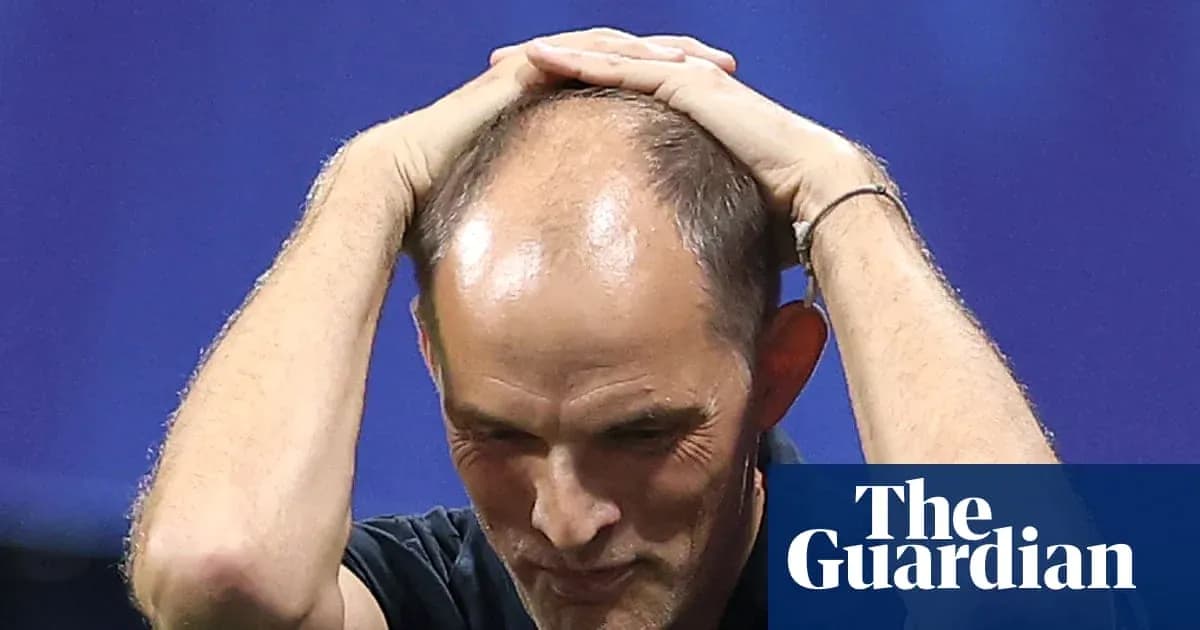
Thomas Tuchel walked into the press room with the look of a man who knew exactly where the fingers would point and chose to get there first. He did not dodge it. He did not dress it up. He put the blame on his own shoulders.
“I have to make a decision on the pitch,” he said. “It’s how I analyse the match and I take the responsibility.”
A lead, a retreat, a collapse
For 60 minutes, England were everything they have so rarely been in the decisive moments of major tournaments: brave on the ball, front-foot without it, composed against the reigning champions. Anthony Gordon’s crisp finish early in the second half had them on the brink of a first men’s World Cup final on foreign soil.
The goal should have been a platform. It became a trigger for retreat.
From the moment Gordon scored to the instant Lautaro Martínez drove a knife into English hearts in stoppage time, England had just 12% of the ball. Twelve. The numbers told the story as clearly as the body language: one team surged, the other shrank.
Tuchel’s key call came three minutes before Enzo Fernández detonated Argentina’s equaliser. Declan Rice and Reece James were withdrawn, England shifted to a back five, and the entire tone of the night changed.
“We decided to go to a back five because the gaps were far too open,” Tuchel explained. “Argentina played with more risk, played with more rhythm and played with the feeling maybe that they had nothing to lose any more, which freed them up and pulled us back. Because we obviously played suddenly with a feeling that we had a lot to lose.”
It was the admission of a coach who knew exactly how that decision would be framed. “Of course the responsibility is on the coach and if it doesn’t go well it’s easy to say it was wrong.”
The pressure finally told. Fernández stepped into space and unleashed a piledriver that roared past England’s resistance and into the net. From that moment on, there was only one side dictating events.
Wave after wave of sky blue and white.
Kane’s verdict: ‘We tried to hold on’
Harry Kane, who dragged his exhausted team-mates over to the travelling support at full time, did not bother sugar-coating it either.
“Just gutted, gutted for the boys, gutted for everyone: the team, the staff, the fans,” he told the BBC. “We played well for the vast majority of it. Once we went 1-0 up we just seemed to try to hold on which, at this level, is not enough.
“After the goal, whether it was them putting more men forward or us being able to match them man for man, it just was wave after wave and we were just trying to hold on, put the blocks in, but in the end it wasn’t enough.”
That was the story of the final half-hour. Blocks. Last-ditch challenges. Bodies flung in front of shots. England stopped playing and started surviving.
Argentina, sensing blood, did what champions do. They tightened the screw and refused to let go.
Argentina smell blood
Lionel Messi’s reaction at the final whistle said everything. As England’s players dropped to the turf, some in tears, their captain trying to gather them, Messi sank to his knees and punched the air. Another final. Another shot at history. Another night when Argentina’s refusal to yield had dragged them back from the brink.
They had done it before in this tournament. They came from 2-0 down to beat Egypt in the last 16. They did it again here.
“England pressed hard for about 60 minutes,” said Lautaro Martínez, the match-winner. “After finding the goal, they dropped back, and that gave us more composure in circulating the ball and spreading the play.”
The description was clinical but accurate. Once England retreated, Argentina’s midfield took charge, the ball zipping from flank to flank, the English back line pushed deeper and deeper until there was almost no grass left behind them.
An emotional Lionel Scaloni, who has built a side that seems to feed off crisis, framed it in the language of survival.
“This team plays best when they are facing adversity,” Argentina’s head coach said. “We had a challenging situation, there was blood in the water and we went for it. We had six or seven chances and the ball wouldn’t go in but the team fought until the end. After they scored, we really proved ourselves – it shows what football means to us and it goes beyond tactics.”
The winner, when it came in the second minute of injury time, felt inevitable. Lautaro Martínez found the moment, Argentina found the final, and England found themselves staring at the same old questions.
Tuchel rejects talk of ‘curse’ – but pattern remains
Tuchel was pushed on the idea that this was something deeper, something baked into the shirt: a tendency to lose control with a lead, to shrink when the stakes rise.
“I don’t believe so much in an English thing and a curse or whatever,” he said. “It’s repeating itself in different moments. It’s different coaches, different players, different situations.
“What cost us today was that we were not active enough in any structure.”
He kept coming back to that word: active. England had been proactive for an hour, then reactive for the rest. The switch to a back five was meant to close gaps. It closed England’s ambition instead.
“At the moment no regrets,” Tuchel insisted. “The team gave everything and we were very very close. We deserved to be up 1-0. We played one of our better matches, maybe our best match under the circumstances. The team was top – we couldn’t bring it over the line.”
The finest margins at the highest level. But the margins always seem to cut the same way.
Raw edges and rising tempers
When the whistle finally went, the tension did not drain away; it spilled over.
Jude Bellingham, who had given everything in midfield, lost his composure after the game and appeared to strike Argentina substitute Valentín Barco on the back of the head. Reserve goalkeepers Dean Henderson and James Trafford had to haul him away. The officials took no action, but the images told their own story: a young star who had come so close to the biggest stage and watched it vanish in front of him.
On the other side, the celebrations were unrestrained and unapologetic. Lisandro Martínez paraded a banner reading “Las Malvinas son Argentinas” – “The Malvinas are Argentinian” – a pointed reference to the Falklands war that will not go unnoticed in England.
It was a reminder that this fixture, even far from home, carries layers of history and emotion that stretch far beyond 90 minutes of football.
What’s left for England?
England leave this World Cup with a performance that, for long stretches, matched the best team on the planet. They also leave with another scar from another night when they led and could not finish the job.
Tuchel stood by his players. Kane spoke for them. Bellingham’s anger showed what it meant. The sense of waste will linger.
Argentina fly on to New York and a final against Spain, fuelled by belief, by Messi’s enduring hunger, by a squad that seems to grow stronger the closer it comes to the edge.
England fly home with the same question echoing around them yet again: when the moment comes to step forward, why do they keep stepping back?