Fiorentina vs Genoa: Tactical Draw in Serie A
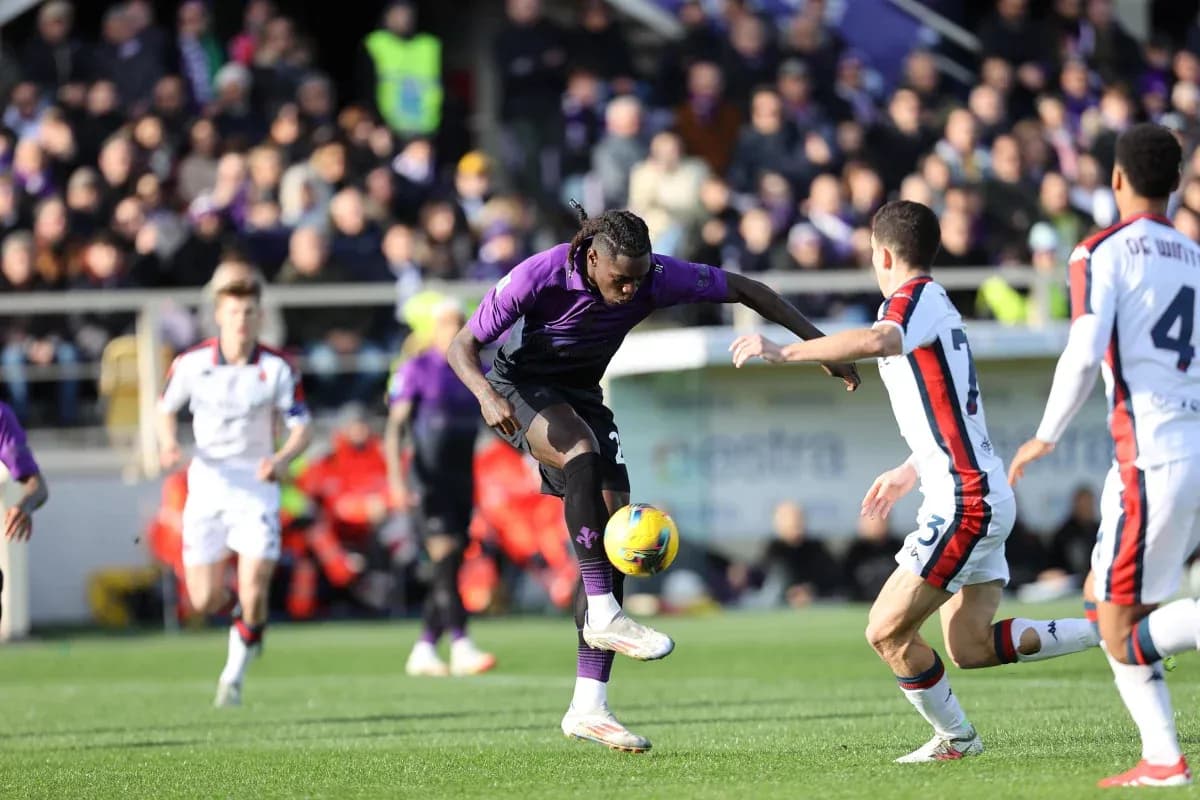
Fiorentina and Genoa played out a goalless but tactically nuanced draw at Stadio Artemio Franchi in Serie A’s Regular Season - 36. Fiorentina, under Paolo Vanoli, imposed themselves territorially and with the ball, yet Daniele De Rossi’s Genoa managed the game with defensive control and selective attacking threat. The 0-0 scoreline reflected a contest where Fiorentina’s 57% possession and higher shot volume (13 total shots to Genoa’s 9) did not translate into clear superiority in chance quality, with xG narrowly in their favour at 0.97 to 0.58. Both sides ultimately prioritised structure and risk management over all-out pursuit of a winner.
With no goals or cards recorded, the match narrative is defined by territorial patterns, shot profiles and the timing of substitutions. The first half ended 0-0 with Fiorentina ahead on shots but unable to break down Genoa’s 3-4-2-1 block. The second half followed a similar script: Fiorentina continued to probe, Genoa remained compact and dangerous in transition. A series of substitutions from the 58th minute onward adjusted energy and reference points in attack but did not change the underlying equilibrium. The game closed with Fiorentina still pushing, Genoa still structurally sound, and the score fixed at 0-0.
Fiorentina's Tactical Setup
From the outset, Fiorentina’s 4-3-3 was built to dominate the ball and the central corridor. D. de Gea started behind a back four of Dodo, M. Pongracic, L. Ranieri and R. Gosens. In midfield, R. Mandragora, N. Fagioli and C. Ndour formed a technical trio, with F. Parisi, R. Braschi and M. Solomon as the front line. Against Genoa’s 3-4-2-1, Fiorentina used their extra midfielder to create a 3v2 in the middle, often dropping one full-back slightly to assist in first-phase build-up and attract Genoa’s first line of pressure.
The statistical profile underlines Fiorentina’s territorial control: 57% possession, 417 passes with 353 accurate (85%), and 13 shots. However, only 1 of those was on target, with 7 off target and 5 blocked. Nine attempts came from inside the box, indicating that Vanoli’s side did manage to access the penalty area but struggled with final execution and shot selection under pressure. Genoa’s compact back three of A. Marcandalli, L. Ostigard and N. Zatterstrom, screened by a hard-working midfield four, repeatedly forced Fiorentina into crowded central zones where blocks became a key defensive tool.
Genoa's Tactical Response
Genoa’s 3-4-2-1, with J. Bijlow in goal, was clearly structured to concede possession but control space. Wing-backs M. E. Ellertsson and A. Martin balanced their roles, stepping out to press Fiorentina’s full-backs while remaining aware of runs in behind. In midfield, Amorim and M. Frendrup provided vertical coverage and ball-winning, while J. Ekhator and Vitinha operated between the lines, supporting L. Colombo. Genoa produced 9 shots, 3 on target, with a more efficient shot profile relative to their lower volume. Their 316 passes, 255 accurate (81%), point to a more direct and pragmatic approach: fewer passes, but sufficient accuracy to exit pressure and launch transitions.
Substitutions and Tactical Adjustments
The substitutions in the second half reflected both coaches’ attempts to tilt a finely balanced tactical contest. At 58', Genoa made the first move: L. Colombo (OUT) was replaced as C. Ekuban (IN) came on, adding a more physical and mobile reference up front to attack space behind Fiorentina’s advanced line. Vanoli responded on 61' with a like-for-like attacking adjustment: R. Braschi (OUT) was replaced as R. Piccoli (IN) came on, offering a different profile in the front line, more oriented toward penalty-box presence.
At 71', De Rossi doubled down on fresh legs and creativity: J. Ekhator (OUT) was replaced as R. Malinovskyi (IN) came on, adding long-range shooting and set-piece threat, while A. Martin (OUT) was replaced as W. L. Ouedraogo (IN) came on, refreshing the left flank and preserving the wing-back intensity needed to contain Fiorentina’s wide play. Vanoli adjusted his midfield shortly after: on 72', R. Mandragora (OUT) was replaced as M. Brescianini (IN) came on, injecting more running power and late-box arrivals; on 73', C. Ndour (OUT) was replaced as G. Fabbian (IN) came on, maintaining the three-man midfield structure but with different energy and pressing angles.
In the closing stages, both benches sought marginal gains without unbalancing their sides. At 82', Genoa rotated their defensive and central units: A. Marcandalli (OUT) was replaced as M. Doucoure (IN) came on, and Amorim (OUT) was replaced as P. Masini (IN) came on, preserving the 3-4-2-1 shape while refreshing legs in the back line and midfield. Fiorentina’s final attacking roll of the dice came at 86': F. Parisi (OUT) was replaced as A. Gudmundsson (IN) came on, a move geared toward adding creativity and one-v-one threat in the final third. Despite these changes, Genoa’s structure held and Fiorentina’s shot quality did not significantly improve.
Goalkeeper Performance
Goalkeeper performance helps explain the stalemate. D. de Gea made 3 saves, matching Genoa’s 3 shots on target and aligning with Genoa’s xG of 0.58. The data shows 0 goals prevented for both keepers, suggesting that while de Gea was reliable, he was not forced into high-difficulty interventions. J. Bijlow, notably, did not register a single save; Fiorentina’s only shot on target was either centrally placed or easily handled, and the bulk of their attempts were either off target or blocked before reaching goal. This combination of Fiorentina’s inefficiency and Genoa’s shot suppression is central to understanding the 0-0 outcome.
Statistically, Fiorentina’s overall form in this match was that of a possession-dominant side lacking incision: more shots, more passes, higher accuracy, and a slightly higher xG, yet minimal genuine threat to Bijlow. Genoa’s defensive index was strong: they conceded territory but limited high-quality chances, blocked 5 Fiorentina shots, committed 14 fouls to disrupt rhythm, and maintained structural integrity through multiple substitutions. With no cards issued and both teams recording 0 goals prevented and modest xG figures, the draw was a logical statistical verdict on a game where structure and discipline outpaced attacking clarity.