Everton vs Sunderland: Late-Season Premier League Clash
Everton host Sunderland at Hill Dickinson Stadium in a late-season Premier League match in 2026 that is more about final positioning than outright survival or title stakes: with Everton 10th on 49 points and Sunderland 12th on 48 points in the league phase (both after 36 games), this Round 37 fixture is a direct battle to secure a top-half finish and potentially climb into the upper mid-table prize bracket.
Head-to-Head Tactical Summary
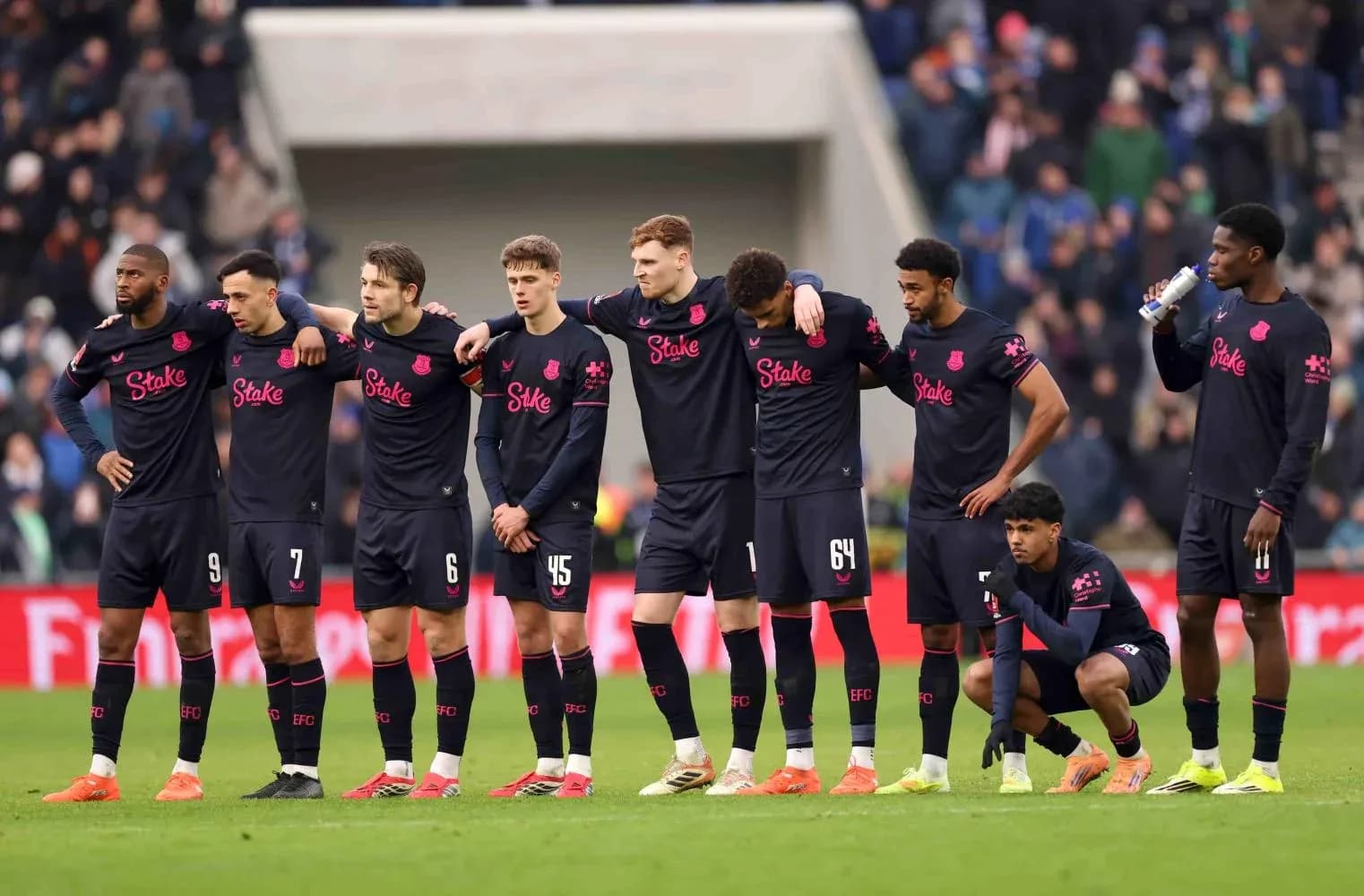
On 10 January 2026 in the FA Cup Round of 64 at Hill Dickinson Stadium, Everton and Sunderland drew 1-1 (HT 0-1) before Sunderland advanced 3-0 on penalties, underlining Sunderland’s composure in a shootout scenario away from home. Earlier in the current Premier League campaign, on 3 November 2025 at the Stadium of Light, Sunderland and Everton drew 1-1 (HT 0-1), with Everton again starting stronger but unable to convert it into three points. Looking further back, Everton dominated cup and league meetings in 2017 at Goodison Park: a 3-0 League Cup win on 20 September 2017 (HT 1-0), and a 2-0 Premier League win on 25 February 2017 (HT 1-0). At the Stadium of Light on 12 September 2016, Everton won 3-0 (HT 0-0) in the Premier League. The pattern across these fixtures is clear: Everton have historically controlled open-play league and cup ties at home, but the most recent cup meeting at Hill Dickinson Stadium showed Sunderland can frustrate them and prevail in a knockout context.
Global Season Picture
- League Phase Performance:
Everton: 10th with 49 points from 36 matches, exactly balanced in both attack and defence with 46 goals scored and 46 conceded in the league phase. Their home record shows 25 goals for and 24 against from 18 matches, reflecting a marginal edge at Hill Dickinson Stadium.
Sunderland: 12th with 48 points from 36 matches, with a negative goal difference: 37 scored and 46 conceded in the league phase. At home they have been relatively solid (23 for, 19 against), but away from home they have struggled, with only 14 goals scored and 27 conceded in 18 matches. - Season Metrics:
Scope detection: team_statistics show 36 games played for each side, matching the standings totals, so this is a league-only dataset and all statistics are in the league phase.
Everton: A balanced but not explosive attack with 46 goals from 36 matches (1.3 goals per game) and an equally matched defence conceding 46 (1.3 per game) in the league phase. They have 11 clean sheets and have failed to score in 9 games, pointing to some inconsistency in chance conversion. Disciplinary data shows a spread of yellow cards across all phases of the match, with a particular concentration from minutes 46-60 and 76-90, suggesting intensity – and risk – rises as the game wears on. Red cards are clustered late (two between 76-90), which can destabilise tight matches. Their most-used formation is 4-2-3-1 (21 matches), underlining a preference for a structured double-pivot with three advanced midfielders.
Sunderland: Sunderland’s attack is less productive, with 37 goals from 36 matches (1.0 per game) in the league phase, and the same 46 goals conceded (1.3 per game) as Everton. They also have 11 clean sheets but have failed to score in 13 games, highlighting a more pronounced issue in breaking teams down, especially away. Their yellow cards peak between 46-60 minutes and remain high in late phases, indicating similar second-half intensity. Red cards are more evenly distributed earlier in games than Everton’s, with dismissals appearing between 16-30, 31-45, and 91-105, which can disrupt game plans at different stages. Sunderland have rotated systems more: 4-2-3-1 (19 matches) is the base, but they have also used 4-3-3, 5-4-1, 4-4-2, 4-1-4-1, and even 3-4-3, suggesting tactical flexibility but also a search for optimal balance. - Form Trajectory:
Everton: Their form string in the standings, “DDLLD”, shows two draws followed by two losses and another draw in the league phase. This points to a team that has stalled, struggling to convert performances into wins and leaking points in the run-in. The extended form from team_statistics (“LWWDLDWLLDWWLWWLLDWLDWDDWLLWWLWDLLDD”) confirms a season of streaks: short winning runs interrupted by clusters of defeats and draws, with no sustained surge. Heading into Round 37, Everton are in a flat, winless mini-run that threatens their top-half ambitions.
Sunderland: Sunderland’s standings form, “DDLLW”, shows three points from the last five matches in the league phase, with a late win halting a slide of two consecutive losses. The broader form sequence (“WLWDDWLWWDDLWDLWDDDDLWLWLLLDWLWWLLDD”) reveals similar inconsistency but with intermittent spikes of strong results. Crucially, Sunderland arrive at this fixture on the back of a win, giving them slightly more upward momentum than Everton despite their overall volatility.
Tactical Efficiency
Without explicit numerical “Attack/Defense Index” values from the comparison block, the efficiency picture must be anchored to the available in the league phase performance indicators. Everton’s 46 goals from 36 matches (1.3 per game) against 46 conceded (1.3 per game) depict a side whose attacking output is broadly matched by what they allow at the other end; they are neither clearly over-performing nor under-performing their underlying profile. Their 11 clean sheets indicate that when their structure in the 4-2-3-1 clicks, the defensive unit can shut games down, but 9 matches without scoring show that their attacking efficiency can drop sharply, especially against compact blocks.
Sunderland’s 37 goals from 36 matches (1.0 per game) against the same 46 conceded (1.3 per game) suggest a less efficient attack than Everton’s relative to the goals they give up. The higher number of games in which they fail to score (13) underscores that their attacking phases are more fragile, particularly away from home where they average only 0.8 goals per match. The variety of formations used points to a coaching staff adjusting structure to opponent and game state, but it also hints that they have not yet found a consistently efficient attacking configuration.
In a comparative tactical lens, Everton’s more stable shape and slightly higher scoring rate give them a marginal offensive edge, while both teams share similar defensive vulnerability in terms of raw goals conceded. The disciplinary patterns – heavy yellow-card loads in second halves and late red cards for Everton – introduce an additional tactical risk: in a tight match that could swing on fine margins, game management and control of transitions will be critical to converting structural balance into actual points.
The Verdict: Seasonal Impact
This Round 37 clash is unlikely to reshape the title race, but it is highly significant for the upper mid-table hierarchy and the perception of each club’s trajectory heading into 2026-27. With Everton 10th on 49 points and Sunderland 12th on 48 points in the league phase, a home win would likely secure Everton a top-half finish and provide a corrective to their current “DDLLD” slump, reinforcing the idea that their 4-2-3-1 framework is a solid base to build from. It would also reassert Hill Dickinson Stadium as a positive venue after the FA Cup penalty exit to Sunderland earlier in 2026.
For Sunderland, an away victory would be strategically powerful: it would push them above Everton in the table, strengthen their case as an upwardly mobile side returning to the Premier League landscape, and directly challenge the narrative of their weaker away attack (14 goals in 18 away games in the league phase). It would also confirm that the tactical flexibility shown across formations can translate into high-value results against mid-table rivals.
A draw would maintain the status quo, marginally favouring Everton due to their current one-point cushion but leaving both clubs vulnerable to being overtaken by teams just behind them. In practical terms, this fixture is a mid-table six-pointer: not decisive for relegation or European qualification, but crucial in defining whether 2026 is remembered as a stabilising year with upward potential or as a plateau that demands significant tactical and personnel changes in the summer window.