England's 4-2 Victory Over Croatia: Defensive Concerns Arise
England’s four-goal flourish against Croatia came wrapped in a warning. The scoreline said 4-2. The performance, especially at the back, told a more complicated story.
This was a night of attacking power and defensive questions, of a statement win that still left the door open for doubt.
Defensive lapses under the spotlight
Wayne Rooney saw it clearly. The first Croatia goal, he felt, was avoidable from start to finish.
“We could do so much better with the first goal,” he said, picking the moment apart. Jude Bellingham, flat-footed. The defender stepping in to win it. John Stones going to ground when he didn’t need to. Jordan Pickford gambling instead of holding his position.
“There’s no real danger and Pickford is in a good position, but he doesn’t stay on his feet,” Rooney argued. Once he commits, Nico O’Reilly has to slide across, the ball is set back, cut across, finished smartly. From a Croatia perspective, a well-worked move. From England’s, a mess of small errors.
Could Pickford have done more? Rooney didn’t give him a free pass.
He noted the goalkeeper got a full hand to the shot. The strike was quick, the move sharp, but a keeper of Pickford’s standing, Rooney suggested, will feel he should keep it out. “If Jordan is getting a hand on it like he does then he’ll be disappointed.”
Micah Richards agreed on the broader point: England helped Croatia far too much.
Looking at both Croatian goals, Richards felt they “could have been avoided” and that England “played into their hands”, allowing Croatia’s technicians to dictate in pockets of space they should never have been given. The energy was there, he said, but deployed too deep. Ten or fifteen yards higher and those situations don’t develop in the same way.
The message from both former internationals was blunt. The scoreline flattered the defending.
Stones, Konsa and a live selection debate
At the heart of it all sat John Stones and Ezri Konsa, Thomas Tuchel’s chosen pairing for this opener. On paper, it looks a calm, ball-playing duo. On the pitch, it was anything but settled across that first half.
Stones, short of minutes at Manchester City last season, saw plenty of the ball. He assumed responsibility in the build-up, stepping out, trying to set the rhythm. That always comes with a risk, and Croatia were quick to pounce when the structure behind him wasn’t perfect.
Konsa, so often a picture of composure under Tuchel, showed flashes of that assurance. Yet alongside Stones, he looked short of rhythm, as if the partnership hadn’t quite found its timing. Two goals conceded before the break underlined that sense.
Tuchel now has a decision to make. Stick with Stones and Konsa for Ghana, trusting that familiarity and minutes together will iron out the wrinkles? Or turn to Marc Guéhi to steady things, sacrificing continuity for a defender who might bring a different kind of balance?
It’s the kind of choice that can shape a tournament. One more loose first half like this and England might not get away with it.
Gordon’s grounded debut
At the other end of the pitch, the mood was very different. Anthony Gordon walked off having ticked off a childhood dream.
First World Cup game. First taste of the stage he’d imagined as a kid. Yet his reaction cut against the usual script.
“It has been a crazy couple of weeks and that just topped it off,” he told BBC Radio 5 Live. Special, yes. But not about him. “Self-centredness is a disease and I don't want to be a part of that.”
Gordon pushed the spotlight firmly back onto the group. He name-checked Marcus Rashford, Bukayo Saka, Morgan Rogers. Impact off the bench, impact from the wings, impact from everywhere. “It is a collective.”
He didn’t sugar-coat the struggle either. A “difficult first half”, he said, with Croatia’s goal “coming from nowhere” and stunning England. The response after the break pleased him more: a strong second half, a job finished properly against opponents he insisted “were really good and that can't be underestimated”.
That balance of honesty and ambition is exactly what managers crave in a young forward. Gordon looked like he belonged, but he sounded like he knew there’s more to come.
Rashford’s reminder – and the transfer question
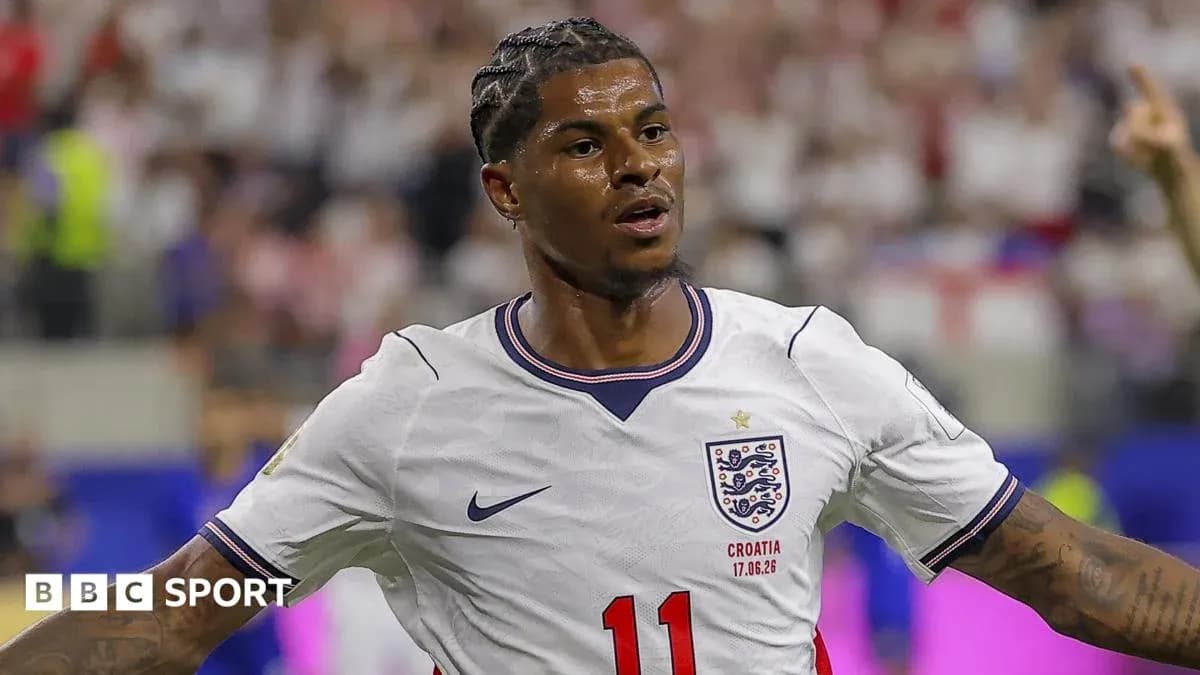
Rashford’s own contribution came with a familiar edge: a goal, a spark, and a fresh twist in a club future that remains wide open.
He came on, scored, and made what Simon Stone described as a “pretty positive impact” in the win. For a player whose next move is under intense scrutiny, nights like this matter.
On 1 July, Rashford formally reverts to being a Manchester United player. Barcelona had the option to make his loan permanent for £26m. They walked away from that clause.
United’s stance is clear. They want £40m for a forward who still has two years to run on a £325,000-a-week contract. They have no interest in another loan to Barcelona, even though that is exactly what the La Liga side are pushing for.
The reality is simple and brutal: United cannot force Rashford out, and his wages immediately narrow the field to a handful of clubs. As it stands, they expect him back after his mandatory three-week post-World Cup break, just in time for a training camp in the Republic of Ireland.
There is still plenty of time for that picture to change. Performances like this one for England only strengthen his hand, and perhaps United’s, as the market watches on.
For now, Rashford is doing the one thing that always gives a forward leverage: scoring when it counts.
England, meanwhile, leave this 4-2 win with four goals, three points, and one lingering issue. Can a side this thrilling going forward tighten up quickly enough at the back to turn promise into something more substantial when the stakes rise again?