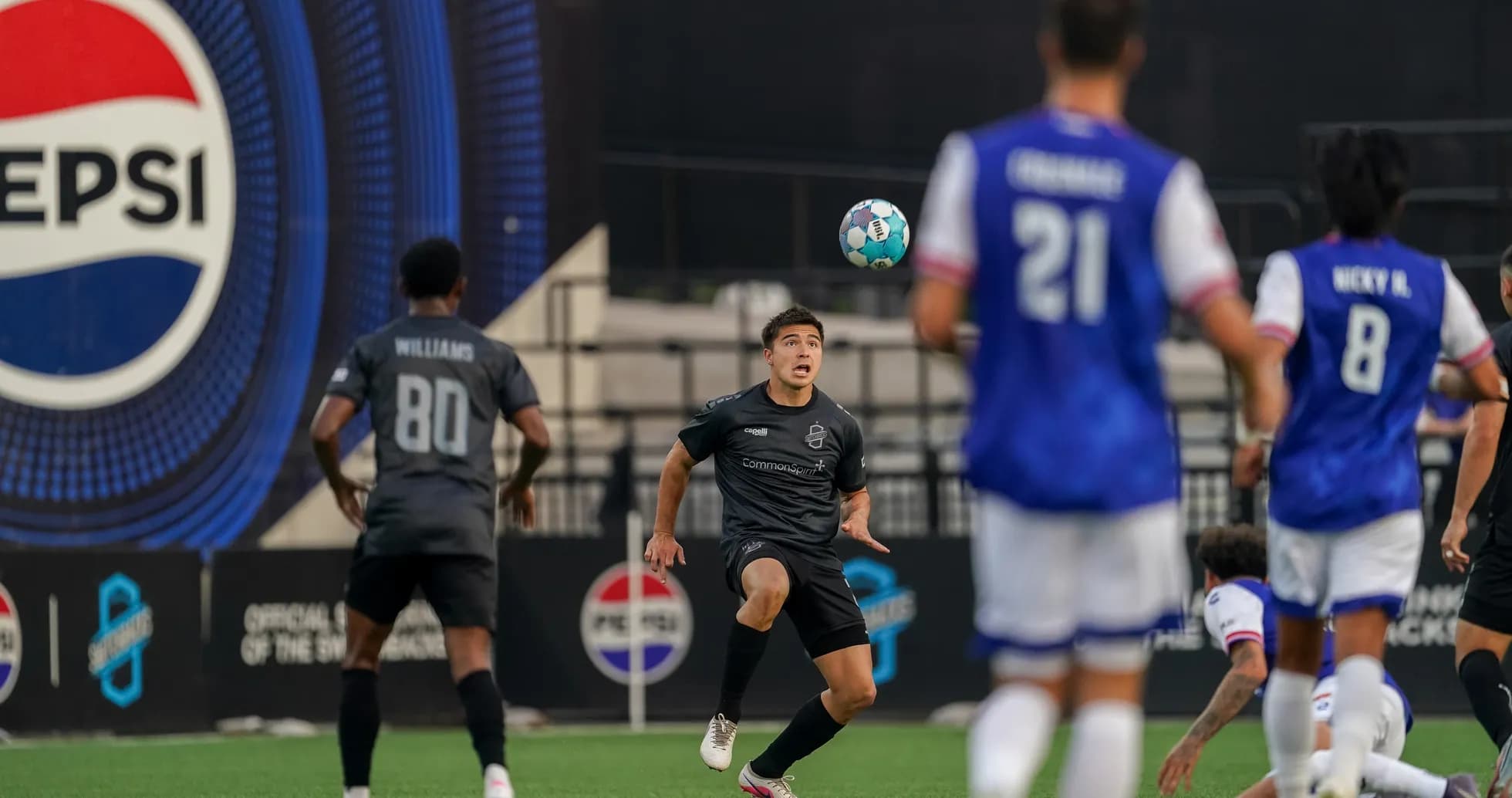
El Paso Locomotive and Phoenix Rising Battle to 1–1 Draw
Under the desert lights of Southwest University Park, El Paso Locomotive and Phoenix Rising played out a 1–1 draw that felt less like a group-stage formality and more like an early play-off stress test. Following this result, the table snapshot still paints them as near-neighbours: Phoenix in 4th on 17 points with a goal difference of 1, El Paso 6th on 16 points, also with a goal difference of 1. Two sides with similar statistical profiles, but very different ways of living with risk.
El Paso’s seasonal DNA is that of a front‑foot team that rarely dies wondering. Overall they average 1.9 goals for and 1.8 against per match, with a wild home split: 1.7 scored at home, but 2.7 conceded. They have yet to keep a clean sheet at Southwest University Park this league campaign, and the 1–1 here fits that pattern: entertaining, open, and always a touch unstable.
Phoenix arrive from the opposite angle. Overall they score 1.2 and concede 1.2 per match, with more controlled lines: 1.5 goals for and 1.0 against at home, 1.0 for and 1.3 against on their travels. On paper, their away profile is pragmatic and slightly conservative. Yet their goal‑timing map reveals a team that comes alive late: 31.25% of their goals arrive between 76–90', and 25.00% between 61–75'. This is a side that builds pressure and finishes hard.
The lineups underline those identities. Junior Gonzalez turned to S. Mora-Mora in goal, shielded by a defensive group including N. Cardona, K. Twumasi and Tony Alfaro, with Gabriel Torres and E. Calvillo offering the connective tissue into midfield. A. Mendez, R. Coronado and R. Avila formed the creative band behind R. Rubin, the reference point up front. It is a spine built for vertical play: ball‑winning, quick distribution, and multiple runners joining Rubin.
Pa‑Modou Kah’s Phoenix, by contrast, looked like a side comfortable in transition. P. Rakovsky anchored the back line, with C. Smith and P. Mar Boye as key defensive pieces and JP Scearce and D. Flores adding physicality and range. Higher up, the pace and directness of I. Sacko, G. Rivera, L. Biasi and G. Studenhofft promised exactly the kind of late‑game thrust their seasonal numbers suggest.
The tactical voids in this match were less about absences – no missing‑player data is listed – and more about structural weaknesses that both teams carried in with them. Heading into this game, El Paso’s defensive minute distribution screamed vulnerability in the closing stages: 23.81% of their goals conceded came between 76–90', the single highest window against them. Combine that with Phoenix’s late‑game surge – 31.25% of their goals for in the same 76–90' band – and you had the defining intersection of the night: a home side that fades against an away side that finishes.
El Paso’s other soft spot is the 61–75' window, where they concede 19.05%. Phoenix, meanwhile, score 25.00% of their goals in that exact stretch. Across 61–90', Rising concentrate 56.25% of their attacking output, precisely where El Paso leak 42.86% of their goals. Any tactical preview of this fixture would have circled that hour mark in red ink; the match itself duly became a story of whether El Paso could build enough of a platform before the storm.
In the “Hunter vs Shield” lens, the roles are blurred. El Paso’s attack is their hunter: they have 23 goals overall, with a particularly strong push right after half-time – 29.17% of their goals come between 46–60'. Phoenix’s defensive shape is the notional shield, conceding just 1.2 per match overall and only 1.3 on their travels. But their own defensive map has cracks: 26.67% of goals against between 31–45' and another 26.67% between 46–60'. That dovetails dangerously with El Paso’s post‑interval surge.
On the night, the expected rhythm held. The first half, framed by both sides’ early caution, was always likely to be more about jabs than haymakers. El Paso’s goals for are relatively evenly spread in the opening 45' – 20.83% in 0–15' and 20.83% in 31–45' – while Phoenix concede 20.00% in the first quarter-hour and 26.67% just before the break. The goalless 0–0 at half-time reflected Phoenix’s capacity to ride those vulnerable windows without breaking, with Rakovsky and his back line managing Rubin’s movement and the late surges of Mendez and Avila.
The “Engine Room” duel revolved around Calvillo and Mendez against Phoenix’s central axis of Scearce and D. Gomez. El Paso’s midfield needed to control tempo to protect a back line that concedes late and often; Phoenix’s enforcers were tasked with disrupting that rhythm and setting the table for Sacko, Rivera and Studenhofft on the counter. Without individual stat lines, the broader season context suggests Phoenix are comfortable absorbing pressure – they have four clean sheets overall and have failed to score three times – while El Paso have yet to fail to score in any league match.
Discipline added another layer of risk management. Heading into this game, El Paso’s yellow‑card distribution peaked between 61–75' at 28.13%, with another 25.00% between 46–60'. Phoenix’s biggest yellow surge was also right after the break: 31.82% of their cautions came in 46–60', plus 22.73% in 76–90'. This is a fixture that statistically tightens and frays as the second half wears on. Red‑card history reinforces that edge: El Paso’s reds are front‑loaded (40.00% between 16–30'), while Phoenix’s are clustered just before half-time (100.00% of their reds in 31–45'). That both sides navigated this particular night without a decisive dismissal felt almost anomalous.
From an xG‑style prognosis – inferred from chance volume, goal timing and under/over patterns – the 1–1 draw tracks the data. El Paso’s matches have gone over 1.5 goals in 7 of 12, Phoenix’s in 4 of 13; both are more often tight than chaotic. El Paso’s total goal difference of 1 (23 for, 22 against) and Phoenix’s total goal difference of 1 (16 for, 15 against) underline how fine the margins are. A narrow scoreline with both teams finding the net is almost the statistical default.
In narrative terms, this fixture confirmed what the numbers already knew. El Paso remain the high‑ceiling, high‑variance side whose home crowd is never bored but rarely fully reassured. Phoenix continue to be the late‑surging travelers who can bend a game their way in the final quarter without ever quite running away from it. Following this result, both stay firmly in the promotion conversation – and if they meet again in the play‑offs, the script will begin at 60' rather than 0', where El Paso’s legs grow heavy and Phoenix’s pulse quickens.