Como Secures 1-0 Victory Against Hellas Verona in Tactical Battle
Hellas Verona’s 0-1 home defeat to Como at Stadio Marcantonio Bentegodi unfolded as a study in territorial control versus structural resistance. In a Serie A Regular Season - 36 fixture, Como’s 4-2-3-1, orchestrated by Cesc Fabregas, imposed a long spell of possession and positional dominance, while Paolo Sammarco’s 3-5-1-1 for Hellas Verona tried to compress space centrally and break through transitions. The contest remained goalless at half-time before a second-half adjustment battle culminated in a decisive strike from Anastasios Douvikas, enough to separate two sides whose xG profiles (0.97 for Hellas Verona, 0.9 for Como) suggested a finely balanced shot quality landscape.
Disciplinary and Scoring Sequence
The disciplinary and scoring sequence was sparse but tactically significant. Cards were as follows:
- 61' Maxence Caqueret (Como) — Persistent fouling
- 89' Martin Frese (Hellas Verona) — Foul
Total cards: Hellas Verona 1, Como 1, Total 2.
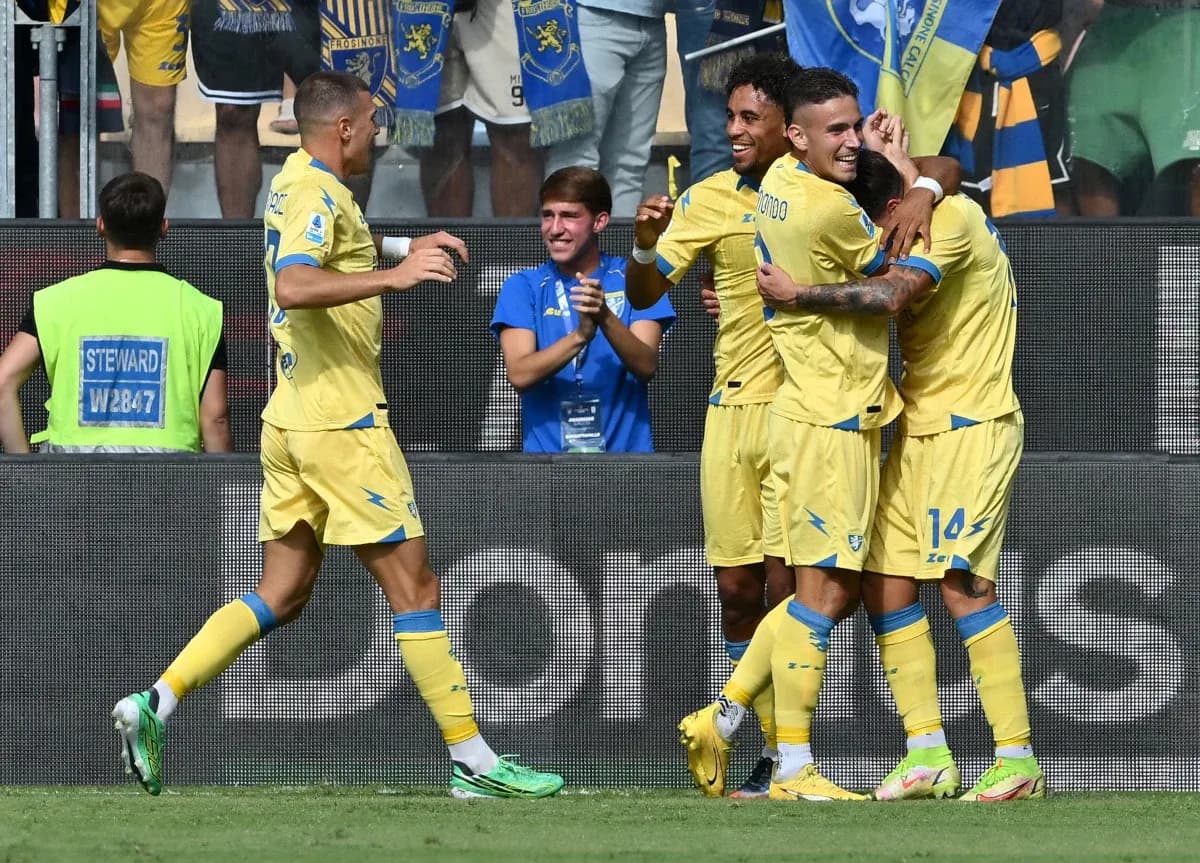
The only goal arrived at 71'. With Como already having reshaped their structure through earlier substitutions, A. Douvikas finished a move created by centre-back M. O. Kempf, whose involvement high up the pitch reflected Como’s willingness to push a defender into advanced zones against Verona’s back three. That strike set the scoreline at Hellas Verona 0-1 Como, which remained unchanged to full time.
Substitution Patterns
Substitution patterns underpinned the tactical narrative. Fabregas acted first and aggressively: at 36', A. Moreno (IN) came on for A. Valle (OUT), effectively refreshing the left side of the back line and ensuring better ball progression from deep. Then, in a triple half-time adjustment at 46', I. Smolcic (IN) came on for M. Vojvoda (OUT), M. Caqueret (IN) came on for M. Perrone (OUT), and M. Baturina (IN) came on for J. Rodriguez (OUT). This shifted the balance of Como’s 4-2-3-1, with Caqueret adding control in the double pivot and Baturina offering a different profile between the lines. Later, at 81', I. Van der Brempt (IN) came on for A. Diao (OUT), adding fresh legs on the flank to protect the lead and maintain width in transition.
Sammarco’s response was more measured and came later. At 63', S. Lovric (IN) came on for A. Bernede (OUT), a like-for-like midfield change aimed at injecting more vertical passing and energy in the central lane. With Verona chasing the game after conceding, he turned to his bench again: at 80', Isaac (IN) came on for J. Akpa Akpro (OUT), and at 81', I. Vermesan (IN) came on for R. Belghali (OUT), moves that tilted the 3-5-1-1 towards a more aggressive, forward-heavy posture in the last ten minutes.
Structural Analysis
Structurally, Verona’s 3-5-1-1 was built around compactness and verticality. L. Montipo in goal sat behind a back three of N. Valentini, A. Edmundsson, and V. Nelsson, tasked with defending the box against Como’s heavy presence inside it (Como recorded 10 shots inside the box). The wing-backs R. Belghali and M. Frese were key to stretching Como’s block and offering outlets, but with only 36% possession and 277 passes, 202 accurate (73%), Verona’s ability to sustain attacks was limited. The central trio of J. Akpa Akpro, R. Gagliardini, and A. Bernede were often pinned deep, forced into defensive work rather than orchestrating play. T. Suslov as the support forward and K. Bowie as the lone striker relied on quick transitions and direct balls, reflected in Verona’s 11 total shots but modest 0.97 xG.
Como’s 4-2-3-1, by contrast, was about methodical control. J. Butez, with 3 saves, matched Montipo’s 3 saves on the other side, but operated behind a back four that enabled sustained build-up: A. Valle (and then A. Moreno) and M. Vojvoda (then I. Smolcic) provided width, while Diego Carlos and M. O. Kempf stepped into midfield lines to compress Verona. The double pivot—initially M. Perrone and L. Da Cunha, then reshaped with Caqueret—was central to Como’s 64% possession and 506 passes, 442 accurate (87%). Higher passing accuracy and volume allowed Como to keep Verona chasing, leading to 17 fouls by the hosts versus 14 by Como.
In the attacking band, A. Diao, N. Paz, and J. Rodriguez (later M. Baturina) worked between Verona’s midfield and defensive lines, frequently overloading the half-spaces. Their presence, combined with Douvikas’ movement as the 9, generated 11 total shots, matching Verona, but with a more concentrated threat inside the box (10 of those 11 attempts). The goal itself, with Kempf assisting Douvikas, typified Como’s positional play: centre-backs encouraged to step up when Verona’s block collapsed too deep, exploiting the gaps around the edge of the box.
Disciplinary Profile
The disciplinary profile subtly influenced the midfield battle. Caqueret’s yellow at 61' for “Persistent fouling” underlined Como’s readiness to break Verona’s counters early, using tactical fouls to prevent transitions from turning into clear chances. Frese’s late yellow at 89' for “Foul” came as Verona pushed forward, a sign of increasing desperation and stretched defensive transitions on the flanks.
Statistical Overview
Statistically, the match supports the tactical reading of control versus resistance. Possession (64% to 36%) and passing metrics heavily favoured Como, whose Overall Form on the day was one of territorial dominance and structured circulation. Yet the xG values—0.9 for Como and 0.97 for Verona—suggest that Verona’s more sporadic attacks still produced comparable shot quality, even if not volume inside the box. Defensively, both goalkeepers finished with 3 saves, and with “goals prevented” equal at 0.73 for each side, the Defensive Index points to parity in last-line performance. The difference lay not in shot-stopping but in structural control: Como’s ability to keep the ball, compress Verona, and finally convert one of their box entries into Douvikas’ decisive finish.