Cagliari vs Udinese: Tactical Analysis of a 0-2 Defeat
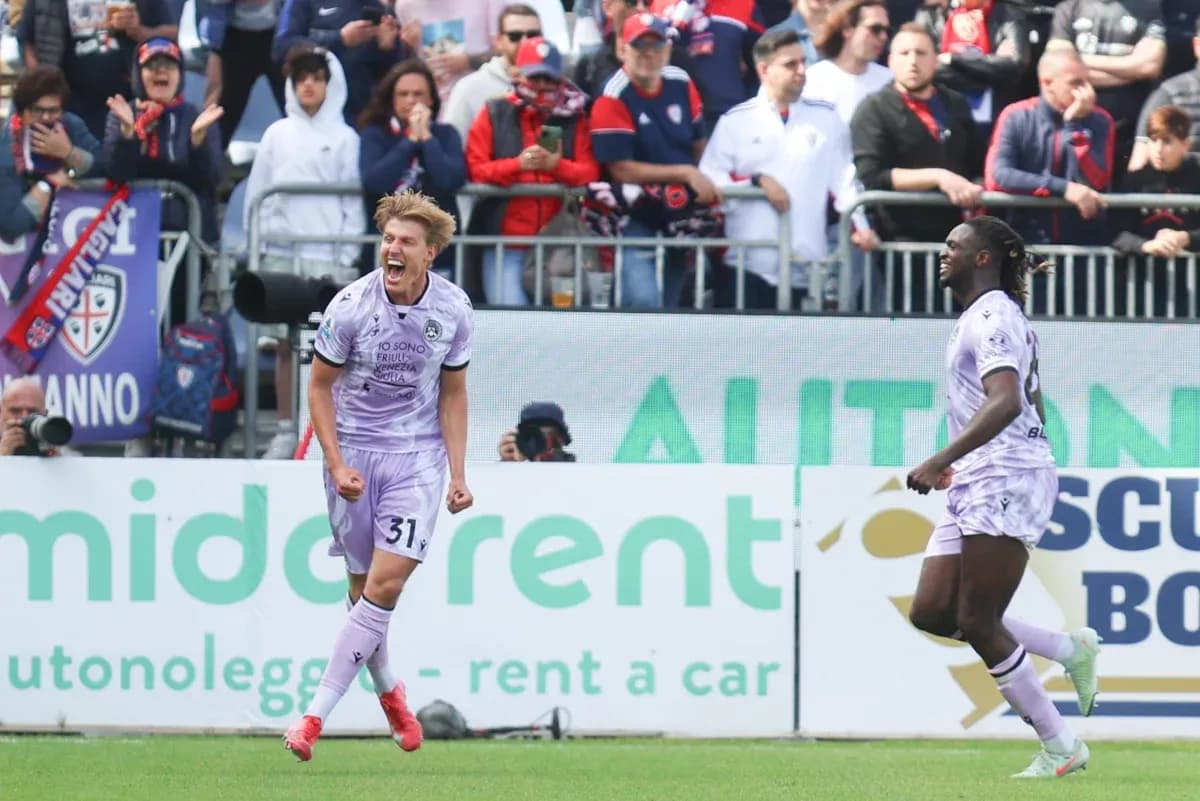
Under the pale afternoon light at Unipol Domus, a survival story collided with a late-season surge. Cagliari, 16th in Serie A with 37 points and a goal difference of -15 (36 scored, 51 conceded overall), hosted 9th‑placed Udinese, who arrived on 50 points and a goal difference of -1 (45 for, 46 against overall). Following this result, the 0‑2 home defeat felt less like a single bad day and more like a crystallisation of each side’s seasonal DNA.
I. The Big Picture – Structures and Season Identities
Fabio Pisacane doubled down on caution, rolling out a 5-3-2 that mirrored Cagliari’s season-long instinct to protect first and hope later. Heading into this game, Cagliari at home had averaged 1.1 goals for and 1.2 against, with 6 clean sheets but also 7 games without scoring. The shape on the pitch matched those numbers: E. Caprile behind a back five of M. Palestra, J. Pedro, A. Dossena, J. Rodriguez and A. Obert, a narrow midfield trio of M. Folorunsho, G. Gaetano and M. Adopo, and a workmanlike front two of S. Esposito and P. Mendy.
Opposite him, Kosta Runjaic chose aggression: a 3-4-3 that played directly into Udinese’s away profile. On their travels they had scored 27 and conceded 26, averaging 1.5 goals for and 1.4 against away – a team that accepts risk to tilt games their way. M. Okoye anchored a back three of O. Solet, T. Kristensen and B. Mlacic, with wing-backs K. Ehizibue and H. Kamara stretching the field, J. Karlstrom and J. Piotrowski stabilising the centre, and a front line of N. Zaniolo, A. Buksa and A. Atta offering varied threats between the lines and in behind.
The final 0-2 scoreline reflected that contrast: Cagliari’s defensive shell never convincingly translated into attacking threat, while Udinese’s front three repeatedly found ways to turn possession into penetration.
II. Tactical Voids – Absences and Discipline
Cagliari came into this fixture shorn of attacking depth. G. Borrelli (thigh injury), M. Felici (knee injury), R. Idrissi (knee injury), J. Liteta (thigh injury), L. Mazzitelli (injury) and L. Pavoletti (knee injury) were all ruled out. That cluster of absences stripped Pisacane of alternative profiles in the final third – no penalty-box specialist like Pavoletti to attack crosses, no fresh wide runners to change the rhythm. It forced an even greater reliance on Esposito’s creativity and Mendy’s mobility.
Udinese had their own gaps. J. Ekkelenkamp (leg injury) and A. Zanoli (knee injury) reduced Runjaic’s options between the lines and at wing-back, while C. Kabasele’s suspension for yellow cards removed a seasoned organiser from the back line. Yet the visitors’ squad depth allowed them to plug those holes more seamlessly, with Solet and Kristensen stepping into leadership roles in the back three.
Disciplinary trends shaped the emotional temperature of the contest. Heading into this game, Cagliari’s yellow-card distribution showed a clear late-game spike: 26.92% of their yellows came in the 76-90 minute window, and all of their red cards this season (2 in total) had arrived in that same late phase, accounting for 100.00% of their dismissals. It painted a picture of a side that frays under pressure. Udinese, by contrast, tended to flare earlier: 26.87% of their yellows came between 61-75 minutes, with a solitary red card in the opening 0-15 minutes (100.00% of their reds), hinting at early aggression rather than late meltdown.
III. Key Matchups – Hunter vs Shield, Engine Room Battles
The most intriguing “Hunter vs Shield” battle was theoretical more than direct: Udinese’s leading scorer K. Davis, with 10 goals and 4 assists in total this season, watched from the bench as his teammates carried the attacking burden. Even so, his statistical profile set the tone for Udinese’s offensive identity. Across 28 appearances and 1928 minutes, he had generated 37 shots (24 on target) and won 143 of 305 duels, a powerful reference point for how Runjaic wants his forwards to play – physical, vertical, and constantly asking questions of centre-backs.
Cagliari’s “shield” was led by A. Obert, one of Serie A’s most carded defenders this season. Across 33 appearances he had amassed 9 yellow cards and 1 yellow-red, along with 63 tackles, 18 successful blocked shots and 40 interceptions. His role in the back five was to step out aggressively on Udinese’s forwards, compressing space before they could turn. But against a mobile front three, that aggression risked being turned against him, dragging the line out of shape.
In the “Engine Room” duel, S. Esposito and N. Zaniolo framed the narrative. Esposito, starting as a second striker but with midfielder’s habits, came into the match with 6 goals and 5 assists, built on 916 passes and 65 key passes. His job was to knit transitions, drop into pockets and release Mendy into channels. Zaniolo, Udinese’s top creator with 6 assists and 5 goals, had attempted 94 dribbles (33 successful) and delivered 53 key passes. Operating from the right half-space in the 3-4-3, he repeatedly targeted the gaps either side of Dossena and Obert, forcing Cagliari’s wing-backs to collapse inward and freeing Ehizibue to advance.
This duel tilted Udinese’s way. Zaniolo’s capacity to absorb contact – 61 fouls drawn, 62 committed overall this season – and still play forward passes embodied the visitors’ willingness to live on the edge. Esposito, by contrast, often found himself dropping too deep, blunting Cagliari’s counter-attacking threat and leaving Mendy isolated against three centre-backs.
IV. Statistical Prognosis – What the Numbers Say
Even before kick-off, the underlying numbers pointed towards a tight but Udinese-leaning contest. Cagliari’s overall average of 1.0 goals scored and 1.4 conceded per match contrasted with Udinese’s more balanced 1.3 for and 1.3 against. At home, Cagliari’s marginally positive attacking output (20 scored in 18) was offset by their tendency to concede in key moments. Udinese’s away profile – 27 scored, 26 conceded – suggested they would create enough volume of chances to at least threaten multiple goals.
Defensive solidity also favoured the visitors. Udinese had kept 11 clean sheets overall (6 at home, 5 away), compared to Cagliari’s 8 (6 at home, 2 away). Combined with Udinese’s perfect penalty record – 5 scored from 5, 0 missed – they had multiple pathways to convert pressure into goals, whether from open play or set pieces. Cagliari’s own penalty record was strong (2 scored from 2, 0 missed), but their bigger issue was simply reaching the final third often enough to draw those fouls.
Following this result, the 0-2 scoreline felt like the logical extension of those trends. Udinese’s higher attacking ceiling, deeper squad and more robust defensive record away from home translated into a controlled, professional performance. Cagliari’s five-man back line, undermined by absences and an overworked Esposito, never truly escaped its own half for long enough to threaten.
In the end, this was a story of a mid-table side playing with freedom against a team still glancing anxiously over its shoulder. Udinese’s structure and statistics promised authority; over 90 minutes at Unipol Domus, they delivered exactly that.