Boston Legacy W vs Seattle Reign FC W: Tactical Analysis of NWSL Match
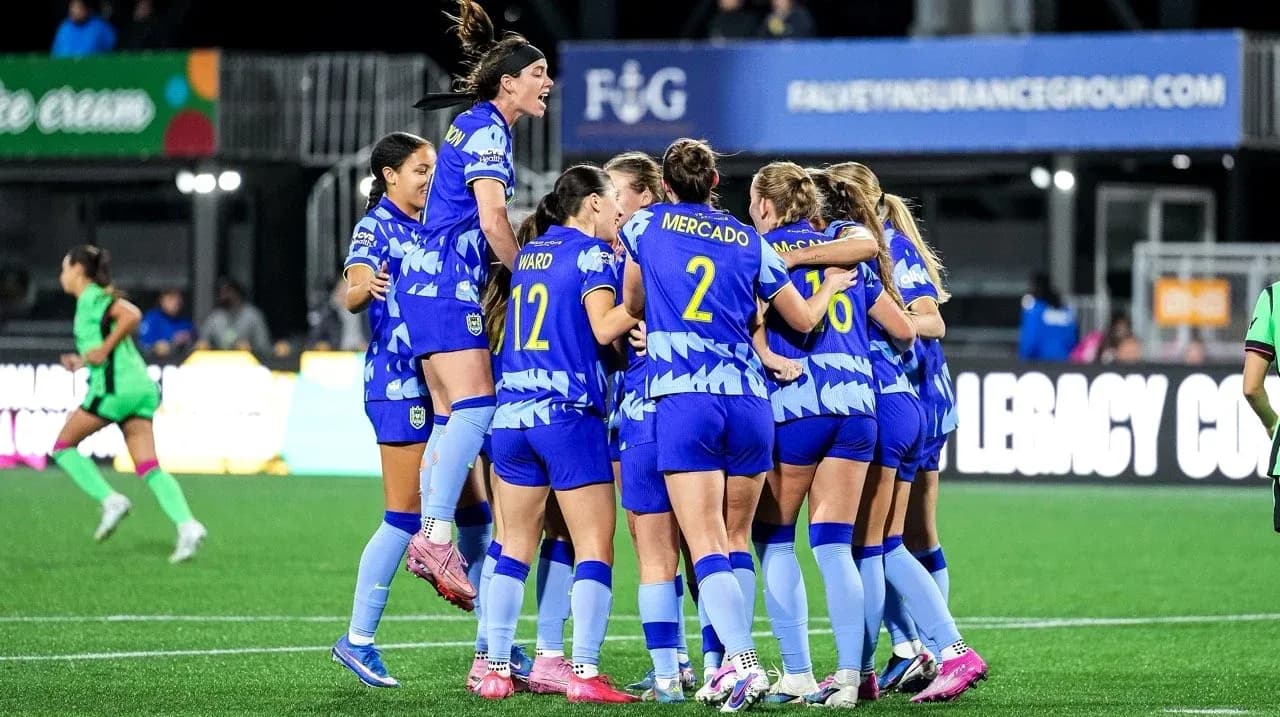
Under the lights at Centreville Bank Stadium in Pawtucket, Boston Legacy W and Seattle Reign FC W produced a tight, tactical 2-1 away win for the visitors, a result that crystallises where both clubs stand in this NWSL Women 2026 group stage campaign.
Following this result, Boston remain anchored in 14th with 9 points from 11 matches. Their overall record – 2 wins, 3 draws, 6 defeats – is mirrored by a goal difference of -7, derived from 11 goals scored and 18 conceded in total. At home, the profile is slightly more assertive but still fragile: 2 wins, 1 draw, 4 defeats, with 9 goals for and 11 against. Their season-long averages tell the story of a side that has to work hard for every breakthrough: 1.0 goals for per game overall, 1.3 at home, while conceding 1.6 overall and 1.6 at home.
Seattle, by contrast, consolidate a mid-table platform. They sit 8th with 14 points from 10 league games, their overall goal difference at -2 (9 scored, 11 conceded). On their travels they have been quietly efficient: 2 away wins, 1 draw, 1 defeat, scoring 4 and conceding 4. That balance is reflected in their averages – 1.0 goals for away, 1.0 against – a team that rarely explodes but rarely collapses.
This finished fixture thus becomes a case study: Boston’s expansive 3-5-2 at home against Seattle’s disciplined 4-2-3-1, a clash between a side searching for stability and one that has already found a functional identity.
Tactical Voids and Discipline
Neither side is explicitly listed with absentees, so the tactical “voids” are structural rather than personnel-based.
Boston’s 3-5-2 asks a lot of its back three and central midfield. With no clean sheets at home or away this season, the numbers underline the strain: 11 goals conceded at home from 7 matches, and 18 in total, without a single clean sheet in the campaign. The back line of Jorelyn Carabalí, Laurel Ansbrow and Emerson Elgin must defend wide spaces, especially when wing-oriented midfielders like Nichelle Prince and Samantha Rose Smith are pushed high.
Disciplinary trends deepen the tactical risk. Boston’s yellow-card distribution is spread across the middle and late phases, with a clear late-game spike: 21.74% of their yellow cards come in the 16-30 minute window and another 21.74% in 76-90, while 17.39% appear in each of 31-45, 46-60 and 61-75. Red cards are brutally concentrated: 50.00% in 31-45 and 50.00% in 76-90. This is a side that can lose emotional control either side of the interval and in the closing stretch – a dangerous trait for a team already conceding 1.6 goals per match overall.
Seattle’s disciplinary profile is more measured but still carries warning signs late on. Only 8.33% of their yellow cards arrive in each of the first three 15-minute windows, but the intensity ramps up after the break: 16.67% between 46-60, 8.33% from 61-75, and then a pronounced late-game surge with 25.00% in 76-90 and another 25.00% in 91-105. They avoid reds entirely in the data, suggesting controlled aggression, but the clustering of yellows late hints at fatigue or game-management fouls when protecting leads like this 2-1.
With Boston yet to miss a penalty this season (2 scored from 2, 100.00%), any reckless challenge in the box is doubly costly. Seattle have also been perfect from the spot (1 from 1, 100.00%), so both teams know that discipline in the area is non-negotiable.
Key Matchups
Hunter vs Shield
For Boston, Aissata Traore is the clear “hunter”. With 3 goals and 1 assist in 11 appearances, she is the focal point of their attack. She has taken 19 shots with 9 on target, an output that reflects both volume and reasonable accuracy. Beyond finishing, she is a constant physical presence: 96 duels contested, 45 won, and 23 fouls drawn. Her ability to pin centre-backs and earn set pieces is central to Boston’s attacking plan.
Against Seattle’s away defensive record – 4 goals conceded in 4 away games, an average of 1.0 against on their travels – Traore is asked to break a compact, well-drilled block. Phoebe McClernon and Jordyn Bugg, shielded by the double pivot of Angharad James-Turner and Ainsley McCammon, form a narrow spine that is hard to pull apart. Seattle’s three clean sheets overall (2 at home, 1 away) show that when their shape is intact, they can suffocate attacks like Boston’s.
The secondary hunters for Boston are Alba Caño and Samantha Rose Smith from midfield. Caño has 2 goals this campaign, 14 shots (8 on target) and a strong two-way profile with 32 tackles and 83 duels, 45 of them won. Smith adds 1 goal from 15 shots (6 on target) and is a dribbling outlet with 27 attempts, 13 successful. Both operate in the half-spaces behind Traore, trying to exploit the channels between Seattle’s full-backs and centre-backs.
Engine Room
The central duel is defined by Boston’s trio of Annie Karich, Caño and Josefine Hasbo against Seattle’s James-Turner and McCammon. Karich is the metronome: 548 passes at 84% accuracy, 10 key passes, 28 tackles, 2 blocked shots and 12 interceptions. She is Boston’s organiser and first presser, but her disciplinary line is thin: 3 yellow cards already, and part of a midfield that contributes heavily to those mid-game bookings.
On Seattle’s side, James-Turner is the enforcer and distributor rolled into one, sitting in front of the back four, while McCammon offers legs and coverage. Ahead of them, Holly Ward, Sally Marie Menti and Maddie Dahlien form a fluid line of three that supports Maddie Mercado. Their 4-2-3-1 has been the default (7 appearances in that shape), and it showed here: a box of four in central areas to outnumber Boston’s double pivot when the wing-backs are high.
Defensive Blocks and Back-Line Craft
Carabalí’s individual defensive profile is pivotal for Boston. She has made 15 tackles, 13 interceptions and crucially has blocked 4 shots this season – those are successful blocks, a sign of her timing and willingness to step in front of danger. Yet Boston’s structure often leaves her and her fellow centre-backs exposed to wide overloads, especially against a side like Seattle that can push Sofia Huerta and Madison Curry from full-back.
Seattle’s back four, meanwhile, are supported by a team that has kept 3 clean sheets in total and failed to score 6 times themselves. That duality – strong defensive phases but inconsistent attacking output – explains their low-scoring profile: 9 goals for in 10 matches, an overall average of 0.9. They do not need to win shootouts; they just need to keep games on their terms.
Statistical Prognosis and Tactical Verdict
Following this result, the numbers and the narrative converge. Boston’s identity remains that of a brave but brittle side: 1.3 goals scored at home on average, but 1.6 conceded, no clean sheets and a disciplinary pattern that spikes in the very phases where games are decided. Their 3-5-2 offers attacking promise through Traore, Caño and Smith, but it also stretches a back line that already ships 1.6 goals per match overall.
Seattle’s 2-1 away win fits their season-long profile almost perfectly. On their travels they average 1.0 goals for and 1.0 against; here they edged slightly above that attacking output while still keeping the game within a narrow margin. Their 4-2-3-1, used in 7 matches this season, provides a clear scaffold: double pivot protection, disciplined full-backs, and just enough creative thrust from the three behind Mercado.
From an Expected Goals lens – even without explicit xG values – the structural indicators are clear. Boston’s higher home scoring rate combined with a porous defence suggests their matches tilt towards balanced, mid-level xG on both sides, with a bias toward conceding quality chances when transitions go against them. Seattle’s low-scoring, defensively solid profile hints at controlled xG environments: few big chances conceded, modest but efficient creation going forward.
In tactical terms, the verdict is that Seattle’s clarity of structure and defensive reliability currently trump Boston’s volatility. Boston have the individual weapons – Traore’s penalty-area gravity, Karich’s passing range, Caño’s box-to-box intensity, Smith’s dribbling – to hurt opponents, especially at home. But until they tame the late-game disciplinary spikes and find a way to protect a back three that has yet to deliver a single clean sheet, narrow defeats like this 2-1 will continue to define their season.
Seattle leave Pawtucket with three points that reinforce their status as a playoff-chasing side built on organisation and restraint, while Boston are left with the familiar feeling of having competed, created, but ultimately been undone by the same structural frailties that their season statistics have been warning about all along.