Arsenal vs Burnley: Premier League Tactical Analysis
Under the Monday night lights at the Emirates Stadium, this was a meeting of extremes in the Premier League table and in tactical identity. Arsenal, top of the league with 82 points and a formidable overall goal difference of 43 (69 scored, 26 conceded), hosted a Burnley side marooned in 19th on 21 points with a bruising overall goal difference of -37 (37 for, 74 against). The 1-0 final scoreline barely hints at the structural gulf between a refined title contender and a team fighting to stay afloat.
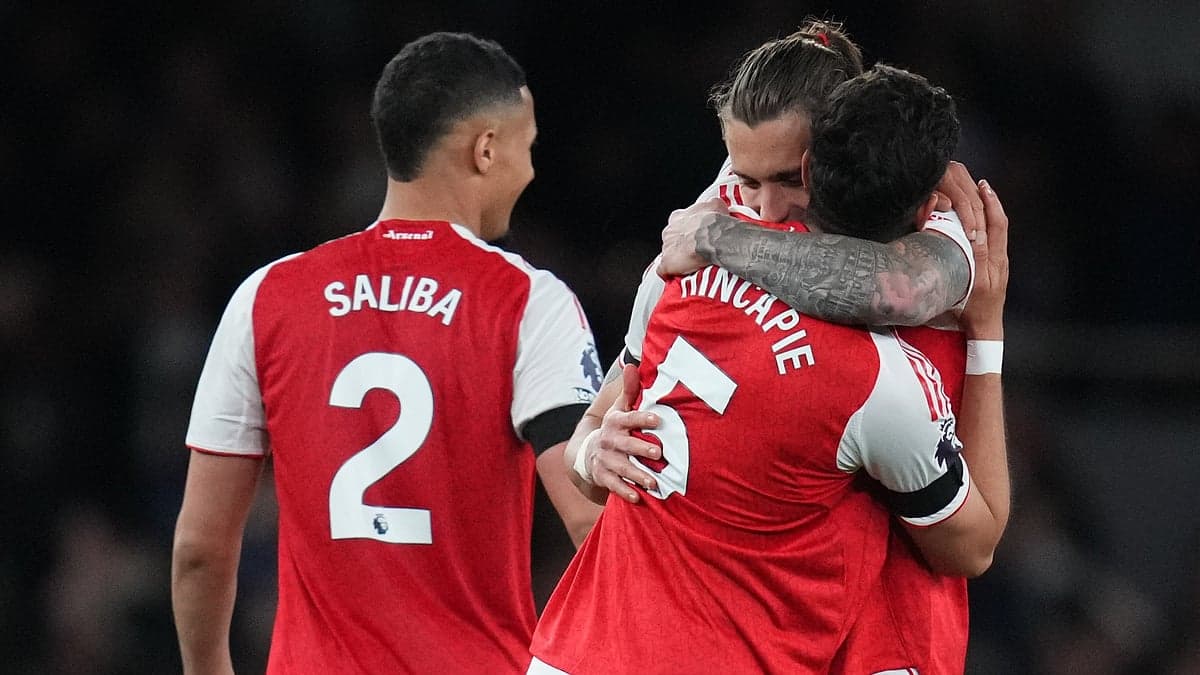
Mikel Arteta doubled down on Arsenal’s season-long DNA: a 4-3-3 that morphs into a 2-3-5 in possession. David Raya sat behind a back four of Riccardo Calafiori, Gabriel, William Saliba and C. Mosquera. Ahead of them, Declan Rice anchored with Martin Ødegaard and Eberechi Eze as twin advanced interiors, while Bukayo Saka, Kai Havertz and Leandro Trossard formed a fluid front three. It is a shape that has underpinned Arsenal’s ruthless home record: 15 wins from 19 at the Emirates, with 41 goals scored at home (an average of 2.2) and only 11 conceded at home (0.6 on average).
Burnley, by contrast, arrived as a reactive side. Mike Jackson set them up in a 4-2-3-1, with M. Weiss in goal, a back four of Lucas Pires, Maxime Esteve, Axel Tuanzebe and Kyle Walker, a double pivot of Florentino and Lesley Ugochukwu, and an attacking band of L. Tchaouna, Hannibal Mejbri and Jaidon Anthony behind Zian Flemming. It was an attempt to add structure to a campaign in which they have conceded 46 goals on their travels (an away average of 2.4) and failed to keep a single away clean sheet.
Injury absences framed the tactical voids on both sides. Arsenal were without Mikel Merino (foot injury), Jurrien Timber (ankle) and Ben White (knee), all listed as missing for this fixture. The knock-on effect was subtle but significant: Mosquera had to hold the right flank without White’s overlapping dynamism, and Calafiori’s inclusion on the left encouraged more asymmetry, with Arsenal often building with Gabriel and Saliba as the central pair while Calafiori stepped into midfield.
For Burnley, the loss of J. Beyer (hamstring) and Josh Cullen (knee) stripped depth from the defensive and midfield spine. Without Beyer, Tuanzebe and Esteve were tasked with containing Arsenal’s rotations in central zones; without Cullen’s composure, Florentino and Ugochukwu had to cover large distances horizontally as Arsenal shifted the point of attack.
Discipline has been a season-long subplot for both clubs, and it shaped the match’s emotional tone. Arsenal’s yellow-card profile this season is weighted heavily towards the final quarter: 26.00% of their yellows arrive between 76-90 minutes, part of a broader late-game spike where 14.00% fall between 91-105. That pattern reflects a side that presses aggressively until the end, often defending a lead. Burnley, meanwhile, scatter their cautions across the middle and late phases, with 20.31% of yellows between 16-30 minutes and 18.75% in each of the 76-90 and 91-105 ranges. Their reds are especially telling: one each in 31-45, 76-90 and 91-105, hinting at a team that can lose control in transition moments and late-game desperation.
On the night, Arsenal’s “Hunter vs Shield” dynamic was always likely to tilt one way. Viktor Gyökeres, though starting on the bench, loomed as the league’s sixth-rated attacking threat with 14 goals and 3 penalties scored from 4 overall team penalties, a physical focal point who wins duels and draws fouls. In his absence from the XI, the burden fell on Saka, Havertz and Trossard. Saka’s season numbers — 7 league goals, 5 assists, 63 key passes and 101 dribble attempts with 50 successful — underline his role as the primary ball-progressor and one-on-one hunter on the right. Opposite him, Walker, Burnley’s leading yellow-card collector with 9 bookings and 258 duels contested, was always going to be stretched between holding the line and stepping out to engage.
The “Engine Room” battle revolved around Ødegaard and Rice against Florentino and Ugochukwu. Ødegaard, with 6 assists, 40 key passes and an 84% pass accuracy, orchestrated between the lines, constantly seeking to overload the half-spaces around Mejbri and the Burnley pivot. Rice, whose presence underpins Arsenal’s league-best defensive platform, recycled possession and locked in counter-pressing traps whenever Burnley tried to break through Tchaouna or Anthony on the flanks.
Burnley’s own Hunter, Flemming, came into the game with 10 league goals and 2 penalties scored, plus 268 duels contested and 5 blocked shots — a forward who is as much a presser and target man as a finisher. Yet he was up against the most miserly defence in the division: Arsenal have conceded only 26 overall, with 11 at home, and have kept 11 home clean sheets and 19 in total. Saliba and Gabriel, protected by Rice, compressed the space around Flemming so that Burnley’s transitions rarely developed into clear shooting opportunities.
From a statistical prognosis perspective, the result was almost pre-written in the season data. Heading into this game, Arsenal were averaging 1.9 goals per match overall and conceding only 0.7, while Burnley were scoring 1.0 overall and conceding 2.0. Burnley’s away profile — 20 goals scored on their travels against 46 conceded — suggested that even a low-xG Arsenal performance would likely be enough if they maintained their defensive standards.
The 1-0 scoreline ultimately reflected Arsenal’s control more than Burnley’s resilience. Arsenal’s clean penalty record this season (4 taken, 4 scored, 0 missed) meant any spot-kick would almost certainly have been decisive; Burnley, with 2 penalties scored from 2 and none missed, never created the kind of penalty-box chaos that might have tilted the margins.
Following this result, the tactical story is of a champion-elect side whose structure and discipline held firm against a relegation-threatened opponent that, despite honest work in a 4-2-3-1, lacked the collective compactness and quality to consistently trouble the league leaders. Arsenal’s pressing and positional play suffocated Burnley’s attempts to build, and when the game narrowed into duels — Saka versus Walker, Ødegaard versus Florentino, Flemming versus Gabriel and Saliba — it was the league leaders’ superior quality and cohesion that carried the night.