Argentina's Tactical Superiority Over Cape Verde Islands in World Cup Match
Argentina’s 2-1 extra-time win over Cape Verde Islands at Hard Rock Stadium in this World Cup Round of 32 tie was a study in territorial dominance meeting stubborn resistance. Argentina controlled the rhythm for almost the entire 120 minutes, but needed an own goal deep into extra time to finally turn their structural superiority into progression.
Executive Summary
Argentina, in Lionel Scaloni’s 4-4-2, imposed a high-possession, positional game from the outset, pinning Cape Verde’s 4-1-4-1 into a deep block. With 64% possession, 22 total shots and 849 passes at 92% accuracy, Argentina continually worked the ball into central pockets and half-spaces. Cape Verde accepted long spells without the ball, relying on compactness, counter-attacks and set-plays, taking 16 shots of their own and forcing the contest into extra time before finally being undone.
Scoring Sequence & Disciplinary Log
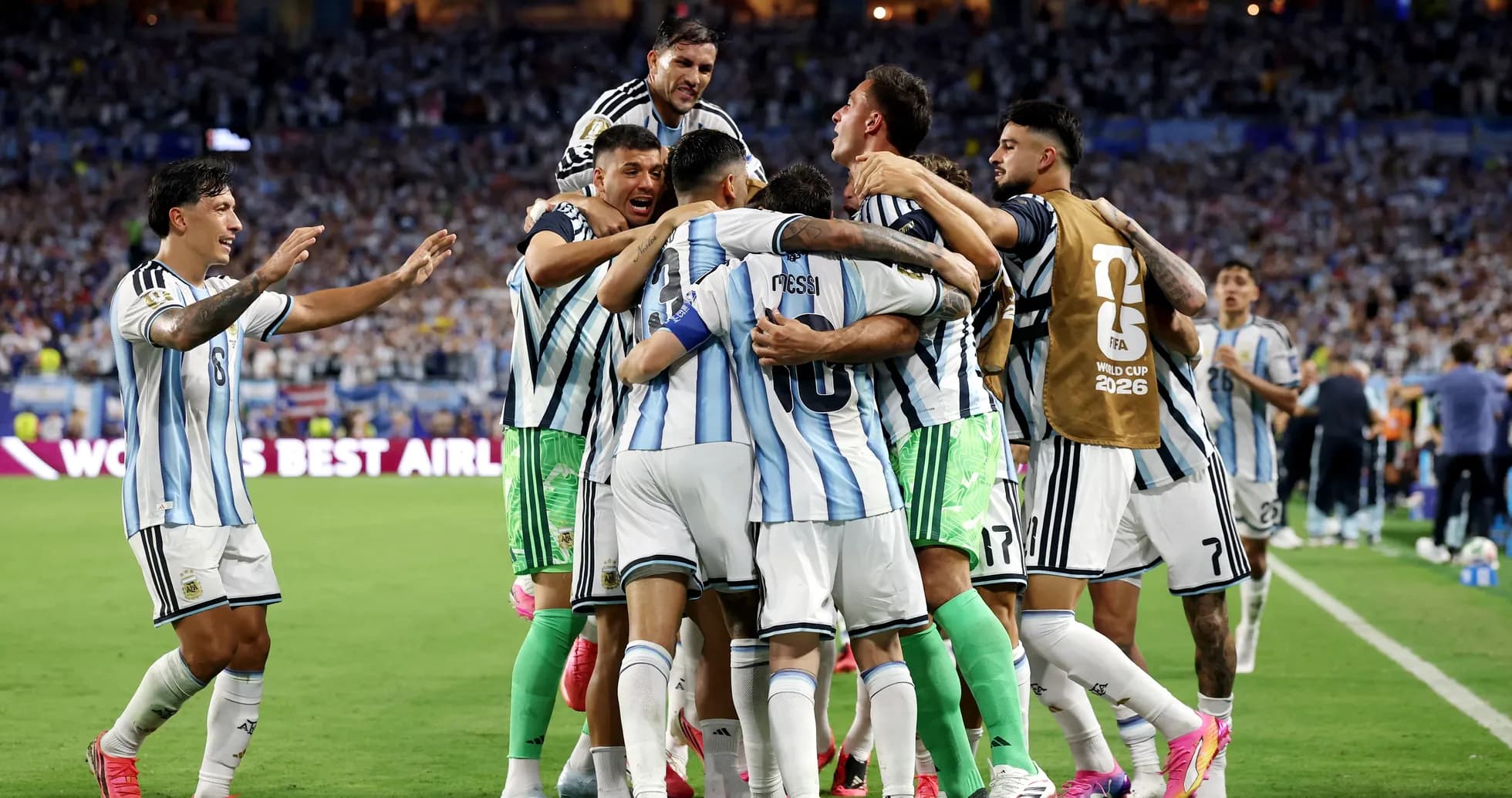
The scoring opened on 29', when Lionel Messi (Argentina) struck after a rare centre-back advance. Lisandro Martínez stepped into midfield and then continued his run, combining before Messi finished the move: 1-0 Argentina.
Cape Verde responded on 59', exploiting one of their few sustained attacks. Deroy Duarte (Cape Verde Islands), assisted by Ryan Mendes, arrived from midfield to level at 1-1, punishing Argentina’s defensive line for not tracking the late run.
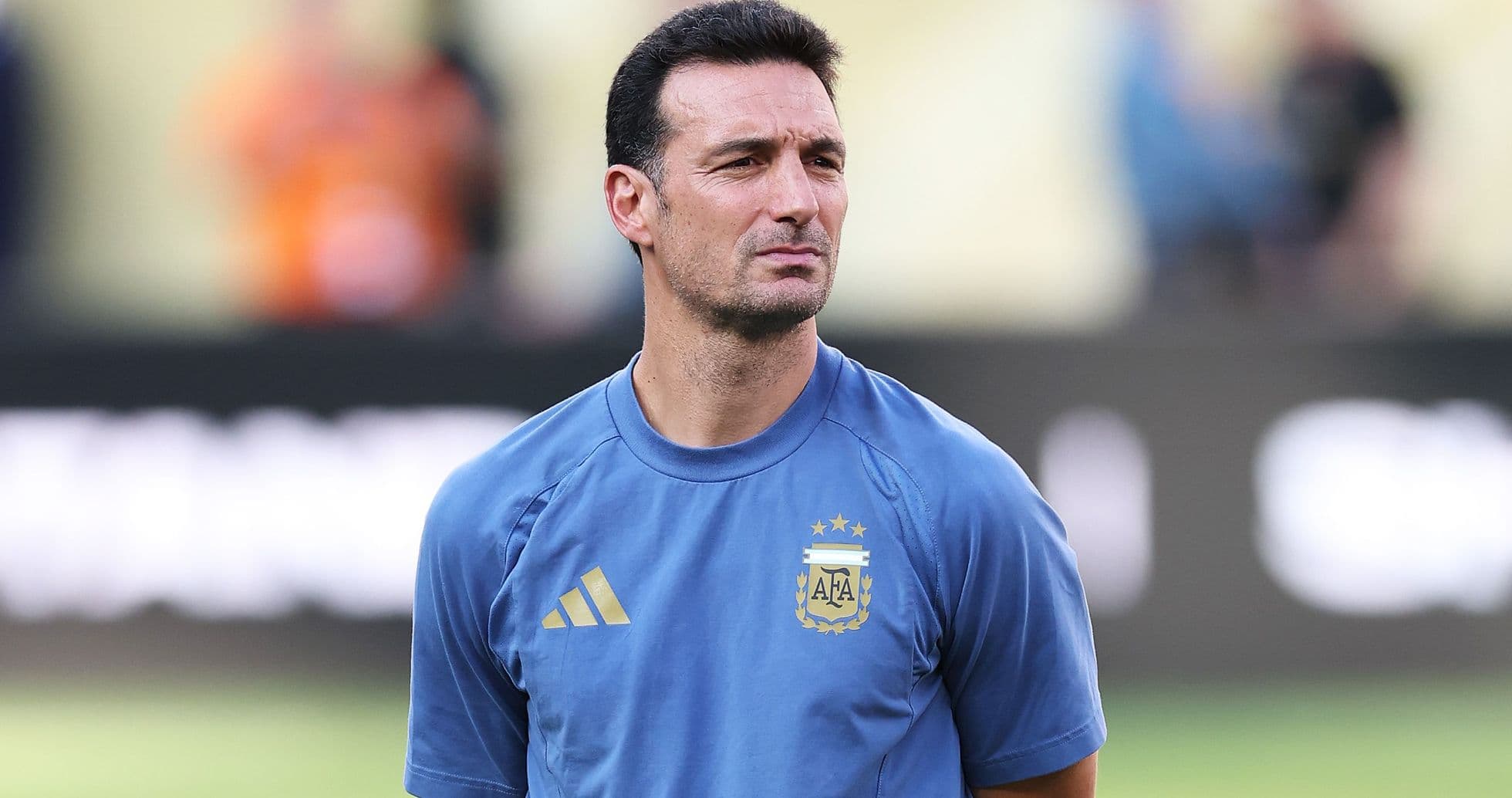
Scaloni reacted with a double substitution at 63': Nicolás González (IN) came on for Thiago Almada (OUT), and Julián Alvarez (IN) came on for Lautaro Martínez (OUT), adding more verticality and pressing energy. Pedro Leitao Brito answered at 67' with his own double change: Dailon Rocha Livramento (IN) came on for Nuno Da Costa (OUT), and Jamiro Monteiro (IN) came on for Laros Duarte (OUT), shifting fresh legs into the first and second lines of pressure.
The first card arrived on 68':
68' Kevin Lenini (Cape Verde Islands) — Foul
Cape Verde reshaped again at 80', with Hélio Varela (IN) coming on for Jovane Cabral (OUT), and Willy Semedo (IN) for Ryan Mendes (OUT), adding pace for transitions. Argentina’s response was to freshen central control: at 84', Leandro Paredes (IN) came on for Rodrigo De Paul (OUT), and at 86' Nicolás Tagliafico (IN) came on for Facundo Medina (OUT), stabilizing the left flank.
Argentina regained the lead at 93', early in extra time, via a set-piece-style situation. Lisandro Martínez (Argentina) scored, assisted by Alexis Mac Allister, making it 2-1 on the night in terms of goals scored from open play and restarts.
Cape Verde made another double switch at 100': Gilson Tavares (IN) came on for Kevin Lenini (OUT), and Yannick Semedo (IN) came on for Deroy Duarte (OUT), effectively refreshing the midfield core. The move paid off quickly in terms of pressure, and on 103' Sidny Lopes Cabral (Cape Verde Islands) scored unassisted, bringing the score in extra time to 1-1 and the overall to 2-2 on the pitch.
Scaloni’s final defensive adjustment came at 104', when Gonzalo Montiel (IN) replaced Nahuel Molina (OUT) at right-back, adding fresh defensive legs.
The decisive moment came on 111'. Under sustained Argentine pressure, Diney Borges turned the ball into his own net. The own goal was credited to Argentina, making it 2-1 after extra time for the home side on the scoreboard.
The final card of the night came late:
115' Gonzalo Montiel (Argentina) — Foul
Card totals: Argentina 1, Cape Verde Islands 1, Total 2.
Tactical Breakdown & Personnel
Argentina’s 4-4-2 was built on a back four of Nahuel Molina, Cristian Romero, Lisandro Martínez and Facundo Medina, with a midfield line of Rodrigo De Paul, Alexis Mac Allister, Enzo Fernández and Thiago Almada behind the Messi–Lautaro Martínez strike pair. The structure aimed to overload central zones while keeping width through the full-backs and Almada drifting inside-out from the left.
With 64% possession and 849 passes (779 accurate, 92%), Argentina adopted a patient circulation, frequently forming a 2-3-5 in attack: the full-backs pushed high, Enzo Fernández anchored centrally, and De Paul plus Mac Allister operated as advanced interiors. Messi dropped between lines, creating a 4v3 or 5v4 in midfield, while Lautaro Martínez pinned the Cape Verde centre-backs.
Cape Verde’s 4-1-4-1, with Kevin Lenini as the single pivot in front of Steven Moreira, Pico, Diney Borges and Sidny Lopes Cabral, focused on vertical compactness. The wide midfielders Ryan Mendes and Jovane Cabral tucked in, narrowing the block and inviting Argentina to circulate laterally. The front man Nuno Da Costa led sporadic presses but mostly protected central lanes, forcing Argentina to work through crowded channels.
Statistically, Argentina’s 22 total shots (10 on goal, 7 blocked) to Cape Verde’s 16 (5 on goal, 6 blocked) reflect territorial dominance but also the visitors’ capacity to contest the box. Argentina generated 15 shots inside the box, evidence of sustained penetration, yet Cape Verde’s box defending and goalkeeping kept the tie alive into extra time.
In goal, Emiliano Martínez (Argentina) made 3 saves, with a goals prevented figure of -0.6, indicating that, relative to the quality of chances faced, he conceded slightly more than the underlying numbers suggested. Vozinha (Cape Verde Islands), facing heavier fire, produced 8 saves, also with goals prevented at -0.6, suggesting that despite the volume of interventions, Argentina’s finishing plus the own goal tilted the margins.
The substitutions were tactically coherent. Argentina’s attacking changes (Nicolás González and Julián Alvarez) increased depth runs and pressing intensity, while Paredes and Tagliafico later reinforced control and defensive stability for extra time. Montiel’s late introduction aimed specifically at managing Cape Verde’s renewed wide threat after the Semedo and Varela entries.
Cape Verde’s bench usage was about energy and transitions. Monteiro and Livramento injected fresh running and ball-carrying from deep; Varela and Willy Semedo added directness and pace against tiring Argentine full-backs; Yannick Semedo and Tavares rebalanced a midfield that had spent long periods chasing.
Structurally, Argentina’s main vulnerability came in transition and second-phase defending, as shown by both Cape Verde goals: late midfield runs and wide-to-central switches exploited brief disorganization when Argentina’s full-backs were high. Conversely, Cape Verde’s undoing was the cumulative pressure of Argentina’s possession game, with the decisive own goal arriving after sustained attacking sequences that forced repeated defensive actions in their own six-yard box.
The Statistical Verdict
The underlying numbers underline Argentina’s superiority. With xG at 2.16 against Cape Verde’s 0.45, the hosts created significantly better chances and in greater volume. Their 64% possession and 849 passes at 92% accuracy versus Cape Verde’s 476 passes at 86% show a clear control of tempo and territory.
In terms of attacking output, Argentina’s 10 shots on goal from 22 total attempts, with 15 inside the box, indicate both volume and quality. Cape Verde’s 16 shots, only 6 inside the box and 5 on goal, reflect a more speculative shot profile, often from distance or broken play. The blocked shots tally (7 for Argentina, 6 for Cape Verde) highlights both teams’ commitment to protecting the box.
Discipline was balanced (13 fouls and 1 yellow for Argentina; 12 fouls and 1 yellow for Cape Verde), supporting the view of a competitive but not overly aggressive contest. Corner kicks were level at 8-8, underscoring Cape Verde’s intermittent offensive presence despite long spells of defending.
Ultimately, Argentina’s territorial dominance, superior chance quality and deeper bench made the difference, even if the decisive moment came via an own goal rather than a crafted finish. Cape Verde’s compact 4-1-4-1 and resilient goalkeeping kept them in the tie far beyond what the xG and possession figures would typically predict, but over 120 minutes the statistical and tactical weight of Argentina’s approach proved just enough to advance.