Wolves vs Fulham: Tactical Draw at Molineux
Wolves and Fulham shared a 1-1 draw at Molineux Stadium in a match that quickly settled into a clear tactical contrast. Wolves, under Rob Edwards, leaned into a compact, counter-attacking 4-2-3-1, ceding territory but looking to break with direct verticality. Fulham, shaped by Marco Silva in the same base formation, controlled the ball and territory, but without enough tempo changes to fully convert their dominance into chances.
Possession numbers tell the story of the game’s structure: Wolves had just 31% of the ball, Fulham 69%. From the outset, Wolves’ back four of D. M. Wolfe, L. Krejci, S. Bueno and Y. Mosquera stayed narrow, with the double pivot of Joao Gomes and Andre screening central lanes. The idea was clear: compress the middle, funnel Fulham wide, and then spring forward through Hwang Hee-Chan and the advanced midfield line behind A. Armstrong.
Opening Goal
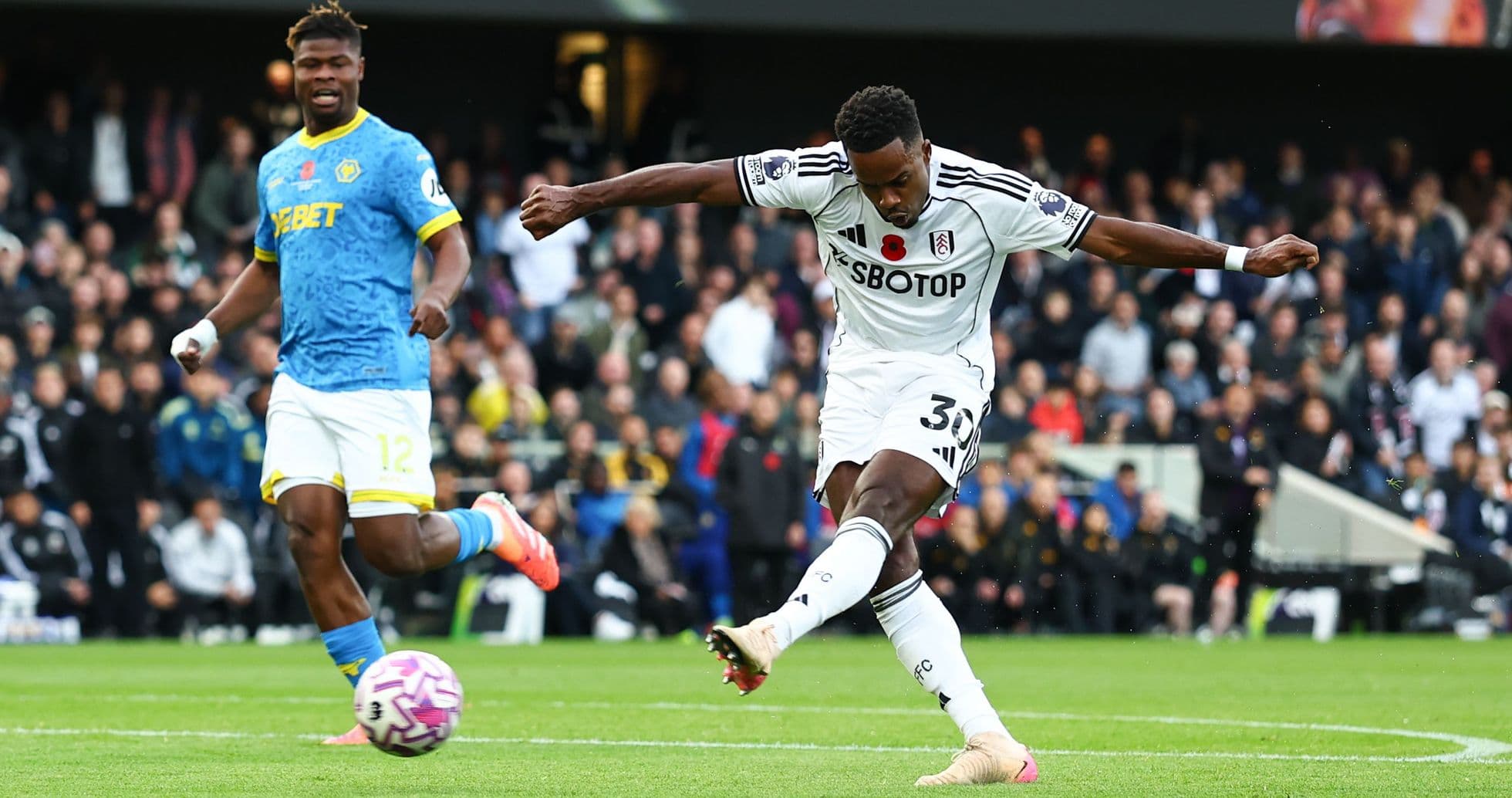
The opening goal on 25 minutes reflected that plan. M. Mane, operating as one of the advanced midfielders in Wolves’ 4-2-3-1, arrived from a second line run to finish after Hwang Hee-Chan provided the assist. It was a classic transition strike: Wolves’ limited possession forced them to be selective, but when they did break, they attacked with numbers into the box. Seven of their 11 total shots came from inside the area, underscoring how they prioritised quality over volume when they did get forward.
Fulham’s response was methodical rather than frantic. With S. Berge and S. Lukic as the double pivot, and O. Bobb, E. Smith Rowe and A. Iwobi floating between the lines, Fulham tried to overload the half-spaces. Their 580 total passes, with 501 accurate (86%), show how effectively they circulated the ball against Wolves’ mid-to-low block. The full-backs, Timothy Castagne and A. Robinson, pushed high to pin Wolves’ wide midfielders, forcing the home side deeper and reducing their capacity to counter as the half wore on.
Equaliser
The equaliser just before half-time came from that territorial pressure and a key structural detail: Fulham’s willingness to commit their full-backs into the box. A VAR intervention at 45+1’ confirmed a penalty for Fulham, and at 45’ A. Robinson stepped up to convert from the spot. The fact that a left-back took and scored the penalty underlines Robinson’s importance in Fulham’s attacking scheme; he was not just providing width but also attacking the inside channel, creating numerical superiority against Wolves’ right side.
Goalkeeper Performance
From a defensive perspective, both teams’ goalkeepers had mixed statistical profiles. J. Sa for Wolves made 4 saves, while Bernd Leno for Fulham made 2. However, the goals prevented metric was negative for both sides at -0.64, suggesting that each goalkeeper conceded slightly more than the shot quality might have predicted. For Wolves, this aligns with Fulham’s 1.53 xG versus a single goal scored; Sa was busy, and Wolves’ defensive index on the day was stretched by the volume of Fulham’s controlled possession and 13 total shots.
Wolves’ own attacking output produced 1.4 xG for their single goal. With only 250 total passes and 173 accurate (69%), their build-up was deliberately sparse and more direct. The low pass completion reflects both the risk profile of their forward balls and the pressure Fulham applied in midfield. Still, the shot profile – 11 attempts, 7 in the box – suggests that when Wolves did manage to play through the press, they reached good finishing zones, largely through the movements of A. Armstrong and the support from M. Mane and R. Gomes between the lines.
Second Half Adjustments
The second half became a battle of adjustments through substitutions. Marco Silva acted first at 46’, with Kevin (IN) coming on for S. Berge (OUT), a move that tilted Fulham slightly more toward attacking thrust from midfield rather than pure control. Later, R. Jimenez (IN) for Rodrigo Muniz (OUT) at 67’ and J. King (IN) for A. Iwobi (OUT) at the same minute refreshed the front line, keeping pressure on Wolves’ centre-backs and maintaining the high pressing cues from the front.
Rob Edwards’ response was more conservative and came later. At 72’, T. Arokodare (IN) came on for A. Armstrong (OUT), offering a more physical focal point to hold up the ball and relieve pressure. At 79’, J. Bellegarde (IN) replaced Hwang Hee-Chan (OUT), trading some direct running for an extra carrier who could help Wolves keep the ball a bit longer in transitions. The double change at 85’ – H. Bueno (IN) for D. M. Wolfe (OUT) and Pedro Lima (IN) for R. Gomes (OUT) – further solidified the defensive structure, signalling that Wolves were content to protect the point rather than chase a late winner.
Discipline
Discipline also shaped the closing stages. Wolves committed 20 fouls to Fulham’s 8, a direct consequence of their low block and repeated defensive duels. The only booking of the match came at 90+4’, when Andre received a yellow card for “Foul”. It encapsulated Wolves’ physical, last-ditch defending in the final minutes as Fulham pushed for a winner with fresh legs in wide and central attacking positions.
Overall Performance
Statistically, Fulham’s 5 shots on goal to Wolves’ 3, their superior xG (1.53 to 1.4), and their overwhelming possession suggest they edged the overall performance. Yet Wolves’ compact 4-2-3-1, their ability to generate high-quality chances from limited possession, and the timing of their substitutions allowed them to stabilise the game and secure a draw. In tactical terms, it was a classic clash between a possession-dominant side and a counter-attacking unit, with both game plans functioning well enough to justify the 1-1 scoreline at Molineux Stadium.