William Saliba Injury: Arsenal Faces Defensive Crisis
William Saliba’s World Cup has ended in agony, and Arsenal’s new season has just been thrown a problem it could have done without.
The France defender suffered a serious back injury during Les Bleus’ 2-0 World Cup semi-final defeat to Spain and is expected to miss four to five months, according to L’Equipe. For Mikel Arteta, that is not just bad news. It is a structural shock.
“My back is dead”
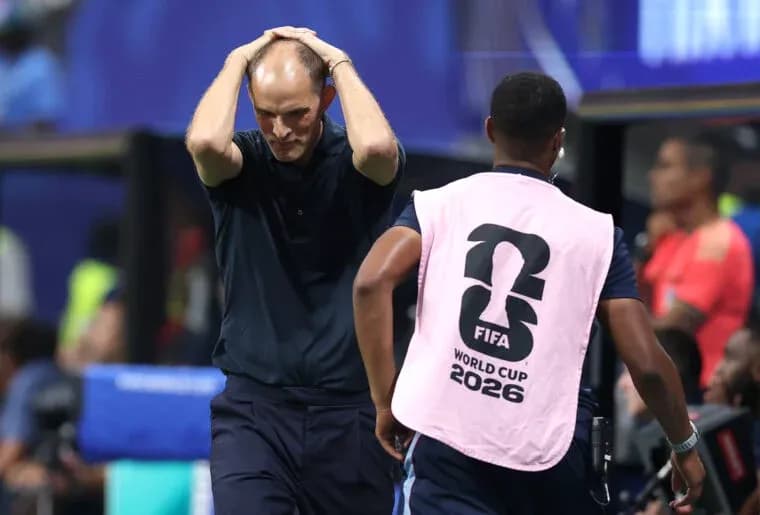
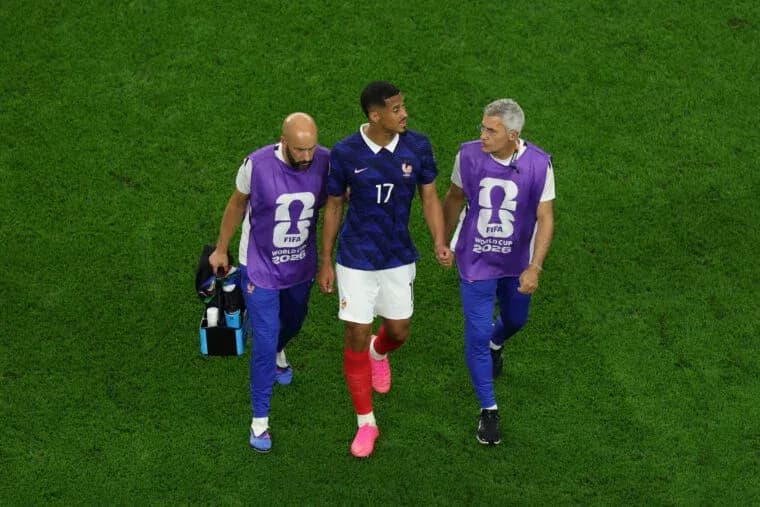
Saliba had been struggling from the opening stages in Munich, moving stiffly, stretching between breaks in play. By the half-hour mark, he could not go on.
Moments before being withdrawn in the 30th minute, he reportedly turned to his international team-mate Dayot Upamecano and delivered a stark message: “I can’t take it anymore, my back is dead.”
He trudged off, head bowed, and France’s back line immediately lost its authority. Maxence Lacroix came on, but the cohesion went with Saliba. Spain seized control, and the French defence, so assured with the Arsenal centre-back marshalling it, suddenly looked fragile.
For Arsenal, that image will feel painfully familiar. Saliba has battled chronic back issues before, problems that derailed their title push two seasons ago. The concern now is not just the length of this lay-off, but what it says about the defender’s long-term durability.
Arsenal’s defensive pillar removed
Saliba is 25 and already one of the Premier League’s standout centre-backs. Calm under pressure, dominant in duels, sharp in his positioning – he has become the reference point in Arsenal’s defensive structure, the player around whom everything else is built.
His partnership with Gabriel Magalhaes underpinned Arsenal’s domestic and Champions League campaigns last season. When he plays, the team defends high, compresses space and suffocates opponents. When he does not, the entire back line drops half a step. The press loosens. The risk calculation changes.
Losing him “well into the new season”, as the projected timeline suggests, forces Arteta into an early tactical rethink. Recruitment plans, rotation ideas, even how aggressively Arsenal can start the campaign – all of it now runs through one question: who replaces William Saliba?
The case for Mosquera
The answer might already be in the dressing room.
Cristhian Mosquera, still young and still learning, now finds a door swinging open much earlier than anyone anticipated. The Spanish defender impressed last season, showing a blend that coaches crave but rarely trust in players of his age: composure on the ball, clear defensive instincts and the physical presence to cope with elite forwards.
He does not have Saliba’s body of work. Few do. But he has the raw material.
Mosquera is comfortable stepping into midfield with possession, happy to defend large spaces, and strong enough in duels to hold his own in the Premier League’s more chaotic moments. Those traits matter for a side that builds from the back and defends on the front foot.
Replacing Saliba is not a like-for-like exercise; it is a test of whether Arsenal can maintain their identity without their defensive leader. Mosquera will not replicate everything the Frenchman brings. What he can do is offer his own profile, his own solutions, and grow into the role.
A chance that cannot be staged
Arteta may look to the market, may juggle options, may lean on versatility. Yet there is a compelling football logic in giving Mosquera real responsibility alongside Gabriel.
Regular minutes at the heart of the defence would accelerate his development in a way no training session can. The rhythm of top-flight football, the demand to concentrate for 90 minutes every three days, the scrutiny when a mistake is punished – that is where centre-backs are truly forged.
The stakes are high. So is the opportunity.
Saliba’s injury strips Arsenal of one of their most important players just as another season of high expectation looms. It also hands Cristhian Mosquera the kind of opening that can define a career.
Is he ready to fill the void? Arsenal are about to find out.