Tottenham's Brutal Review After Narrow Escape: The De Zerbi Impact
Tottenham are picking through the wreckage of a Premier League season that came within two points of catastrophe – and nothing, or no one, is off limits.
An internal review is under way at the club after a campaign that ended with Spurs glancing over the edge of the relegation trapdoor on the final day, only for Roberto De Zerbi to drag them clear with 11 points from their last six games. Survival was secured, but the message from inside the club is blunt: this cannot happen again.
From ‘Spursy’ to sports science
The review cuts across every corner of the football operation. A new psychologist is being brought in to tackle the “Spursy” tag that has hung over the club for years, with a specific brief to harden a squad that has too often folded under pressure.
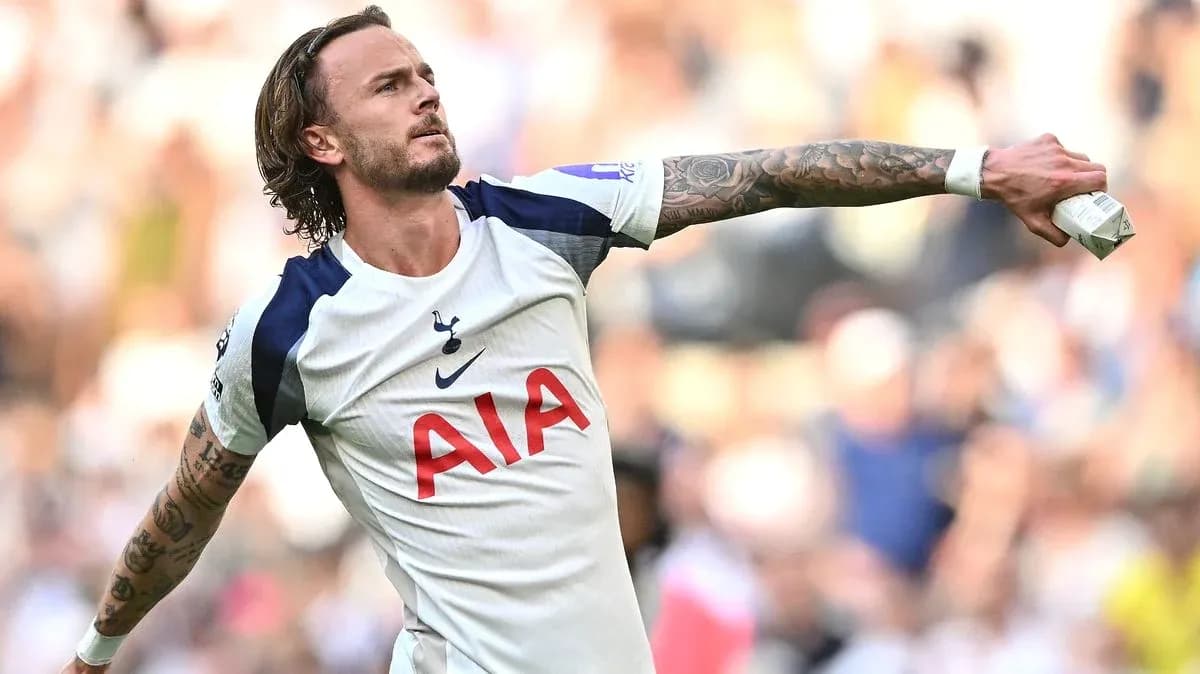
The physical side has been even more damning. Tottenham suffered more injuries than any other Premier League side this season, many of them long-term. James Maddison, who has only just returned after a partially torn anterior cruciate ligament finally gave way last summer, did not hide his frustration.
“Our situation with the injuries has been worse than any other club,” he said after the win over Everton. “People try and say ‘Oh, but we’ve got this and that’, but ours is astronomical, and we need to look at why that is.”
The club has listened. What began as quiet concern has turned into a full-scale investigation led by new performance director Dan Lewindon, who arrived from City Football Group in February and found a structure creaking under the strain of constant change.
He walked into Hotspur Way the day before Thomas Frank left the club and immediately saw a medical and performance set-up that had been through years of churn. Long-time head of medicine and sports science Geoff Scott departed in 2024 after more than two decades and is now at Nottingham Forest. His successors barely had time to settle.
Director of performance services Adam Brett and head of sports science Nick Davies both exited after just a year in their roles. Nick Stubbings came in last summer as men’s team medical lead after 11 years at Brentford, following Frank and a cluster of former Bees to north London. Stability never had a chance to take root.
Lewindon’s mandate: fix the body, sharpen the mind
Lewindon has been handed the job of dragging Spurs’ performance and medical departments up to the level of the world’s elite. His background spans football, tennis and rugby at the highest level, and those inside the club are banking on his experience to halt the conveyor belt of injuries that has left double figures of players sidelined far too often over the past three seasons.
De Zerbi has already forged a close working relationship with him. The pair have held regular conversations about how to reshape the club’s physical and medical infrastructure, and how to align it with the demands of the Italian’s intense, high-energy style.
Non-executive chairman Peter Charrington has publicly signposted the shake-up, confirming moves to “modernise our football operation, with a significant focus on raising standards across medical and performance”.
De Zerbi’s influence stretches beyond tactics and touchlines. Those who deal with him daily in the medical department have been struck by a manager who is clear, consistent and unflinching about one thing: he will not gamble with players’ health for a short-term result.
Under pressure and under scrutiny, he has insisted on detailed feedback before bringing players back, prioritising the individual over the league table. One-on-one meetings have become a feature of his regime, as has the use of video clips showing players at their best – at Spurs and previous clubs – to rebuild shattered confidence during that crucial late run.
The pitch under the microscope
Nothing is being left unexplored, not even the ground beneath their feet.
Tottenham are already running an investigation into whether the Tottenham Hotspur Stadium’s retractable pitch – which slides under the south stand to make way for NFL games and concerts – has contributed to a spate of serious knee injuries. The club has suffered five ACL injuries in recent years, a number deemed unacceptable. The situation has drawn comparisons with Real Madrid, who have also endured a heavy injury load since installing a retractable surface.
Early independent tests carried out on matchdays have so far shown no discernible difference in bounce or spring between the stadium pitch and the turf at Hotspur Way. That has not closed the case. More detailed, long-term analysis is planned to rule out any hidden issues.
Some injuries are simply cruel. Xavi Simons and Wilson Odobert both suffered unfortunate ACL problems, and the handling of Simons’ injury at Molineux has already been reviewed. The physios allowed him to attempt to continue at his own request before he was forced off, and the internal verdict is that the medical staff took the right precautionary steps and avoided further damage.
A new psychological spine
The review is not just about muscles and ligaments. It is about mentality.
At a club routinely mocked with that ‘Spursy’ label, Lewindon has pushed hard for a new lead psychologist to work full-time with the squad and the staff around them. The aim is to equip everyone at the club to handle the strain of elite sport – the dips in form, the injuries, the noise from outside.
De Zerbi sees himself as part-coach, part-psychologist. His approach has been visible in those constant individual meetings and his insistence on understanding players as people, not just assets. Family situations, personality, position on the pitch – all of it feeds into how he wants to manage them and how he expects the club to support them.
Lewindon’s plans mirror that philosophy. Tottenham are preparing to move towards a pod-based model of care, where groups of four to six players work closely with a dedicated physio and sports scientist. Rather than one-size-fits-all, each pod will be built around specific needs, positions and profiles.
Like a teacher with fewer students, the theory is simple: smaller groups, deeper understanding. Better-informed decisions about training loads and recovery. Fewer surprises. Fewer breakdowns.
Trust, transfers and a sporting director in limbo
Trust in the medical department has become another battleground. Some players have leaned more heavily on staff from former clubs or their national teams. Spurs are not alone in navigating the complex web of personal performance coaches and international medics that surround modern footballers, but they know they must manage it better.
The club wants a single, agreed plan for each player, signed off by everyone involved. That means stronger relationships, clearer communication and less room for mixed messages.
Once Lewindon’s review is complete, changes behind the scenes are expected. New faces. New ideas. Tighter integration between departments. Even recruitment is under scrutiny, with an eye on bringing in more physically robust players who can withstand the demands of De Zerbi’s football.
At executive level, the fallout from this season has left sporting director Johan Lange’s position in serious doubt. After a chaotic 12 months featuring four different head coaches, the Dane could be shifted into a supporting or handover role, with Spurs targeting what they see as a world-class sporting director to lead the next phase.
Inside the club, there is also a frank admission that the revolving door in the dugout has contributed to the injury crisis. Each new head coach arrived with new training methods, new intensity levels and a fresh group of players desperate to impress. Sessions ramped up, bodies were pushed to the limit, and the casualty list grew.
No room for another near-miss
Tottenham know the margin for error has gone. Another season like this one, and the damage may not be so easily repaired.
They believe the overhaul now in motion – from the pitch technology to the psychology sessions, from pod-based rehab to a revamped recruitment strategy – will take time to show its worth. There will be no overnight miracle.
But if De Zerbi is to turn a late escape into a genuine resurgence, he will need something Spurs have not given any manager for far too long: a fit squad, a clear plan and a club that finally looks after the body and the mind with the same ruthless attention to detail.
The question now is simple. Having stared over the edge, will Tottenham learn from the fall – or just wait for gravity to catch up again?