Tottenham vs Leeds: Tactical Stalemate Ends 1-1
Tottenham and Leeds played out a 1-1 tactical stalemate at Tottenham Hotspur Stadium, a match that neatly reflected both sides’ current identities. Roberto De Zerbi’s Tottenham, in a 4-2-3-1, dominated territory and set-piece volume, but Daniel Farke’s 3-5-2 Leeds absorbed pressure intelligently and carried a persistent counter and transition threat. With the score 0-0 at half-time and finishing 1-1, the underlying numbers – Tottenham 1.32 xG, Leeds 1.26 xG – underline how finely balanced the game was despite Spurs’ 57% possession and 14 corners to Leeds’ 2.
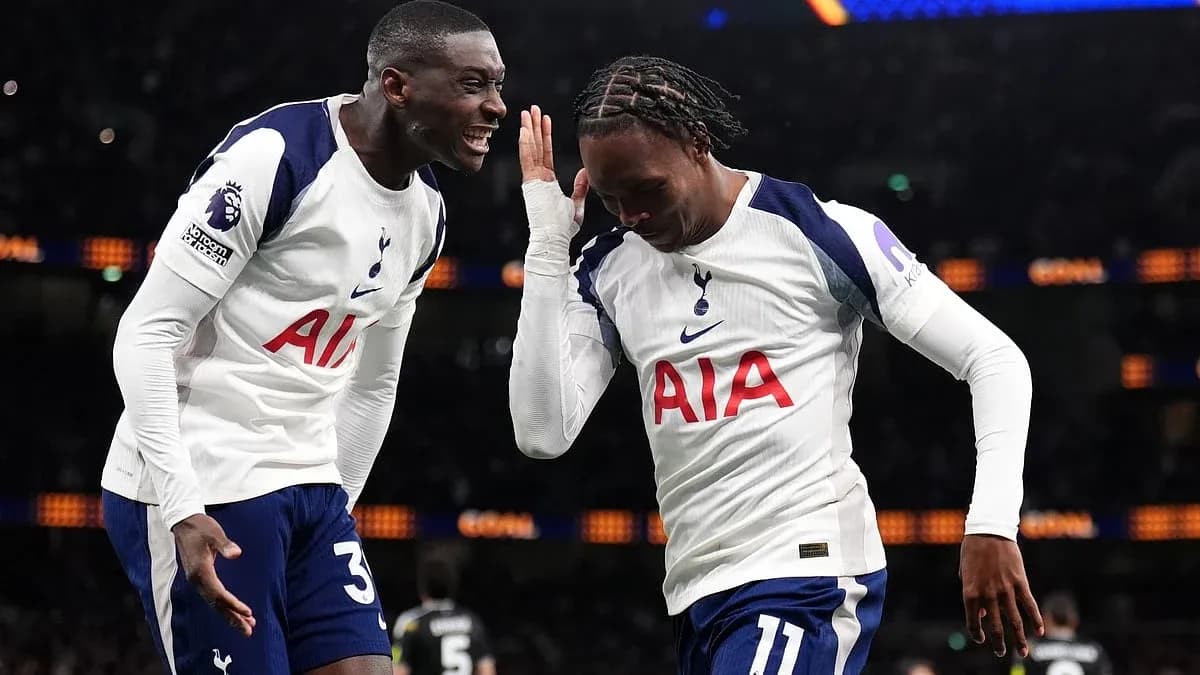
The scoring opened on 50': M. Tel (Tottenham) struck a Normal Goal with no assist, a product of Spurs’ sustained pressure after the interval. Leeds’ equaliser was rooted in process rather than chaos. On 71', a VAR check recorded as “Penalty confirmed” for Ethan Ampadu (Leeds) validated Leeds’ claim for a spot-kick. Three minutes later, at 74', D. Calvert-Lewin (Leeds) converted the Penalty, again with no assist, to level the match at 1-1. These were the only two goals, matching the full-time scoreline.
Discipline
Discipline was asymmetrical and tactically revealing. All cards, in order:
- 41' Kevin Danso (Tottenham) — Foul
- 66' João Palhinha (Tottenham) — Foul
- 79' Joe Rodon (Leeds) — Foul
- 82' Pedro Porro (Tottenham) — Foul
Totals: Tottenham 3 yellow cards, Leeds 1 yellow card, total 4. Each Tottenham booking stemmed from a “Foul”, reflecting the cost of their aggressive counter-press and high defensive line when Leeds broke through the first wave. Rodon’s 79' “Foul” yellow came as Leeds tried to manage space and tempo in the closing phase.
Tactical Analysis
Tottenham’s 4-2-3-1 was built around structured possession and vertical surges from the three behind Richarlison. A. Kinsky in goal was mostly a distributor, making 3 saves but posting a negative goals prevented figure (-0.49), suggesting that Calvert-Lewin’s penalty and Leeds’ best chances were of a quality he might have done better with relative to expectation. In front of him, the back four of Pedro Porro, Kevin Danso, M. van de Ven and D. Udogie pushed high, with Porro and Udogie especially important in pinning back Leeds’ wing-backs and generating the 14 corners and 13 shots inside the box.
The double pivot of João Palhinha and R. Bentancur was central to De Zerbi’s structure. Palhinha’s 66' yellow for “Foul” typified his role: stepping out to break Leeds’ transitional moves at source. Bentancur, later replaced at 81' when L. Bergvall (IN) came on for R. Bentancur (OUT), balanced circulation with late arrivals. Ahead of them, R. Kolo Muani, C. Gallagher and M. Tel rotated fluidly. Tel, nominally from the left, attacked the half-space and penalty area aggressively, and his 50' goal was the clearest expression of Spurs’ plan: overload wide, then penetrate centrally. His substitution at 85' – J. Maddison (IN) came on for M. Tel (OUT) – shifted Tottenham towards a more intricate, between-the-lines creator profile for the final minutes, but without changing the score.
Richarlison as the lone forward worked primarily as a reference point to fix Leeds’ central trio of J. Rodon, J. Bijol and P. Struijk. When Tottenham sought extra width and attacking thrust late on, D. Spence (IN) came on for D. Udogie (OUT) at 85', pushing Porro even higher and turning the back line into a situational three in possession.
Leeds’ 3-5-2 was compact and clear in its triggers. K. Darlow made just 1 save but, like Kinsky, registered -0.49 goals prevented, hinting that Tottenham’s best looks were relatively contained or mis-executed rather than demanding elite shot-stopping. The back three of Rodon, Bijol and Struijk initially held a narrow block, forcing Spurs wide and trusting their aerial presence to deal with crosses and set pieces. The first Leeds change at 56' – S. Bornauw (IN) came on for P. Struijk (OUT) – was a like-for-like adjustment that preserved the structural integrity of the back three while refreshing legs and aerial power.
In midfield, D. James and J. Justin provided width, with A. Stach, Ethan Ampadu and A. Tanaka forming the central triangle. Ampadu’s involvement in the 71' VAR “Penalty confirmed” episode underlined his willingness to break lines and arrive in advanced zones, not just sit as a shield. Tanaka’s 90+3' substitution – S. Longstaff (IN) came on for A. Tanaka (OUT) – was a late stabilising move, adding fresh energy in central areas to protect the draw. Earlier, Leeds had refreshed their front line and wide threat: at 63' L. Nmecha (IN) came on for B. Aaronson (OUT), and simultaneously W. Gnonto (IN) came on for D. James (OUT), injecting pace and direct running against a Tottenham defence already carrying yellow cards.
The forward pair of D. Calvert-Lewin and B. Aaronson gave Leeds a dual threat: Calvert-Lewin as a penalty-box focal point (ultimately converting from the spot at 74') and Aaronson dropping into pockets to link counters. When Aaronson departed on 63', Leeds traded some connective tissue for Nmecha’s more straightforward goal threat, signalling a shift towards more vertical, direct attacks in the channels.
Statistics
Statistically, the match was a near-perfect equilibrium disguised by stylistic contrast. Tottenham’s 57% possession, 426 passes, 341 accurate (80%) and 16 total shots reflected a side comfortable in sustained pressure, but their 1.32 xG shows that Leeds’ low block and back three limited the quality of many looks, even as Spurs racked up corners and blocked shots (6). Leeds, with 43% possession, 335 passes, 240 accurate (72%) and 11 shots, were more selective but almost as dangerous in pure chance value (1.26 xG).
Defensively, Tottenham’s higher foul count (12 vs Leeds’ 7) and three yellow cards underscore the physical cost of their aggressive pressing and rest-defence structure. Leeds’ single yellow for Joe Rodon suggests a more controlled defensive performance, with the back three and midfield screen generally well-positioned rather than constantly recovering. Overall, the numbers and the tactical patterns converge on the same verdict: Tottenham controlled the ball and territory, Leeds controlled key moments and transitions, and a 1-1 draw at Tottenham Hotspur Stadium was a fair reflection of a finely balanced Premier League contest.