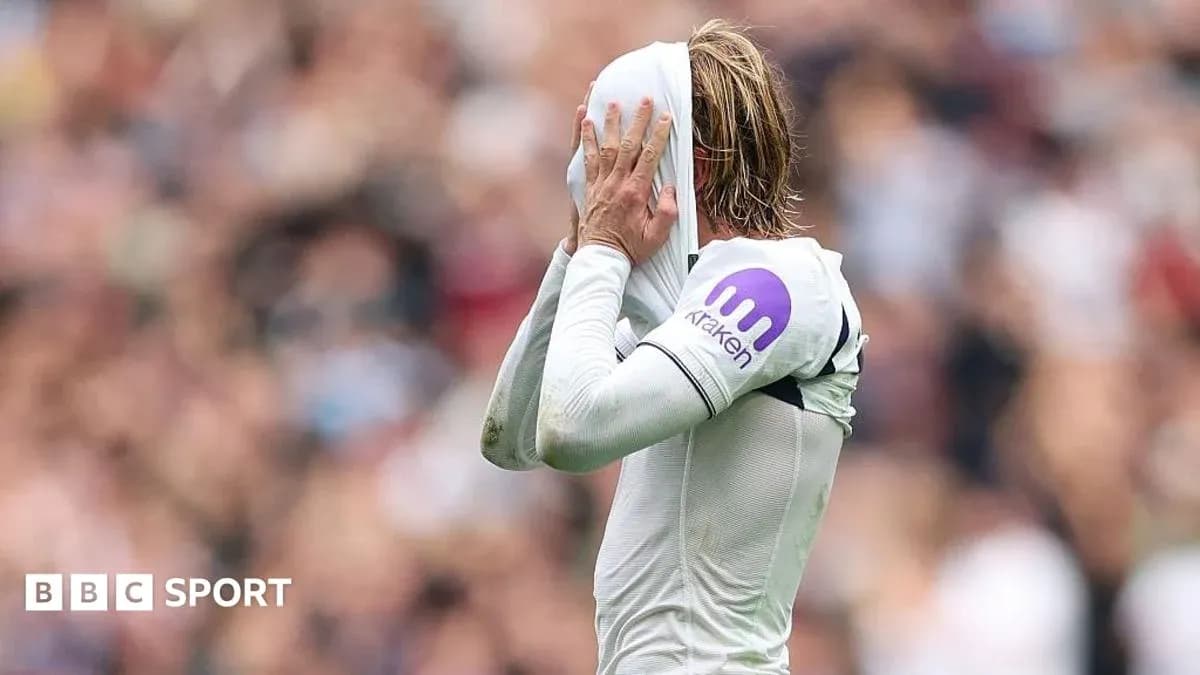
Tottenham's Fragile Start Continues: De Zerbi's Struggles
Tottenham’s slide was almost scripted.
The louder the crowd roared for a breakthrough, the more you sensed which net would bulge first. Roberto De Zerbi knew it. His own damning verdict after a 3-2 home defeat to Aston Villa said everything: “Too fragile.”
Spurs on top, then on the floor
For 20 minutes, Tottenham looked like a side ready to shake off a wretched start to the season. They pressed high, moved the ball crisply, and hemmed Villa in. Zion Suzuki, though, stood between them and the release they craved, denying Savio and Archie Gray as the home side swarmed forward.
No goal. No reward. And with this Tottenham, that usually means trouble.
The turning point arrived in first-half stoppage time, wrapped in chaos and hesitation. Micky van de Ven was off the pitch receiving treatment after a blow to the face, leaving Spurs down to 10 men. Andy Robertson tried to prevent a corner but only succeeded in gifting the ball to John McGinn. Boubacar Kamara’s effort caused panic, Johan Manzambi pounced from close range, and Villa were in front.
It felt inevitable. Statistically, it almost was. Tottenham have now failed to win any of their last 36 Premier League games when conceding first. The moment Manzambi scored, the writing was scrawled all over the half-time scoreboard.
Some home fans didn’t even see it, already heading for refreshments. Many more would not see the end.
De Zerbi’s warning ignored
De Zerbi had spoken about resilience, about staying compact, about being ready for long balls. He had even prepped his in-game reshuffle: Rodrigo Bentancur dropping into centre-back, Mateus Fernandes stepping into midfield, just in case they went down to 10 men for a longer spell.
The plan didn’t hold. The mentality didn’t either.
“In that moment of the game we have to defend, we have to defend compact, the leaders have to be leaders,” De Zerbi said. “We cannot lose this game in this way. The second goal we conceded was incredible.”
Tottenham went into the international break still searching for a first league win of the season, still stuck in the bottom three, still trying to justify more than £300m of summer spending. Two points from five games. Their worst top-flight start since 2008-09, when Juande Ramos was sacked after three more defeats and Harry Redknapp came in to rescue eighth place.
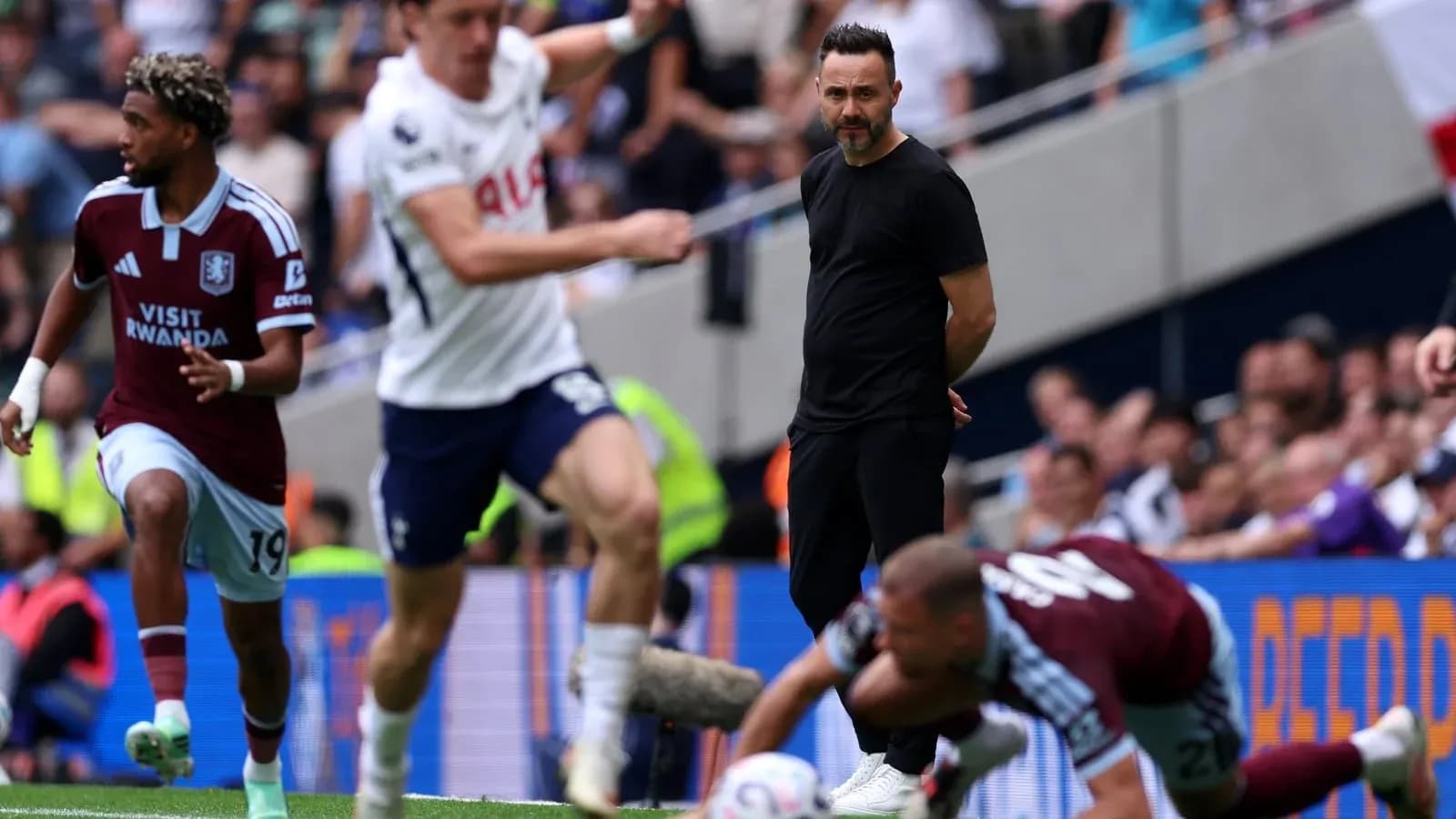
This time, the fans didn’t wait for the board. “Sacked in the morning,” sang the Villa supporters as De Zerbi stood motionless on the touchline, his team unravelling.
Kudus denied, Jackson punishes
There was a flicker of hope on the hour. Mohammed Kudus thought he had dragged Spurs level, only for VAR to rule Robertson narrowly offside in the build-up. The stadium groaned, the moment passed, and with it went Tottenham’s belief.
Seven minutes later, they were punished ruthlessly. A long, direct launch from Suzuki – the kind De Zerbi had flagged in those many meetings – sailed over a stretched home defence. Nicolas Jackson ran clear, finished, and the contest felt done.
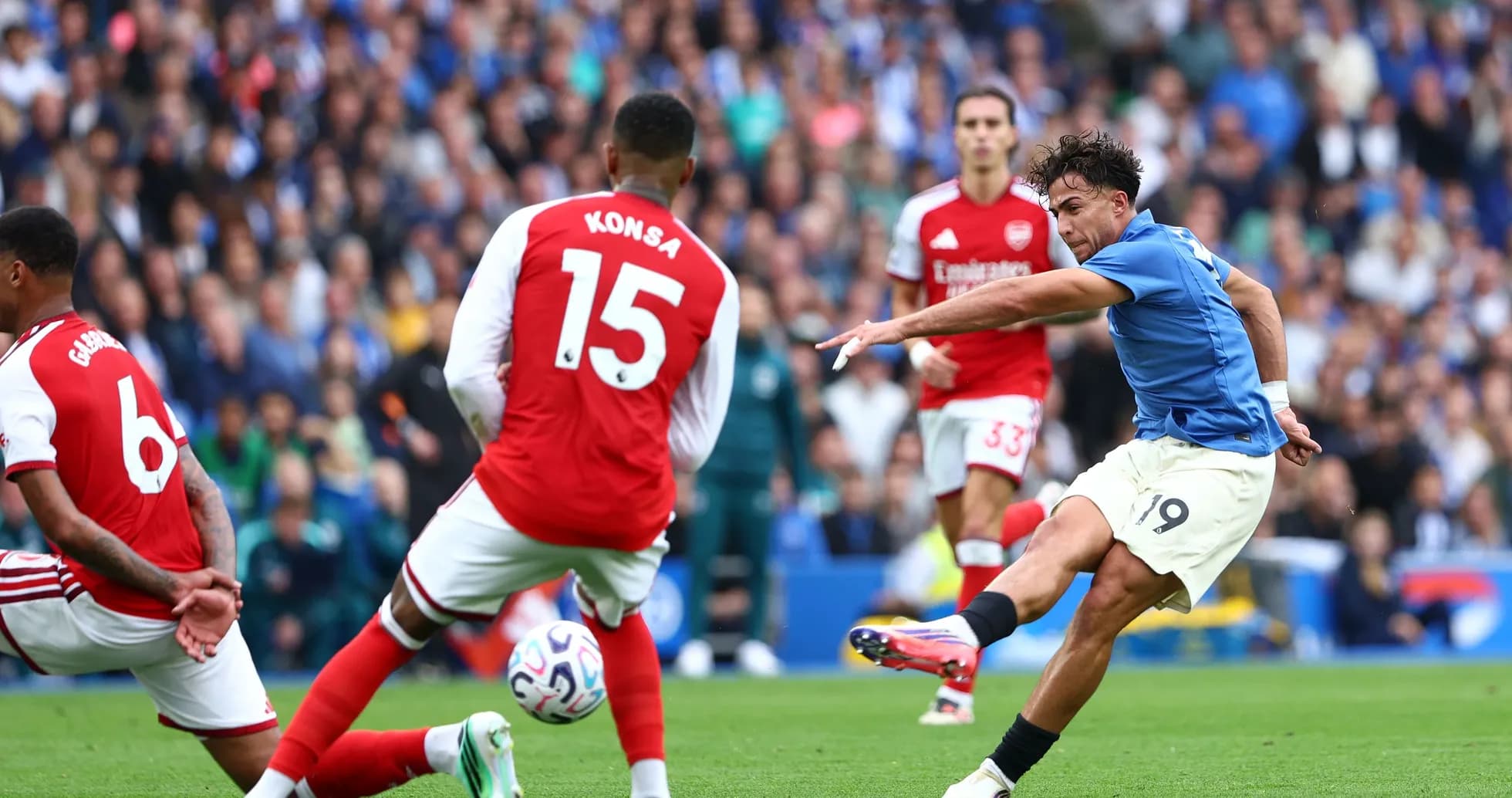
The third goal turned resignation into anger. With 11 minutes left, Emi Buendia stepped inside and unleashed a stunning 25-yard strike into the top corner. A brilliant hit, a brutal soundtrack. Thousands of Spurs fans streamed for the exits, unwilling to watch any more.
They missed Conor Gallagher’s late goal. They missed Jan Paul van Hecke’s header, the club’s first Premier League goals of the season. On the scoreboard, it softened the blow. On the pitch and in the stands, it changed nothing.
Villa settle, Spurs search
This was a significant afternoon for Villa as well. Europa League winners, more than £250m invested after high-profile exits, and a stuttering league start with three defeats in four. They needed a first win every bit as much as Tottenham.
They looked like a team edging into shape. McGinn, the £2.75m signing from Hibs eight years ago, bossed the midfield and overshadowed Sandro Tonali, Tottenham’s £100m statement buy from Newcastle. Suzuki, assured and brave, repelled Savio three times before the Brazilian faded. Villa’s structure held, their plan clear, their long-ball strategy executed exactly as the numbers had suggested it would be.
Tottenham, by contrast, looked like a side that had spent heavily without solving anything. Omar Marmoush, brought in to bring goals, offered little. The new faces have not yet fused into a team.
De Zerbi did not spare them.
“I didn’t speak with the players [afterwards], I didn’t want to say anything,” he admitted. Those heading off on international duty, he said, must play and work. The rest – James Maddison, Gallagher, Dominic Solanke, Tosin Adarabioyo, Marcos Senesi, Savio – “have to work more” after a physical level he “didn’t like in this game.”
Patience or panic?
The numbers, oddly, still offer a sliver of comfort. Former Brighton striker Glenn Murray urged calm, pointing out on BBC’s Final Score that Spurs have had more shots in three of their past four games, more possession, more touches in the opposition box.
“They are positives, be patient,” he said. “The metrics are there to say he will turn it around. They need to be patient with Roberto De Zerbi, with all the signings, it takes time to gel and get to know each other.”
The metrics say one thing. The table says another. Five league games, no wins, two points, a fanbase already fraying, and a manager calling his side “too fragile.”
After two relegation battles and a summer of lavish spending, Tottenham wanted a new era. What they have instead, heading into a three-week break, is a familiar question hanging over the club: how long does patience last when the numbers and the reality keep pulling in opposite directions?