Torino vs AC Milan: Tactical Battle in Serie A Opener
On a warm Turin evening at the Stadio Olimpico Grande Torino, Serie A’s new season opened with a tactical mirror: Torino and AC Milan both lined up in a 3-4-2-1, but walked away with very different stories. The scoreboard told the blunt truth – Torino 1, AC Milan 2 – yet beneath that, the match felt like a study in how two squads at different stages of their evolution inhabit the same structure.
Following this result, Torino sit 13th with 0 points, a goal difference of -1 from 1 goal scored and 2 conceded overall. AC Milan, by contrast, leave Turin 5th with 3 points, their overall goal difference +1 after 2 goals scored and 1 conceded. On their travels, Milan have already carved out an away profile of 2 goals for and 1 against from their single outing.
Ignazio Abate’s Torino were forced into a kind of accelerated rebuild. The absentees list was long and significant: F. Anjorin (hip injury), F. Israel (shoulder injury), and P. Pellegri (knee injury) stripped away depth and alternative profiles, while E. Comert’s suspension removed an experienced defensive option. That context helps explain why Abate leaned into a young, mobile back three of S. Coco, A. Ismajli and P. Comuzzo in front of debutant goalkeeper D. Mascardi.
In front of them, the double pivot of M. Pedersen and G. Gineitis was tasked with both screening and progressing. Gineitis, already on the league’s top-assist list after this round, quietly stitched Torino together: 30 passes at 86% accuracy, one key pass and a blocked shot underline a midfielder who can both circulate and contest. Ahead of them, K. Fitz-Jim and A. Cacciamani operated as hybrid eights/number tens, trying to connect to a front line of N. Vlasic, C. Casadei and G. Simeone.
The structure, on paper, offered central overloads and wide outlets via the “wing” midfielders, but the reality was that Torino’s 3-4-2-1 is still embryonic. Their season statistics underline the fragility: in total this campaign they have played 1 match, scored 1 goal and conceded 2, with an overall average of 1.0 goals for and 2.0 against per game. At home, those numbers are identical – 1.0 scored, 2.0 conceded – and the absence of any clean sheets so far reflects a back line still learning each other’s movements.
Yet there were green shoots. Off the bench, C. Adams – already among the league’s early top scorers – altered the game’s rhythm. In just 20 minutes he scored Torino’s only goal, hitting the target with his single shot, completing 11 passes at 72% accuracy and winning 1 of 3 duels. He gives Abate a different reference point to Simeone: more willing to drop, combine and then attack the box late. When paired with the intelligent service of Gineitis and the creative instincts of Vlasic, Torino hinted at a more dangerous late-game profile than their raw numbers suggest.
On the other side, Ruben Amorim’s Milan arrived with their own absentees but a clearer identity. The missing names were weighty: R. Leao (muscle injury), S. Gimenez (ankle injury), Y. Fofana (inactive), C. Nkunku (inactive) and F. Tomori (inactive) would represent the core of many teams. Yet Milan’s squad depth and tactical coherence allowed them to reconfigure without losing their shape.
The back three of M. Gila, K. De Winter and S. Pavlovic offered both aggression and composure, shielding M. Maignan while enabling the wing midfielders to push high. In the middle, Y. Musah and A. Jashari formed a dynamic axis, with P. Estupinan and S. Chukwueze providing width. Chukwueze, already listed among the league’s top assist providers, delivered 45 passes at 77% accuracy, four key passes and one assist – a constant outlet on the right who stretched Torino’s left side and repeatedly isolated defenders in uncomfortable zones.
Ahead of them, the “box” of R. Loftus-Cheek, A. Cisse and G. Ramos became the decisive difference. Cisse, just 19, announced himself as a hunter of space between the lines: 3 shots, 1 on target, and a goal to cap a performance that also included 10 duels (winning 6) and 4 fouls drawn. His ability to receive on the half-turn and drive at the back three forced Torino to collapse centrally, opening lanes for Chukwueze and Estupinan.
Loftus-Cheek, meanwhile, embodied Milan’s edge in physicality and verticality. Though he did not score, his 3 shots, 3 key passes and 20 completed passes at 100% accuracy illustrated a player who repeatedly broke Torino’s midfield line. His disciplinary record is a subplot to watch: he collected a yellow card in this match, and Milan’s season card data show that 100.00% of their yellow cards so far have come in the 46-60 minute window – a sign that their intensity after half-time can tip into risk.
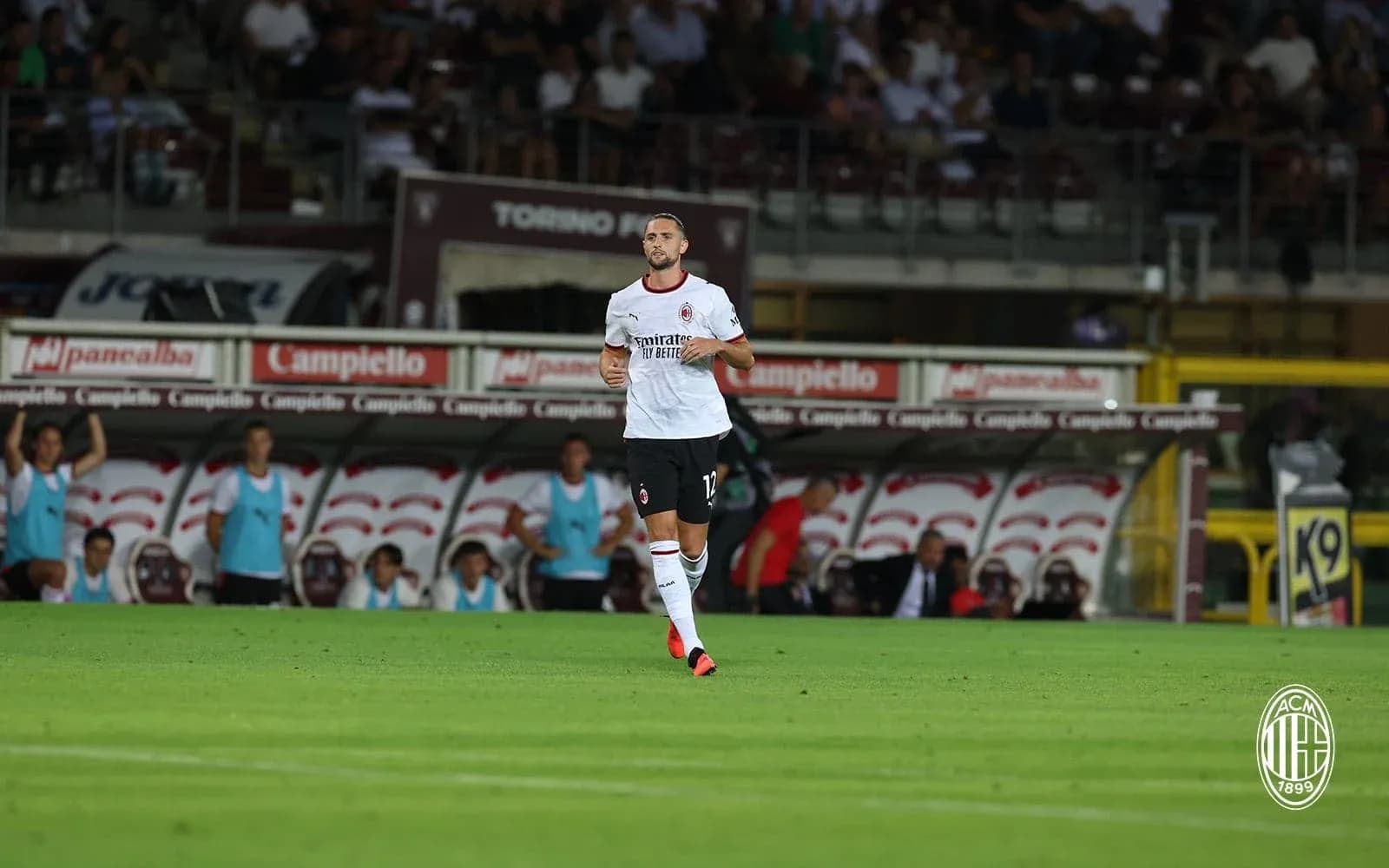
The bench then elevated Milan’s ceiling. A. Rabiot, already on both the top scorers and top assists lists after just one appearance, stepped in as a game-state specialist: in 34 minutes he produced 1 goal, 1 assist, 1 shot on target and 12 passes with a key pass. His profile – late-arriving runner, calm under pressure, able to recycle or break lines – gave Milan a second wave of control just as Torino were chasing the game. Alongside him, the presence of C. Pulisic and F. Camarda among the substitutes underlines how much attacking variety Amorim can call upon even with major stars missing.
Statistically, Milan’s early-season picture is compact but clear. Overall they have played 1 match, winning it, with 2 goals for and 1 against, averaging 2.0 scored and 1.0 conceded per game. On their travels, those figures are identical: 1 away match, 1 away win, 2 away goals scored, 1 away goal conceded. There are no penalties taken or missed yet, and no clean sheets either, but the underlying pattern is of a side that can outscore opponents while still tightening its defensive distances.
Defensively, Torino’s biggest concern is that their only defeat so far – this 1-2 at home – is also their only data point. They have failed to keep a clean sheet in any competition minutes this season, and their home goals against average of 2.0 suggests that the back three plus double pivot are still synchronising. Without minute-by-minute goal distributions, we cannot pinpoint exact time windows of weakness, but the flow of the match hinted that Torino struggled most when Milan accelerated play immediately after turnovers, particularly in central zones where Musah, Jashari and later Rabiot could find Cisse between lines.
From a tactical lens, the “Hunter vs Shield” duel was embodied by Cisse and the Torino back three. Cisse’s movement dragged Ismajli and Coco into wide and high areas, forcing Comuzzo to cover channels he did not always own. Mascardi, making his way into Serie A life, was often exposed to cut-backs rather than simple crosses, the type of chances that are hardest to read for a young goalkeeper.
In the “Engine Room” battle, Gineitis and Pedersen fought to contain Musah and Jashari, but Milan’s superior technical level in tight spaces – and the later introduction of Rabiot – tilted the midfield. Gineitis emerged with credit, winning all 3 of his duels and adding one tackle and one blocked shot, yet he often found himself outnumbered when Loftus-Cheek dropped inside to create a temporary three-man Milan midfield.
Following this result, the statistical prognosis for both sides diverges. Torino’s overall averages of 1.0 goal scored and 2.0 conceded per match point to a team that can hurt opponents but must reduce the volume and quality of chances allowed. The absence of any penalties and clean sheets means their margins are thin; they will need Adams’ finishing, Vlasic’s creativity and Gineitis’ progression to be almost perfect until the defensive structure settles and key injured players return.
Milan, with their away win and early attacking efficiency, project as a side whose offensive ceiling is high even without Leao and Nkunku. An overall goal difference of +1 and an away average of 2.0 goals scored per match suggest that Amorim’s 3-4-2-1 is already functional in hostile environments. The lack of clean sheets and the concentration of yellow cards just after half-time are small red flags, but the blend of youthful energy in Cisse and Chukwueze with the experience of Rabiot, Loftus-Cheek and Maignan gives them multiple ways to manage game states.
In narrative terms, this match felt like the opening chapter of two different books. Torino’s is a coming-of-age story, built around young defenders, a quietly influential Gineitis and the emerging threat of Adams. Milan’s reads more like a seasoned contender fine-tuning its weapons, trusting its structure even with stars missing. The numbers and the eye test agree: on this evidence, Milan have the sturdier platform, while Torino must turn promise into points before the table starts to harden around them.