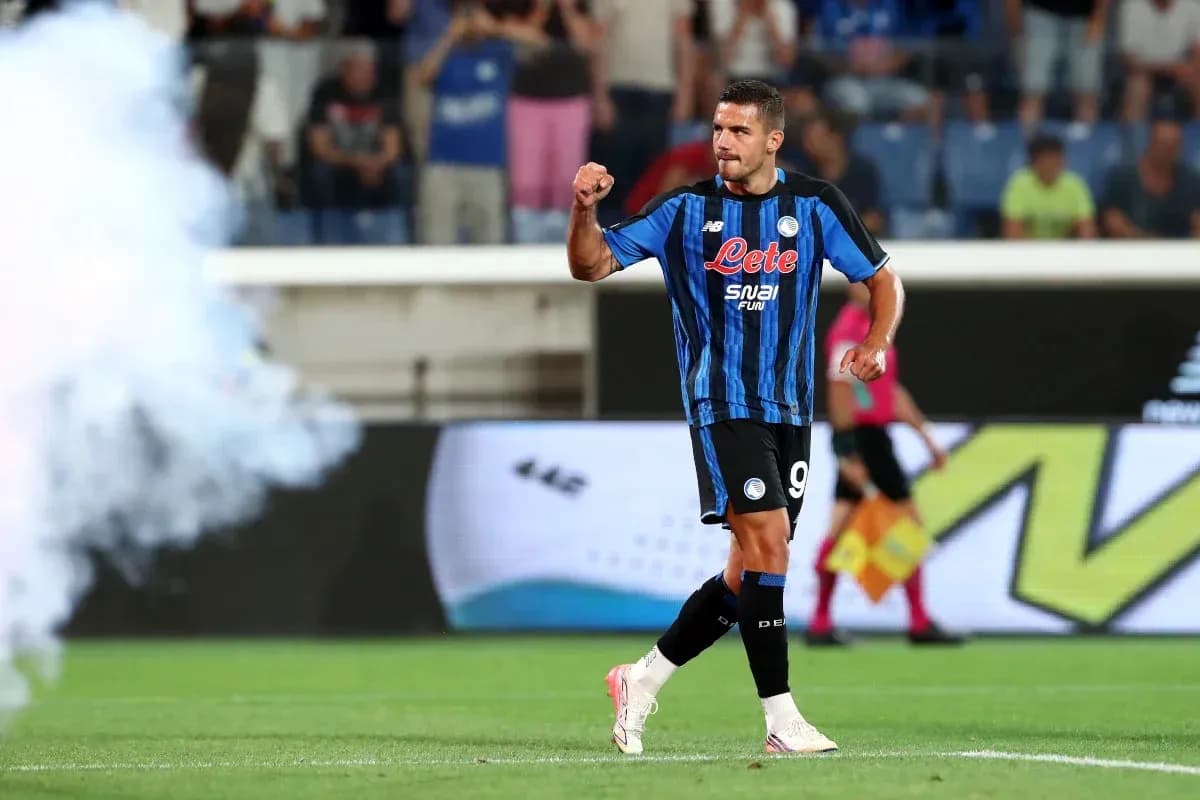
Atalanta vs Sassuolo: Tactical Insights from Serie A Opener
Under the Bergamo lights at New Balance Arena, Serie A’s new season opened with a meeting that felt like a tactical manifesto. Atalanta, reshaped under Maurizio Sarri, edged Sassuolo 2–1, a scoreline that neatly mirrors the early-season table: Atalanta sitting 6th with 3 points and a goal difference of +1, Sassuolo 12th with 0 points and a goal difference of -1. Following this result, both sides have played 1 league match; for Atalanta, it was at home, for Sassuolo, on their travels.
I. The Big Picture – Sarri’s imprint and Aquilani’s courage
Both coaches sent out a 4-3-3, but the systems carried very different intentions.
Sarri’s Atalanta were recognisably possession-oriented, building from the back with M. Carnesecchi as the starting point and a back four of D. Zappacosta, O. Kossounou, G. Scalvini and L. Bernasconi. The midfield trio of M. Pasalic, G. Gaetano and Ederson formed a staggered carousel: Gaetano often dropping alongside Ederson to knit play, Pasalic arriving late into the box. Ahead of them, a fluid front three of N. Zalewski, G. Scamacca and G. Raspadori constantly rotated lanes.
The numbers from this single league outing underline the intent: heading into the next game, Atalanta have scored 2 goals in total this campaign, all at home, averaging 2.0 goals at home and 2.0 overall. They have conceded 1 goal at home, 1.0 on average at home and overall. It is a small sample, but it already suggests a side comfortable in a high-scoring rhythm.
Alberto Aquilani’s Sassuolo, also in a 4-3-3, leaned more on verticality and directness. With A. Muric in goal, a youthful back line of S. Cinquegrano, C. Odenthal, T. Macchioni and J. Doig had to learn fast under pressure. In midfield, V. Adzic, N. Matic and D. Bakola tried to offer a blend of control and energy, while the front three of C. Volpato, K. Bowie and A. Lauriente were tasked with stretching Atalanta in transition.
Sassuolo’s early-season data tells its own story: 1 league game played, all away, with 1 goal scored and 2 conceded on their travels. Their away averages stand at 1.0 goal scored and 2.0 conceded, pointing to a team that can threaten but is still fragile without the ball.
II. Tactical Voids – Injuries shaping the chessboard
Both squads came into this fixture carrying significant absences that forced tactical recalibration.
Atalanta were without H. Ahanor, I. Hien, T. Kristensen and K. Sulemana, all listed as missing through various injuries. The defensive absences, particularly Hien and Kristensen, made Sarri’s decision to trust Kossounou and Scalvini at the heart of a back four even more telling. It demanded composure in build-up and aggression in duels from a relatively young pairing, while Bernasconi’s selection at left-back hinted at a desire for balance rather than relentless overlapping.
Sassuolo’s injury list was even more disruptive. D. Berardi, D. Boloca, F. Cande, I. Kone, Y. Paz, E. Pieragnolo, A. Pinamonti and S. Walukiewicz were all unavailable. The absence of Berardi stripped Aquilani of his most reliable source of goals and creativity from the right, while Pinamonti’s injury removed a classic reference point at centre-forward. As a result, Bowie had to lead the line, flanked by Volpato and Lauriente, a trio rich in movement but lighter in penalty-box craft.
Disciplinary trends are still opaque: across the season so far, card timing data for both sides is blank, and neither team has registered a yellow or red in the top-card rankings. This opening fixture, therefore, was more about structural discipline than refereeing flashpoints.
III. Key Matchups – Hunter vs Shield, and the engine room
The “Hunter vs Shield” duel was defined less by raw finishing volume and more by how Atalanta’s forwards manipulated Sassuolo’s defensive shape.
G. Raspadori, operating nominally from the right but often drifting inside, underlined his status as one of Serie A’s early standout attackers. With 1 goal in total this campaign, an 8.3 rating, and 8 duels contested (6 won), he played as both scorer and first presser. His timing between the lines forced Odenthal and Macchioni into constant decisions: step out and leave space, or sit and allow Atalanta’s midfielders to dictate.
On Sassuolo’s side, C. Odenthal emerged as both shield and unlikely hunter. He is already on the scoresheet this season with 1 goal in total, from 1 shot on target, and his defensive work included 1 successful blocked shot. His 65 passes with 98% accuracy reveal how central he was to Sassuolo’s attempts to play out, but also how much responsibility he carried in repelling waves of blue shirts.
In the “Engine Room”, G. Gaetano’s duel with N. Matic was the game’s cerebral axis. Gaetano, already among the league’s top assist providers with 1 assist and 68 passes at 92% accuracy, orchestrated Atalanta’s tempo. His ability to receive under pressure and find vertical lanes into Raspadori or Scamacca repeatedly pulled Matic and Bakola into uncomfortable, sideways pressing patterns. Matic, for his part, tried to anchor Sassuolo’s midfield, but with Atalanta’s full-backs stepping high and Ederson joining the first phase, Sassuolo were often outnumbered around the ball.
From the bench, N. Krstovic added another layer to Atalanta’s attacking threat. In just 30 minutes this season he has produced 1 goal, 3 shots (2 on target) and 1 key pass, underlining how Sarri can change the tone of the front line without sacrificing technical quality.
IV. Statistical Prognosis – What this game says about their trajectories
With only one league fixture each, the statistical sample is narrow, but the patterns are already suggestive.
Atalanta’s home output of 2 goals scored and 1 conceded, with no penalties taken or missed, fits the profile of a side that will lean on sustained pressure rather than set-piece windfalls. Their lack of clean sheets so far (0 in total) is a reminder that Sarri’s high line and aggressive spacing will occasionally be punished, but the attacking ceiling looks high.
Sassuolo, conversely, emerge from this opening defeat as a team in transition. They have failed to keep a clean sheet, yet have not failed to score either, suggesting that even with Berardi and Pinamonti absent, there is enough in the likes of Odenthal from set pieces and the mobile front three to trouble opponents. The question is whether Aquilani can tighten a defence that has already conceded 2 goals on their travels without the calming presence of Walukiewicz.
Following this result, the xG story is not available numerically, but the qualitative indicators are clear: Atalanta generated higher-quality chances through structured possession and intelligent rotations, while Sassuolo relied more on moments and individual thrusts. If these trends persist, Atalanta’s blend of creative midfield control and multi-faceted attacking options should keep them in the upper reaches of Serie A, while Sassuolo will need defensive consolidation and the gradual return of their injured core to avoid being drawn into a season of reactive football.