Solbakken's Bold Strategy: Haaland and Ødegaard Sit Out France Defeat
Ståle Solbakken walked into the mixed zone in Boston with a 4–1 defeat to explain and two global superstars still in their tracksuits. He did not flinch.
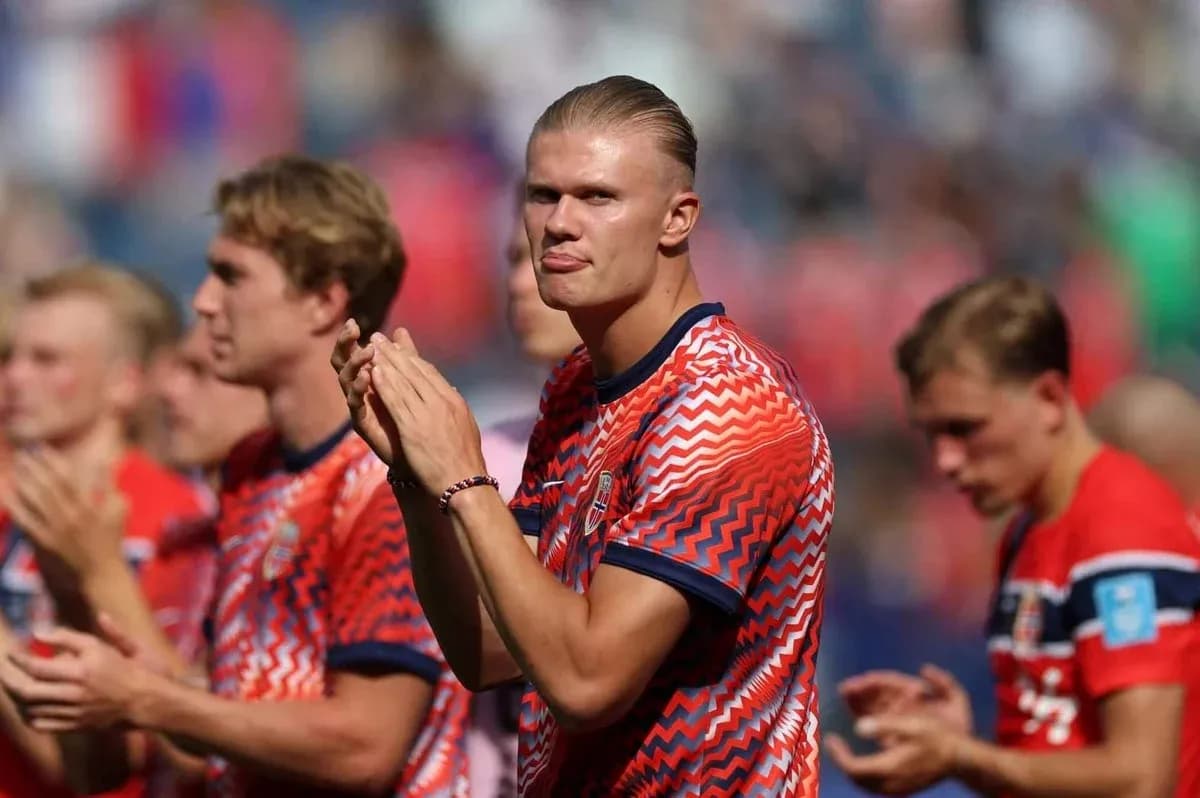
Norway’s head coach had rotated almost his entire side against France, made 10 changes from the thrilling 3–2 win over Senegal, and left both Erling Haaland and Martin Ødegaard on the bench for the full 90 minutes. With thousands of Norwegian fans having paid heavily for the chance to see Haaland go head-to-head with Kylian Mbappé, it was a bold call. Solbakken called it something else.
“A no-brainer.”
Norway had already booked their place in the knockout rounds before a ball was kicked in Boston. Victory over France would have meant top spot in the group and a last‑16 tie against Sweden rather than Ivory Coast, but it would also have meant pushing a squad that had already creaked in the heat and schedule.
The warning signs had flashed against Senegal.
“We did a summary after Senegal and there were five or six who were very affected,” Solbakken said. “After 80 minutes of play, the entire defence line and one or two midfielders were very affected.”
Cramp, fatigue, numbers from the medical team – the picture was clear to him. Norway, he pointed out, had the tightest turnaround between games of any side involved.
“We know that from this match to Senegal, Norway has the shortest window before another match,” he explained. “It could have been that we were able to play a decent match today but we want to win. Bear in mind we might not have won, what about the next game then?”
That next game now comes in Dallas on Tuesday, against an Ivory Coast team that beat Curaçao to qualify and will have had more time to recover. Norway, by contrast, face a four‑hour flight and just three days to reset body and mind. France, who wrapped up top spot, head to New York on a 45‑minute hop, a detail assistant coach Guy Stephan highlighted as a significant advantage.
Solbakken’s answer to that logistical squeeze was to gamble with the France game and protect the one that truly matters. To him, it barely felt like a gamble at all.
“It was a no-brainer,” he repeated. “Both on my part and the physio and medical team — and from some players themselves. They all said it would be difficult for them and to be able to train. The (urine) samples were taken by the medical team and they were fed back to me. It was not a decision that took a long time to arrive at.”
The cost was obvious in the stands. The red shirts, the flags, the Haaland 9 replicas – all geared towards a heavyweight duel with Mbappé that never came. Many had travelled across the Atlantic for that moment. Solbakken knew exactly what he had denied them.
“The support has been very good and they want to see Erling and Martin so that is the only reason you can feel something about the way we lined up today,” he admitted. “But hopefully because of that we can give them some good summer nights in the weeks ahead.”
That is the crux of his argument. Short-term spectacle versus long-term ambition.
“I feel this consideration but we have given them a couple of victories and the opportunity to watch more games. That is what we are here to do,” he said. “We don’t need to be the naive country who just play for fun. We are here to proceed as long as we can and I have to make the decisions to do that.”
The word “naive” hung in the air. Norway, in his mind, cannot afford romantic decisions. Not when the margins are this fine, not when one overextended hamstring could end a campaign.
“I wouldn’t want to sit on the plane back knowing we didn’t do our best to go as far as possible,” he added. “It was an easy decision. Not even up for discussion.”
The physical data backed him, and so did the calendar. One rest day less, train journeys, hotel changes, the cumulative load of tournament football. All of it fed into the choice to rotate heavily against France and accept the consequences.
Norway will now face Ivory Coast, not Sweden, and some observers believe that extra day’s rest for the Africans could tilt the balance. Solbakken pushed back.
“Not now because we did what we did today,” he said. “You have to take that into consideration – the shortest space between games, the train trips and changing hotels with one rest day less. It was part of why we did what we did.”
There was, he revealed, only one scenario in which Haaland and Ødegaard would have been unleashed – and even that would have been late, carefully controlled.
“It would have had to be after the last hydration break,” he said. “If there was a situation where we might have reached our goal.”
That moment never came. Norway were outplayed, the rotated side exposed, and France cruised to the win that secured them first place and the easier travel schedule.
Solbakken leaves Boston with a heavy defeat on the record, a frustrated travelling support, and his two biggest stars fresh for the knockout round. He has nailed his colours to the mast: this tournament will be judged not by one night without Haaland and Ødegaard, but by what Norway can still do with them when everything is on the line in Dallas.