Socceroos Face USA: A Test of Faith in Sydney
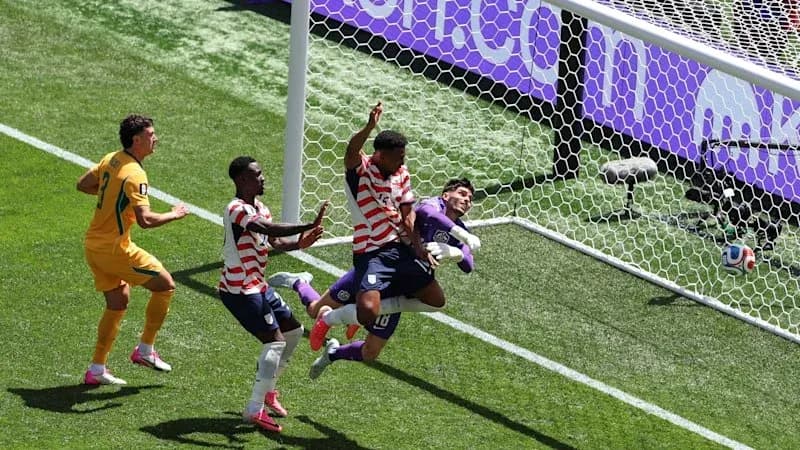
The roar inside Enmore’s Golden Barley had barely settled into a steady hum when it happened. Cameron Burgess struck early for the USA and the pub, packed with hundreds of Sydneysiders in green and gold, fell stone silent.
This was supposed to be a party. Instead, it turned into a test of faith.
Moments earlier, every glimpse of US manager Mauricio Pochettino on the big screen had been met with a chorus of boos. The military flyover before kick-off drew even louder derision. The mood was raucous, defiant, very Australian.
Then the football started, and the reality bit.
USA took control of the ball, of the tempo, of almost everything that mattered. Possession swung heavily their way, and with it came a controversial second goal that left the room seething. If you asked the fans, the decision was a shocker. The scoreboard didn’t care.
One punter muttered that he might go home early. He didn’t. Most didn’t. That’s not how this works.
Half-time arrived like a much-needed whistle in a pub brawl. More pints. More party pies. A rush to the bathrooms and a reset of belief.
Because for all the frustration, nobody in that Sydney crowd was ready to throw in the towel on the Socceroos. Not with 45 minutes left. Not with the promise of Nestory Irankunda still to come.
“It’s not over yet,” one fan declared, pint in hand. Sound advice. The kind that gets repeated when the scoreline doesn’t.
Popovic’s Puzzle and the Heat Factor
On the touchline and in the sheds, Tony Popovic’s staff knew exactly how badly the opening stages had hurt.
“Conceding so early wasn’t ideal,” assistant coach Paul Okon told SBS, summing it up with the blunt honesty the situation demanded.
The conditions weren’t helping. It was hot. Australia struggled in the heat, their defensive line sagging too deep, too often, unable to push high enough to properly press the ball. USA, sharper in body and mind, picked them off and forced error after error.
“We’re not getting our line high enough to put pressure on the ball. But it’s difficult,” Okon admitted.
The danger, he stressed, was in panic. “What we don’t want to do is fall out of our structure and start chasing the ball. We need to stay compact as much as possible and obviously try and have enough legs that once we get the ball we can hurt them.
“We’ll see some fresh legs in the second half, a bit of speed to hurt them once we have the ball.”
Those fresh legs arrived. Last weekend’s scorers, Nestory Irankunda and Connor Metcalfe, came on, joined by Jason Geria. Off went Toure, Velupillay and Burgess. Mathew Leckie slid across to the left, Metcalfe took up station on the right.
On paper, it was a statement: Australia would swing back, not just hang on.
Fed Square: Soaked, Sleepless, Still Believing
Across the country, another kind of endurance test played out in Melbourne.
Fans at Fed Square had queued from 2am, standing in the rain, waiting for gates to open and the big screens to flicker into life. By the time USA’s dominance on the scoreboard became impossible to ignore, they were already soaked, tired, and utterly committed.
They kept going.
Flares pierced the drizzle. A beach ball bobbed across the throng. Green and gold draped over shoulders and heads, clung to by hands that refused to give in to the cold or the scoreline.
Mel, a veteran of two decades of Fed Square match days, turned up in a Socceroos jersey and a Donald Trump costume that made it look like he was riding on Trump’s shoulders. It was ridiculous, theatrical, and completely in tune with the occasion.
Who would win? “Aussies of course,” he said, without blinking.
For Madison Cambora, it was all new. First time up in the middle of the night. First time joining the pilgrimage to Fed Square.
She called it worth it, even with USA in front. “I hope they come back from this,” she said. “I’m hoping all good things, but it’s not looking good.”
That tension between hope and reality hung over both cities.
USA in Control, Australia on the Brink
On the pitch, the pattern was brutally clear.
The Americans were better in every department: stronger in the duels, sharper in the mind, cleaner on the ball. They won the 50-50s, forced Australia into repeated mistakes, and carried themselves with the swagger of a side that knew exactly how to manage a game like this.
They looked, quite simply, fantastic.
For Popovic’s men, the path back looked narrow and steep. To stand any chance, they had to attack after the break, to risk the space that USA would eagerly exploit. Sit back, and the game would drift away. Open up, and it might be torn from them.
At the very least, Irankunda had to start the second half. He did. And with him came a sliver of doubt in American minds and a surge of noise in Australian hearts.
Because while USA had little to worry about on the balance of play, football has a habit of listening to the stubborn, the sleep-deprived, the rain-soaked, and the half-time believers in crowded pubs.
The question now is simple: can the Socceroos turn that belief into something the USA finally has to fear?