Sam Hutchinson: From Chelsea Glory to Heart Attack Survival
Sam Hutchinson remembers the noise first.
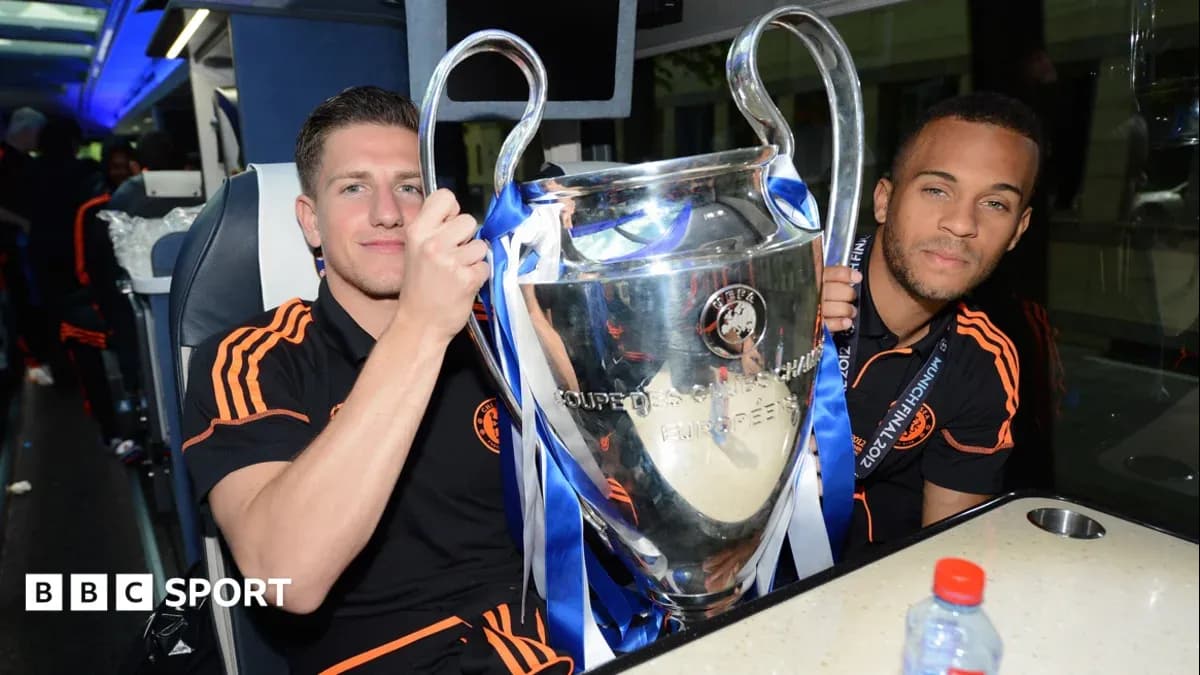
Munich, 2012. Chelsea’s players sprinting towards the corner, blue shirts disappearing under a pile of bodies. Champions of Europe at last. He was there, part of Roberto di Matteo’s squad, invited to the parade, soaking it all in.
And yet, in his words, his Chelsea story is “filled with regret and what might have been”.
From Mourinho’s golden boy to forced retirement
Hutchinson joined Chelsea at seven. By 17 he was making his debut under Jose Mourinho, a highly rated defender who captained England at Under-19 level and heard his manager praise him publicly.
Then came a reserve game at Aston Villa and a tackle that changed everything.
Doctors found a chondral defect – a hole in his right knee. The damage was so severe that, after years of setbacks, he made the brutal decision to retire in 2010. He was 21.
“I had already played for the first team and Mourinho had said some encouraging things about me in interviews,” he says. “Then the injury happened and everything fell apart. I was just a kid.
“After I retired I was in a bad place with dark thoughts.”
The promising career had vanished almost overnight. What followed was depression, isolation and a realisation he needed help.
“Unless you get help, you never know how bad you are,” he tells BBC Sport. “Even telling this story, it’s like therapy.
“It’s like the old saying – a problem shared is a problem halved. That’s true about mental health. If you’re suffering in silence, it’s not going to help.”
Treatment at the Priory and surgery on his knee gave him something he thought he had lost: a way back.
In December 2011, Hutchinson came out of retirement and re-signed for Chelsea.
On the fringes of glory
He never became the Stamford Bridge regular many expected. His body wouldn’t let him. Six senior appearances was the final tally.
But the story isn’t just about what he missed. In 2010, he set up a goal for Frank Lampard in a 7-0 demolition of Stoke City at Stamford Bridge. Two years later he flew with the squad to Munich for that famous Champions League final against Bayern.
He did not play that night at the Allianz Arena. Still, he was considered part of it. He was there in the dressing room, on the plane, on the bus as the club paraded the trophy through west London.
Despite the frustration of injuries, he refuses to turn his back on Chelsea.
“They brought me up and gave me values,” he says. “I look back at the club fondly and what they did for me. I do bits of work now for Chelsea TV.”
Reinvented in the Championship
If the Premier League dream faded, the game did not.
Hutchinson rebuilt his career in the Championship, most memorably at Sheffield Wednesday, where he became a cult figure. Tough, combative, all in. He passed 200 games in the division, the sort of volume that would have felt impossible when he was lying on treatment tables as a teenager.
He went abroad too – to Vitesse Arnhem in the Netherlands and Pafos in Cyprus – and back again with spells at Nottingham Forest, Reading and AFC Wimbledon.
Sixteen years on from fearing his career was finished for good, he is still playing at 37. This summer, he signed a two-year deal with non-league Farnham Town.
That he is playing at all is remarkable. That he is playing after what happened at Grimsby is something else entirely.
The goal that nearly cost him his life
Monday, 26 May 2025 will always belong to AFC Wimbledon fans. Their team beat Walsall at Wembley in the play-off final to climb into League One.
They would not have been there without Hutchinson.
Three weeks earlier, away at Grimsby, he scored the goal that secured their place in the play-offs. It looked like a veteran’s big moment, the kind of clutch contribution supporters remember for years.
He had no idea that, for 11 months, it would be his last start.
“Throughout the first half my chest was getting increasingly tighter and I was in so much pain,” he recalls of that afternoon at Blundell Park.
“I felt dizzy and my hands started sweating.
“I was rapidly going downhill but then our centre-back won a great header, the keeper tipped it on to the bar, and it dropped down to me to tap over the line.”
The away end erupted. Hutchinson didn’t. His only thought was to get through the match and get home to his wife and three children.
He never made it back to Ascot that night.
On the journey back to London, his condition worsened so dramatically that the team coach was diverted to a hospital in Nottingham. Tests were carried out. The situation escalated.
He was moved quickly to a nearby cardiac unit.
“I was put in the back of an ambulance and I remember hearing the blues and twos,” he says. “My blood levels had spiked so much, I was in a really bad way. A couple of the paramedics knew who I was because I had played for Nottingham Forest a few years earlier.
“They said: ‘You can thank us later for saving your life.’ I was told I’d had a heart attack.”
He spent the next five days in hospital. Scans revealed a branch of an artery was 75% blocked. He underwent an angiogram and had a stent fitted by a specialist.
“The one thing that the professor – who had looked after both Tom Lockyer and Christian Eriksen – said was my situation was nothing like theirs,” Hutchinson explains. “It was a blockage and it was all fixed, there was no need for a defibrillator to be fitted.”
The scare shook English football. It shook him even more.
Back from a heart attack
Messages poured in. One of them came from John Terry, his former Chelsea team-mate. Hutchinson recovered well enough to attend Wembley and watch AFC Wimbledon complete their promotion mission without him.
A month later, the Dons announced he had signed a one-year contract extension, having been given the all-clear to train again.
His body, though, could not give him what his mind wanted. Across the 2025-26 season he managed only a handful of appearances. In May, exactly a year on from that fateful match at Grimsby, Wimbledon confirmed he would be leaving at 36.
“Sam played a pivotal role in getting us over the line, not only with that iconic goal at Grimsby but his performances leading up to that,” read the club’s statement.
Many players would have stopped there. Retired with a promotion, a heart scare survived, and a long list of scars to show for it.
Hutchinson chose something different. He signed for Farnham Town and carried on.
A different kind of perspective
These days, his connection to the game stretches beyond the pitch. He has supported the British Heart Foundation and spoken publicly about mental health, using his own story as a warning and a reassurance.
He knows what it is to lose a career at 21 and to lie in a hospital bed wondering if he will see his children grow up. He also knows what it is to walk back out with boots on, again and again.
How is his mental health now?
“I’m in a different place,” he says. “I do have regrets [because of the injury] but I have also lived a life that has been good.
“There are many players who have gone through a lot worse than me.”
From Mourinho’s praise to Munich’s glory, from retirement papers to a stent in his chest, Hutchinson has lived almost every extreme football can throw at a player.
At 37, in non-league, he is still lacing up his boots. After everything, what exactly is he supposed to be afraid of now?