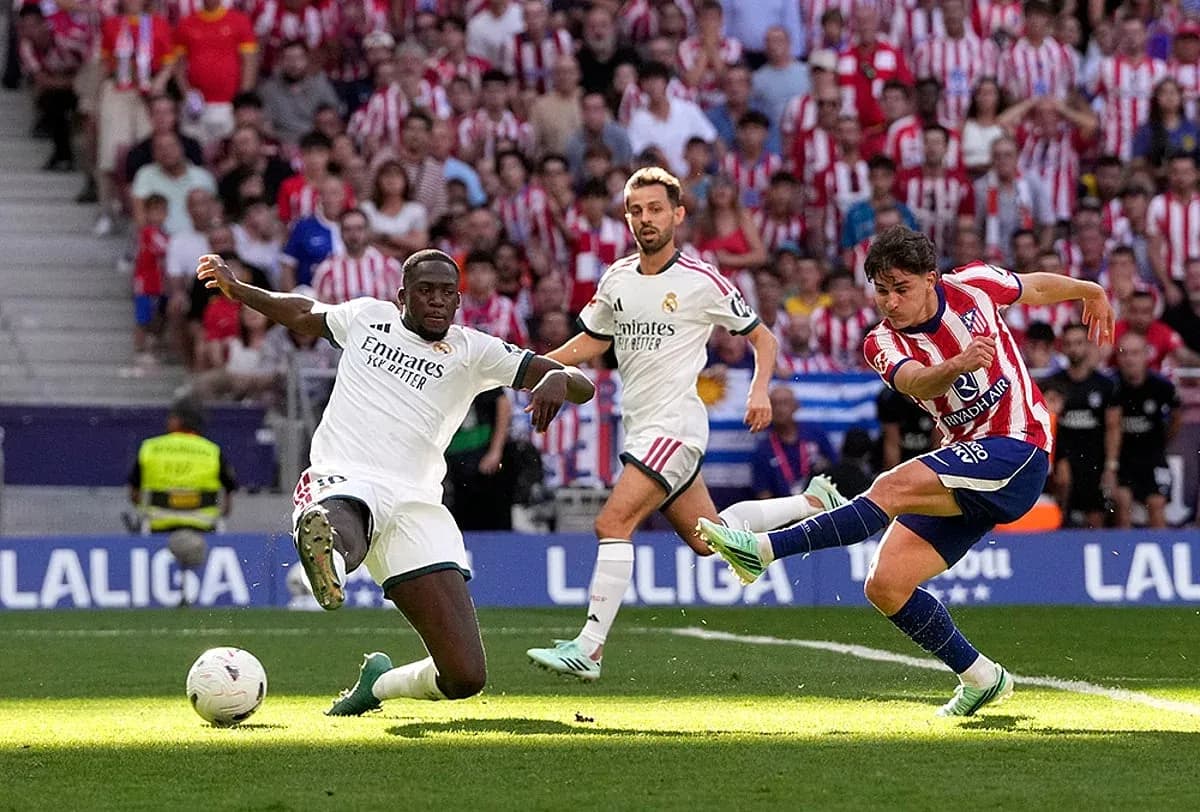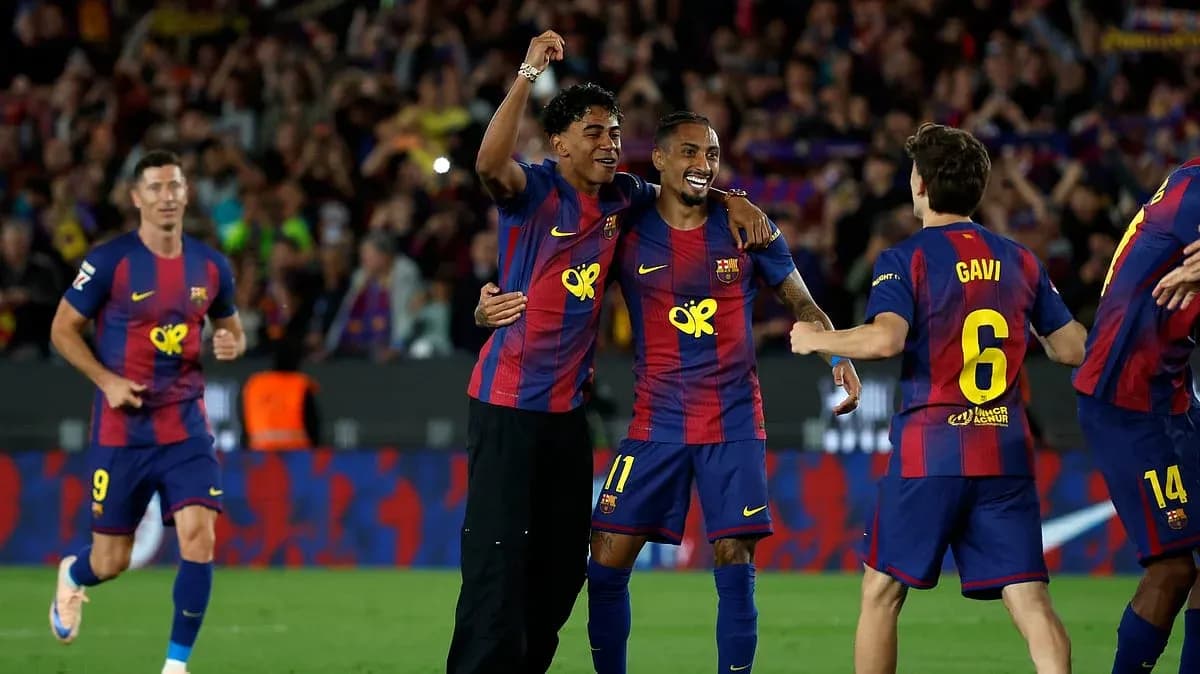
Barcelona's 2-0 Victory Over Real Madrid: A Tactical Analysis
Camp Nou under the May floodlights felt less like a league ground and more like a stage for a coronation. Following this result, Barcelona’s 2-0 win over Real Madrid in La Liga’s Regular Season - 35 did more than settle another Clásico; it underlined the structural gap between the league leaders and their closest pursuers.
I. The Big Picture – Champions’ poise vs contender’s strain
The table sets the tone. Heading into this game, Barcelona sat 1st on 91 points with a formidable goal difference of 60, built on 91 goals for and 31 against overall. Real Madrid trailed in 2nd on 77 points with a goal difference of 37 (70 scored, 33 conceded overall). The numbers behind those positions explain the narrative that unfolded.
At home, Barcelona had been flawless: 18 wins from 18, 54 goals scored and only 9 conceded, averaging 3.0 goals for and 0.5 against. Real Madrid’s away record was strong but mortal: 10 wins, 4 draws, 4 defeats on their travels, with 31 goals for and 19 against, an away average of 1.7 scored and 1.1 conceded. Camp Nou, in other words, was a fortress; Real Madrid arrived as a capable but clearly outgunned besieger.
Both coaches leaned into a mirrored 4-2-3-1, but the systems told different stories. Hansi Flick’s Barcelona used the shape as a platform for positional play and vertical surges. Alvaro Arbeloa’s Real Madrid, stripped of several key attacking figures, were forced into a more reactive, transitional identity.
II. Tactical Voids – Absences that rewrote the script
The team sheets were as revealing as the final score. Barcelona were without A. Christensen and the explosive Lamine Yamal, both listed as Missing Fixture. The absence of Yamal, who had produced 16 goals and 11 assists in the league with 244 dribble attempts and 135 successes, removed their most direct one‑v‑one outlet on the right. Flick’s response was to shift creativity and penetration inside: Pedri and Dani Olmo between the lines, with M. Rashford and Fermín tasked to stretch and attack half-spaces rather than hug the touchline.
Real Madrid’s voids were deeper and more structural. D. Carvajal, Eder Militao, F. Mendy, A. Güler, Rodrygo, F. Valverde and K. Mbappe all appeared on the Missing Fixture list. That is not just depth; it is their spine and transition threat ripped out. Mbappé’s 24 league goals and 8 scored penalties, Valverde’s 8 assists and box‑to‑box coverage, and Güler’s 9 assists and 90% pass accuracy in the right half‑space were all absent. Arbeloa had to lean on Vinicius Junior as the primary carrier, with J. Bellingham and Brahim Diaz (B. Diaz) as the creative hub and G. Garcia leading the line.
Disciplinary profiles added another layer. Barcelona’s season-long yellow-card distribution peaks between 46-60 minutes at 27.59% and again late at 76-90 with 20.69%, hinting at intensity spikes after half-time and in the closing stretch. Real Madrid’s yellows are more spread, with a late-game concentration between 61-75 (22.06%) and 76-90 (17.65%). The risk window was clear: as the game became stretched after the interval, Madrid’s tired legs and makeshift back line were always likely to be exposed by Barcelona’s relentless tempo.
III. Key Matchups – Hunter vs Shield, Engine Room vs Enforcer
Hunter vs Shield tilted decisively toward the hosts. Even without Yamal, Barcelona’s attacking ensemble is broad: Ferran Torres, R. Lewandowski, Raphinha and Rashford all rank among the league’s notable goal contributors. Ferran’s 16 league goals from 56 shots (36 on target) made him a constant penalty-box reference, while Lewandowski added 13 more, plus 1 scored penalty, despite starting only 14 times.
That firepower met a Real Madrid defence that, while strong overall, had cracks away from home: 19 goals conceded on their travels at an average of 1.1 per away game. Without Militao and Mendy, Arbeloa turned to a back four of T. Alexander-Arnold, R. Asencio, A. Rudiger and F. Garcia in front of T. Courtois. The structure was solid on paper, but the absence of Valverde’s covering runs and Güler’s press-resistance meant that once Barcelona broke the first line, Madrid’s back four were repeatedly isolated.
In the Engine Room, the duel was almost symbolic. Pedri and Gavi, supported by Dani Olmo and Fermín, formed a rotating square that constantly overloaded Madrid’s double pivot of E. Camavinga and A. Tchouameni. Pedri’s season numbers – 1,908 completed passes with 59 key passes at 91% accuracy – framed him as Barcelona’s metronome, while Gavi’s tackling and duels added bite. Fermín, with 9 assists and 87% pass accuracy, drifted intelligently between lines, giving Barcelona a third creator.
On the other side, Bellingham tried to knit transitions and late box entries, but he was outnumbered. Camavinga and Tchouameni were forced to defend large vertical spaces, particularly when Rashford drove diagonally off the left and Ferran pinned the centre-backs. Every time Real Madrid lost the ball, Barcelona’s counter-press compressed the pitch around those two, suffocating their ability to launch Vinicius Junior into space.
Vinicius, with 15 league goals, 5 assists and 189 dribble attempts (86 successful), remained Madrid’s one true chaos agent. But without Mbappé’s gravity or Rodrygo’s complementary runs, Barcelona could afford to crowd him: J. Cancelo and G. Martin doubled wide, while P. Cubarsi and E. Garcia stepped out aggressively when he drifted inside.
IV. Statistical Prognosis – Why 2-0 felt inevitable
Heading into this game, Barcelona’s overall scoring average of 2.6 goals per match, combined with a defensive record of just 0.9 conceded overall, suggested a side that not only overwhelms opponents but also controls risk. At Camp Nou, that profile becomes extreme: 3.0 scored and 0.5 conceded at home, backed by 10 home clean sheets and zero matches failed to score.
Real Madrid’s overall profile – 2.0 goals for and 0.9 against per match, with 7 away clean sheets – pointed to resilience, but the injury list dramatically lowered their attacking ceiling. Their penalty record (12 from 12, 100.00% scored, 0 missed) normally offers an xG buffer, but in a match where they struggled to sustain box entries, even that weapon was blunted.
Barcelona’s own penalty record (7 from 7, 100.00% scored, 0 missed) rarely needed to be invoked; their chance creation in open play, driven by Pedri, Dani Olmo and Fermín, consistently pushed the expected goals ledger in their favour. In a contest of structures and depth, the league leaders simply had more ways to generate high-quality chances and fewer ways to be hurt in transition.
So the 2-0 at Camp Nou was not a shock twist but the logical conclusion of the season’s underlying numbers and the night’s absences. Barcelona, top of the table and perfect at home, played like a side whose system is now fully internalised. Real Madrid, brave but depleted, were left chasing shadows – and, perhaps more painfully, the idea of what this Clásico might have been with their full attacking arsenal on the pitch.