New Footage Confirms VAR Decision on Williams' Disallowed Goal
New footage has thrown fresh light on one of the weekend’s most contentious calls – and, awkwardly for Nottingham Forest, it backs up the VAR.
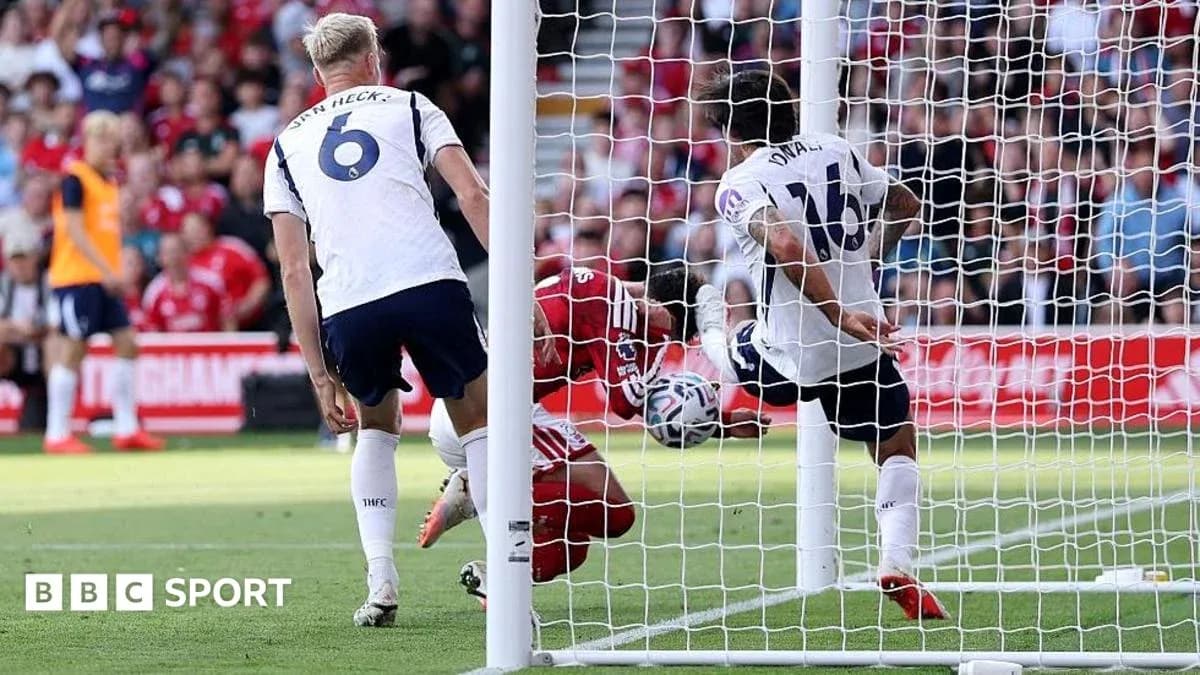
A new camera angle, released after Forest’s 0-0 draw with Tottenham Hotspur, clearly shows the ball striking Neco Williams’ arm in the build-up to his disallowed goal at the City Ground.
Williams crashed the ball in on 67 minutes, the stadium erupted, and for a brief moment Forest thought they had their breakthrough. Then VAR Peter Bankes stepped in. After a lengthy check, the goal was ruled out for accidental handball.
On the night, Williams and manager Oliver Glasner were adamant: there was no evidence of any contact with an arm. The new angle says otherwise.
New angle, old anger
The fresh footage shows the ball hitting Williams’ left arm, then his right forearm, before crossing the line. It vindicates Bankes’ call. It doesn’t calm the storm.
There’s a crucial detail. The angle doing the rounds now was not available to Bankes during the game. The VAR hub only has access to broadcast cameras used in the live match coverage. This particular camera is one of several that record but do not transmit as part of the feed.
So while Bankes will feel justified – he was already 100% convinced he’d seen enough from the angles he did have, pointing to the ripple of Williams’ shirt as the ball brushed his right forearm – Forest fans are unlikely to soften. From their perspective, the decision still came from pictures that many felt were inconclusive.
The scrutiny on Bankes has been intense over the past couple of days. Now, with the new footage, the refereeing body believes the official can point to clear visual proof. The debate, though, has shifted. It’s no longer just “Did it hit his arm?” but “Should that really be enough to kill a goal?”
Pro Ref stands firm
BBC Sport understands that Pro Ref – the new name for the organisation previously known as Professional Game Match Officials (PGMO) – is fully satisfied with the decision to disallow the goal.
Inside Pro Ref there is irritation at how the story has escalated, and at one thing in particular: the certainty with which Williams dismissed any suggestion of handball.
"I've seen the images and the replays and at not one moment did I think I handballed it," he told Sky Sports. He doubled down, insisting none of the images showed the ball clearly hitting his arm and that he had headed it down between his arms.
The new footage undercuts that version. It also shows the ball did not touch his head at all. Given the speed of the incident, it is plausible he simply didn’t feel the contact and believed he’d scored with his head. But his absolute confidence fed the backlash. The feeling within Pro Ref is simple: if Williams had not been so emphatic, the criticism of the officials would not have burned so hot.
Nottingham Forest have been approached for comment.
‘Clear and obvious’? Not this time
Much of the noise around the incident has focused on the phrase that now follows VAR everywhere: “clear and obvious error”.
Glasner referenced it. Williams posted about it on X. Many fans argued the VAR did not have clear and obvious proof to overturn the on-field decision.
But that phrase does not apply to every VAR intervention.
“Clear and obvious” only governs subjective calls – the ones that send the referee to the pitchside monitor to reassess an incident: penalties, red cards, that sort of decision.
Attacking handball in the immediate build-up to a goal is treated differently. It is classed as a factual intervention. The VAR is not asking the referee for a new judgement; they are making an evidence-based call themselves. If the VAR believes the replays show a handball, the goal is ruled out. No monitor. No “clear and obvious” threshold.
That’s what happened here. Bankes thought he could see the contact. Many viewers did not. The new footage now backs his view, but the core problem remains: even “factual” decisions often hinge on one person’s interpretation of a few blurred frames.
VAR’s grey area
This is not the first time a marginal attacking handball has split opinion.
Last season, Benjamin Sesko scored for Manchester United against Liverpool with a goal that raised similar questions. The ball appeared to brush his fingertips before going in. VAR Stuart Attwell reviewed it and allowed the goal to stand, deciding he could not be certain of a handball.
Referees’ chief Howard Webb later admitted the ball “probably does hit the hand” but stressed that VARs must see such incidents conclusively before intervening. Attwell didn’t feel he had that proof. Bankes did in Williams’ case.
Same law. Same type of offence. Two different outcomes, both defensible under the current framework. That is the fault line running through VAR.
Webb has already flagged attacking handball as one law he would change. Under the current wording, goals like Williams’ are routinely at risk.
“The problem is the law forces VARs on every goal to look at what body part the ball went in off,” Webb said during pre-season briefings. He argued that if officials only penalised deliberate handball or cases where an attacker made themselves “unjustifiably big”, without the forensic trawl through every tiny deflection, checks would be quicker and cleaner.
“It is a law I would definitely look to change,” Webb added, confirming that Pro Ref and the Premier League intend to lobby for that shift.
Lighter touch, same heat
This season, VAR is officially being run with a lighter touch. The numbers back that up: just two subjective interventions so far, at a rate of 0.06 per game, down from 0.15 last season.
Yet the temperature around VAR has not dropped. If anything, moments like Williams’ disallowed goal show how quickly the debate can ignite.
Forest feel robbed. Pro Ref feels vindicated. The footage now supports the decision, but not the process that led to it. And somewhere in the middle sits the bigger question: until the law on attacking handball changes, how many more goals like this will football be prepared to lose?