Mourinho's Views on Ballon d'Or and Team Dynamics
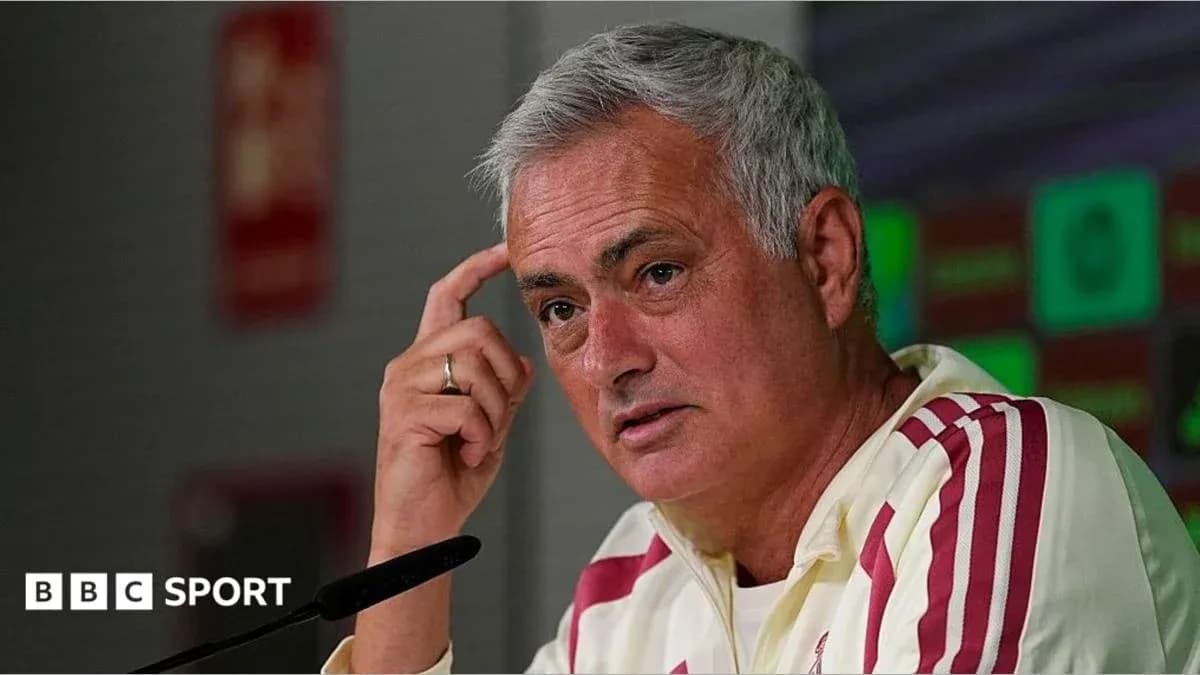
Jose Mourinho walked into the media room at Valdebebas and, as so often in his career, the conversation quickly veered away from Málaga and towards the Ballon d’Or. He did not dodge it. He never does.
Mourinho’s Ballon d’Or manifesto
For Mourinho, the award has lost its compass.
"It's very beautiful individually," he began, framing the Ballon d’Or as an entry into the “individual history of a particular player.” Then he drew his own line in the sand. The trophy, he argued, should belong to the players we never quite get over.
"For me, the Ballon d'Or has to go to those players who, when they retire, we miss forever. I miss Maradona, Nazario, Messi, Zidane, Matthäus…"
He pushed back against the idea that a Champions League or World Cup automatically tips the scales.
"You can't give the Ballon d'Or just because they won the Champions League or the World Cup. If you want to reward the Champions League, give the Ballon d'Or to Luis Enrique. For Spain, De La Fuente certainly deserves it."
That, he said, is tribute. The “best in the world” is something else entirely.
"There are two, three, or four, and we know who they are. We know where they are — here. We know who has made history individually this summer."
Then came the sting.
"The Ballon d'Or has politics, and if politics gets involved, I don't like it so much. We already know my concept of the Ballon d'Or. We're not going to invent it in Spain or at PSG. There, it's Luis Enrique or De La Fuente. The best player is someone else."
The message was clear: reward the coaches for trophies, but recognise the truly great players for something deeper and longer-lasting.
Squad choices and internal competition
When the talk finally turned to Málaga, Mourinho sounded relaxed about his options and the different preseason paths his players have taken.
"There are players who, I keep saying, have had different preseason experiences. We have a strong squad with solutions to compensate for these issues."
He gave a concrete example for Sunday.
"Tomorrow, Cucurella starts, and Álvaro, who played well against Espanyol and Real Sociedad, will be on the bench. If Cucurella runs out of steam, we have Álvaro to come on. It's the kind of solution a squad like this provides a coach."
One starts, one waits, but in Mourinho’s mind it is proof of depth, not a problem.
‘Concentration’ where it matters
Asked about the group’s focus, Mourinho drew a sharp distinction between being physically together and being mentally locked in.
"There are two kinds of concentration. The one you're talking about, being together, sleeping in a hotel, in Valdebebas… The one I'm interested in is the one here," he said, pointing to his head.
"It has nothing to do with sleeping in a hotel, it's here."
He admitted it frustrates him that the outside view often stops at warm-ups and rondos.
"Sometimes I think, and it saddens me, that all you see is warm-ups and rondo drills. In my other job, there's a lot of concentration. This is what interests me."
On the eve of Málaga, the players are not in full lockdown at a hotel.
"We're not sleeping today. The players are together. We have a tactical meeting now, we're eating together. We'll be together a little longer and then we'll see each other in the morning. Espi, Cucurella, and I are sleeping here. The rest are going home."
The ritual is flexible. The mental edge, he insists, is non-negotiable.
Diomande’s slow burn
On Yan Diomande, Mourinho shut down any temptation to single him out for criticism or praise, but he did outline the context.
"I'm not going to say anything more about individual players. Diomande arrived late and had a difficult summer because of the decision. He didn't train with Leipzig; when he arrived, he didn't have a foundation to work with, and he's progressing gradually."
He already has minutes in his legs and will get more.
"He's already had playing time, which is what he needs to develop. Tomorrow he'll either start or come on as a substitute. He's getting more and more ready."
No drama. Just a player catching up.
Bellingham, and the stars who make a team
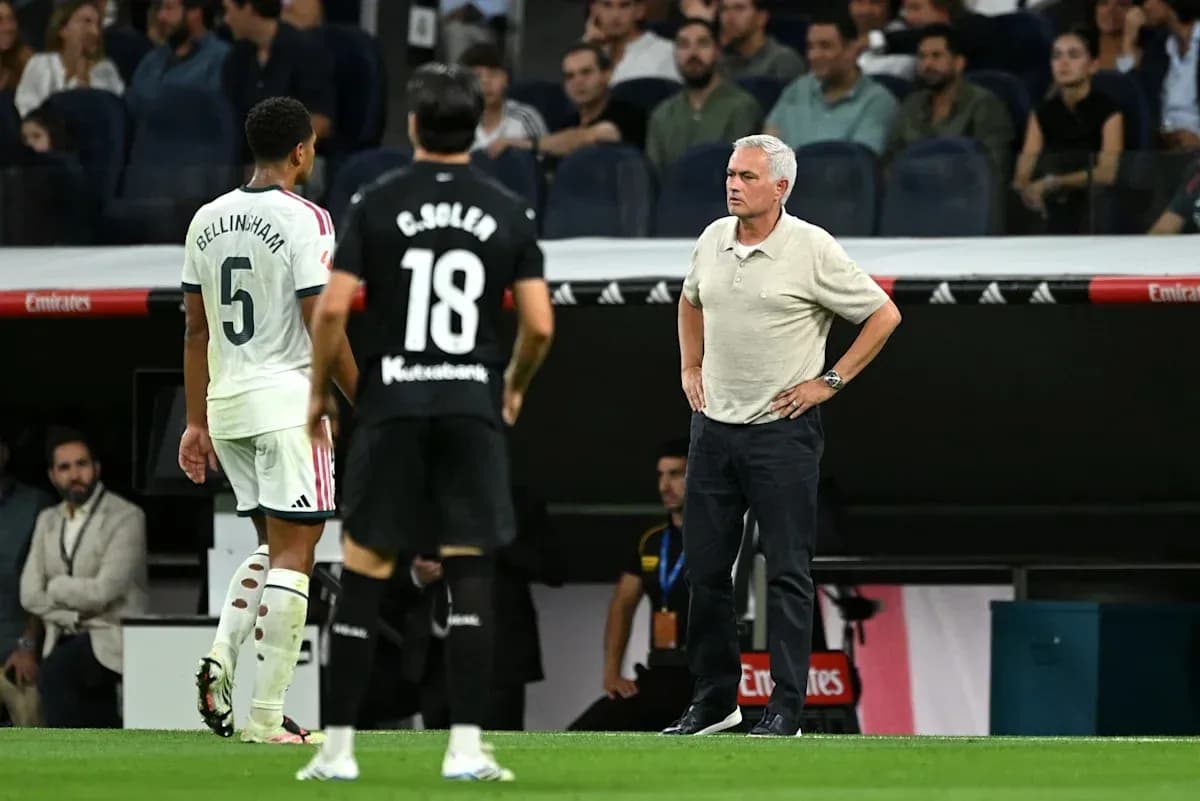
When Jude Bellingham’s name came up, Mourinho did not hold back.
"He's unique. Super important for the team. He has different talents: physical, mental, tactical, ball recovery, his goal-scoring ability, his aerial game. He's impressive."
He admitted he enjoys talking about his headline acts.
"I really like talking about Kylian, Vini, Jude. I understand the questions. But I'm very happy with everyone. As I said, here we only have great players and truly great players."
Then he circled back to his core principle: names only matter if the collective works.
"The team has to function as a team. Real Madrid fans go to the Bernabéu to see these exceptional players, but they also go to see a team play as a team, suffer as a team, face difficulties as a team, and dominate as a team. I'm the coach of that team, and I really like the players I have."
The stars shine, but the badge still comes first.
Castilla, Thiago Pitarch and the next step
Mourinho also took time to praise the work being done below the first team, singling out Álvaro Arbeloa and one forward in particular.
"Arbeloa has done a fantastic job in defense. Up front, the situation is different, and it hasn't been easy. He's done a fantastic job with the players. There isn't a single Castilla player I don't like."
Thiago Pitarch, he said, has outgrown that level.
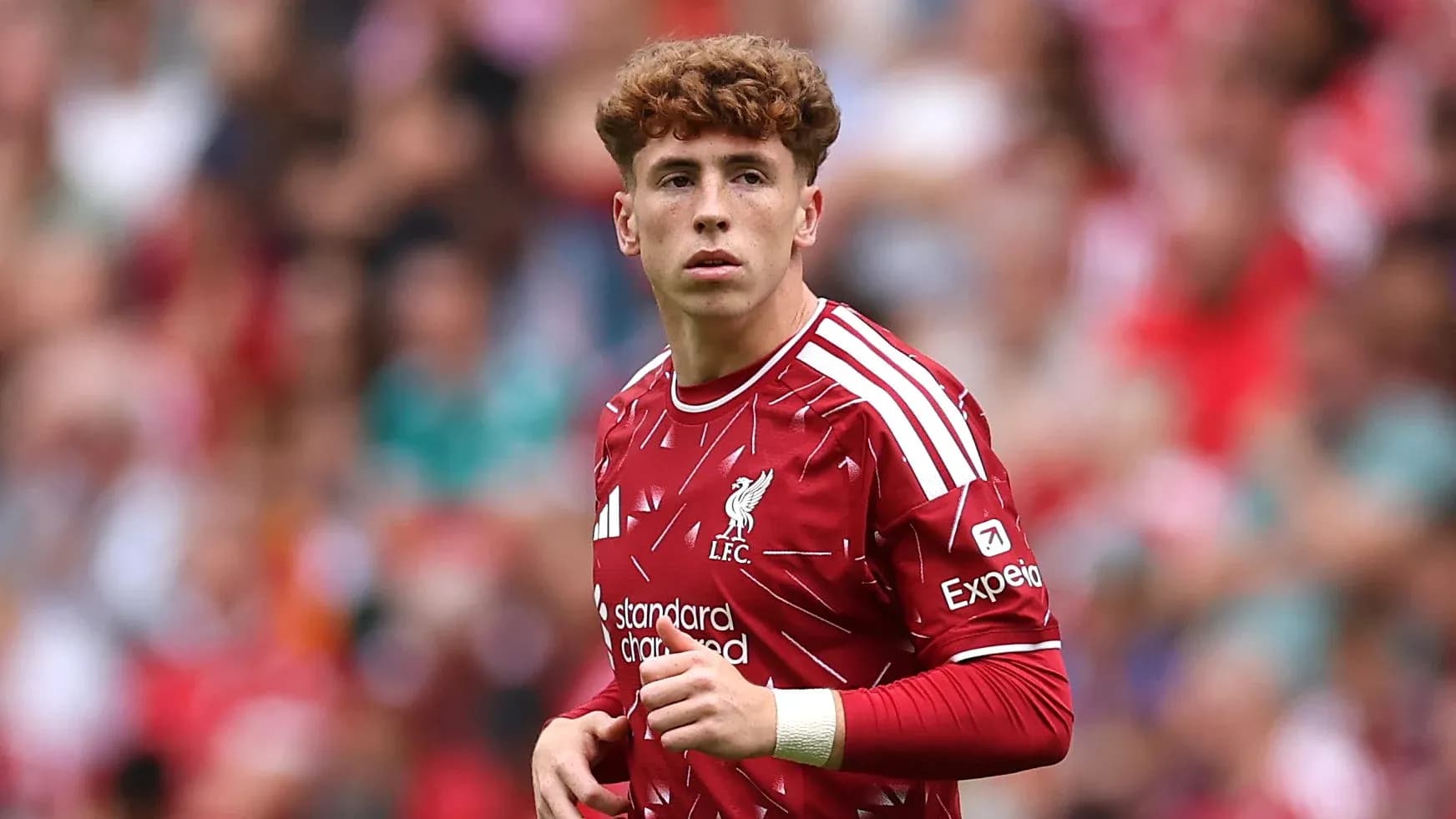
"Thiago has shown he's no longer fit for the Castilla division. I like him a lot. He's part of this group of 21 players."
For now, numbers are tight.
"We have Ciria, Cestero, and two goalkeepers on the bench because we don't have many options. When he's fit, he'll be part of the group and will get playing time."
Then came a typically sharp Mourinho line, half-joke, half-demand.
"I tell him his leg muscles are the same as mine, and he needs to put on a couple of kilos through hard work."
The message: talent is not enough; the body must be ready for the step up.
Freedom for the forwards, structure for the team
Mourinho knows his attackers can make him look like a genius.
"When you have players of incredible quality, they make the coach look like a phenomenon. They do things that go beyond the everyday routine."
That doesn’t mean there is no work behind the curtain.
"We work on defense and attack. Today, the entire 45 minutes of training were dedicated to offensive organization. We worked on tactical formations and movement."
Still, in the decisive moments, he trusts them to solve problems.
"When things get tough, they win matches. We have to give them space for creativity and for their ability to make decisions. We have to be organized. We're improving in that area."
The balance between structure and freedom is, for him, the essence of coaching this squad.
Endrick, Tchouameni and the injury timetable
On injuries, Mourinho’s tone shifted to caution. Endrick is closest.
"[Endrick] is the closest to returning. I don't want to take any risks with Betis. Like I said, he could be ready for Betis or for the first Champions League match."
The others, he admitted, are trickier.
"The other situations are more complicated. With Tchouameni, we have to keep our emotions in check. I don't want him to be in and out, in and out again. I don't want to start the season in August with a situation like this. I hope to have Tchouameni fit again, and I prefer to wait a little longer."
Short-term temptation will not outweigh long-term planning.
International break anxiety
The looming international window clearly irritates him, not because of the games themselves, but because of the uncertainty.
"International matches worry me. It's a long time. I'm less concerned about players who go with their national teams to play than those who are selected but don't play. Those are the ones I worry about the most."
His relationship with Carlo Ancelotti, now in charge of Brazil, offers some reassurance.
"My relationship with Carlo means I'm aware of the situation, and we'll exchange information. With Carlo, it won't be a problem."
Elsewhere, trust is thinner.
"With others, where we don't have this level of trust, having players away for three weeks is very complicated. We're going to have faith in the professionalism of those coaches, in the respect they have for the players and the clubs. I don't want to dramatize it."
He pointed to a familiar pattern: injuries that seem to appear after the players return.
"Often, there are injuries while on international duty, and then when they return to their clubs, they lose the balance of the work they'd been doing for weeks, and then the injury happens. It is what it is, and there's nothing we can do about it."
He does not like it. He accepts it.
Managing people, managing tactics
Asked whether handling egos or drawing up tactics is harder, Mourinho brushed the dilemma aside.
"I don't feel that anything is difficult. I see it as natural. Problems are a natural part of life. We haven't had our first problem yet, but it's going to come. Whether it's tactical or related to team management, it's normal for it to happen. You have to see it as a natural occurrence and manage it as a natural one."
For him, conflict is not a crisis. It is part of the job description.
Respect for Ancelotti
On Ancelotti himself, there was only admiration.
"Ancelotti is a great man in every way. He doesn't have a weak point. He's a great man at every level."
No rivalry, no edge. Just respect between two giants of the dugout.
Line-up leaks and tactical secrets
Finally, the subject turned to his starting XI and the risk of it leaking early. Mourinho would prefer silence, but he did not overplay it.
"If we go into tomorrow's match and the opposition doesn't know our lineup until an hour and a half before kickoff, I prefer that. But if our lineup starts today, it's not a big deal."
What would worry him is something more radical becoming public.
"The worrying thing is when you make a lot of structural changes. If we played with three centre-backs, with Espi and Kylian together. If we do something that's outside of what the Málaga manager might expect, then yes, it's a concern."
The debate over Cucurella’s place, for instance, does not keep him up at night.
"But the difference between Carreras and Cucurella isn't a big deal. The positive feeling about him not starting is that nobody has spoken about it. Not the players, not the kit men, not the doctors… But if he does start, it's not a big deal."
On Sunday, Málaga await. Around them, the Ballon d’Or noise, the politics of international football, the weight of expectation. Inside Valdebebas, Mourinho insists, the concentration is “here” — and he is betting that, when the season’s big judgments come, that is what will matter most.