Messi's World Cup Countdown Affected by Muscle Fatigue Diagnosis
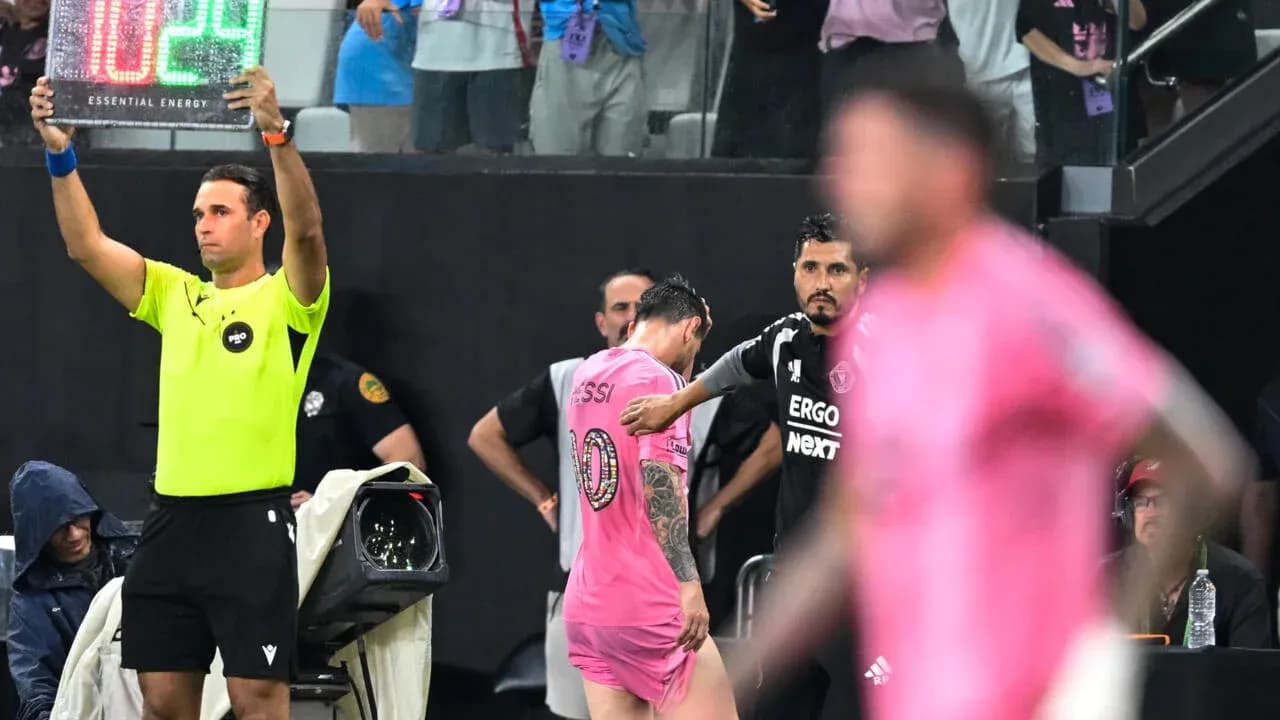
Lionel Messi’s World Cup countdown has been jolted by a diagnosis of muscle fatigue in his left hamstring, Inter Miami confirmed, after the Argentina captain walked off 17 minutes from time in a wild 6-4 win over Philadelphia.
He did not limp. He did not collapse. He simply stopped, looked at the bench, and signalled enough.
For a 38-year-old still carrying a nation’s expectations and chasing a record-equalling sixth World Cup finals appearance, even that small gesture sent alarms ringing from Miami to Buenos Aires.
Scaloni cautious, but quietly relieved
Argentina coach Lionel Scaloni watched the drama unfold on television from the federation’s headquarters. The concern was instant; the relief came only when he realised Messi had chosen to remove himself.
“Obviously we would have preferred that nothing had happened,” Scaloni told Argentinian TV channel DSports on Tuesday. He stressed that Argentina must now wait for fresh medical tests to see whether Inter Miami’s initial diagnosis is confirmed.
The message between the lines was clear: no panic yet, but no guarantees either.
Scaloni is due to name his World Cup squad next week. Every name on that list matters, but one towers over the rest. Even now, with a World Cup winner’s medal in his pocket and the trophy already lifted in Lusail, Messi remains the axis around which Argentina’s title defence spins.
Miami play it safe
Inter Miami manager Guillermo Hoyos defended the decision to withdraw his star. He pointed to a heavy pitch, a tiring player and a club unwilling to flirt with disaster in a high-scoring league match when a global tournament looms.
The club’s official statement on Monday was deliberately vague: “The timeline for his return to physical activity will depend on his clinical and functional progress.” No mention of days, weeks or matches. Just a reminder that the eight-time Ballon d’Or winner will be treated on his body’s terms, not the calendar’s.
Messi has been carefully managed since arriving in Miami in 2023. He has skipped games in congested periods, with staff building a protective ring around his workload. Now that approach faces its most serious test.
World Cup clock is ticking
The timing could hardly be more delicate. MLS has paused for the World Cup, co-hosted by the United States, Mexico and Canada, but Argentina’s schedule is packed and unforgiving.
They open their World Cup campaign on June 16 against Algeria in Kansas City. Six days later comes Austria on June 22, before Group J finishes against Jordan on June 28. Before all that, two tune‑up friendlies in the United States: Honduras on June 6, Iceland on June 9.
Every one of those dates now doubles as a checkpoint in Messi’s recovery.
Argentina want rhythm, cohesion, the familiar patterns that carried them to glory in Qatar. They also know that overloading their captain in early June could cost them dearly by mid-July. The medical reports will dictate how bold or conservative Scaloni can be.
A sixth chapter on the line
Messi has not formally confirmed he will play at this World Cup, though few in football doubt his intention. One more tournament would draw him level with Cristiano Ronaldo and, potentially, Mexico goalkeeper Guillermo Ochoa on six World Cup appearances – a landmark that once felt unreachable.
That is the backdrop to every grimace, every substitution, every medical bulletin.
For now, the diagnosis reads “muscle fatigue”, not “tear” or “strain”. For Argentina, that wording matters. It keeps the dream intact. It keeps the door open for the player who transformed their recent history and still defines their future.
The next set of tests will say how wide that door remains.