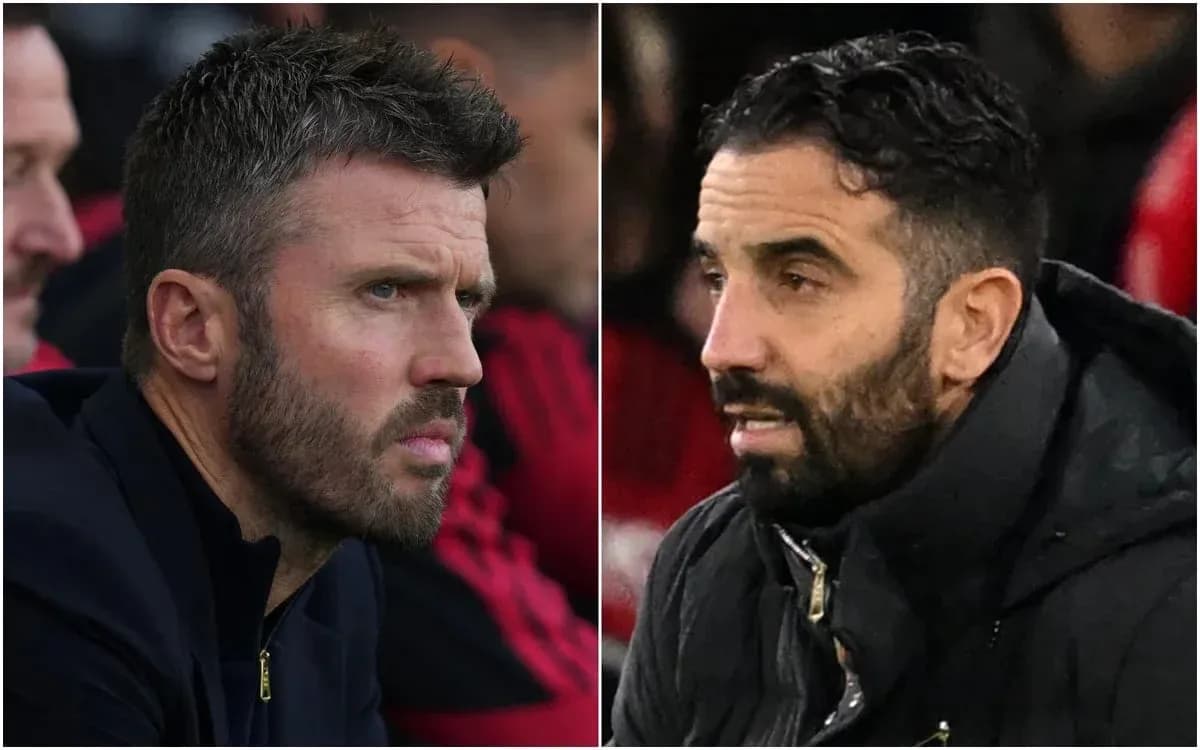
Manchester United's Troubling Start: Carrick vs. Amorim
The mood around Manchester United was supposed to be different this year. Michael Carrick had come in as interim in January, calmed the chaos and quietly outperformed everyone in the Premier League from that point on. Third place, a sense of direction, a manager the fans could get behind. It felt like a reset.
Seven games into his first full season, that optimism has evaporated. And the echoes of Ruben Amorim’s doomed start are getting harder to ignore.
Matching numbers, familiar unease
Strip away the sentiment and the cold numbers are blunt. After seven games of this campaign, Carrick’s United have won two and lost three. Exactly the same record Amorim posted at the same stage last season.
You can argue Amorim’s start was worse. His United were dumped out of the Carabao Cup on penalties by Grimsby, a result that never really stopped stinging. Carrick’s side have already followed the familiar script in that competition too, going out to Brighton last week.
In the league, the table is even more damning. United sit 12th, with just five points from their first five Premier League matches. That total equals their lowest haul at this stage of a season in the Premier League era, matching the 2014/15 return under Louis van Gaal.
Only newly promoted Ipswich have been beaten by United in the league. Everyone else has taken something. Too many have taken everything.
Amorim’s first full campaign followed a slightly different pattern in terms of fixtures, but not in mood. Six of his opening seven games were in the league, and United were 14th after home wins over Burnley and Chelsea briefly suggested he might be turning a corner. He never did.
The data tells a familiar story
Look beneath the league table and the parallels become even sharper.
This time last year, the expected points model painted Amorim’s United in a far kinder light. On performances, they sat fourth in the xPts table, a huge leap from their actual position of 14th. The numbers insisted they were playing like a top-four side, just not finishing like one.
Fast forward 12 months and the pattern is almost identical. Carrick’s team are 12th in reality, but sixth on expected points. Again, the data says they should be much higher. Again, they are not.
The root of it is simple: United are creating chances but not finishing them.
Under Amorim at this stage last season, United had scored seven league goals from an expected-goals total of 12.04. A yawning gap. This year, the difference is smaller but still significant – eight goals scored from an xG of 10.59.
In plain terms, the players in red shirts are not putting away the opportunities they are working so hard to create.
You can read that as a sign that things will correct themselves. By the end of last season, United’s expected-goals tally was only a little over three higher than their actual goals scored, a sign that the wastefulness eased as the campaign went on.
Or you can look at the same numbers and see something else: a squad short of reliable, ruthless finishers.
Different manager, different narrative
On the touchline, the temperature around Carrick is not yet what it was around Amorim.
Carrick has credit. That late-season surge to third place, the calmness, the sense of tactical clarity – all of it has bought him time and patience. Supporters and media are frustrated, but not yet sharpening the knives.
Amorim never had that luxury. After seven games of the 2025-26 season, the pressure was already suffocating. He had taken just 34 points from 33 Premier League matches in charge and had never managed back-to-back league wins. The story had already been written: the project wasn’t working.
There was also a clear tactical villain in that story. Amorim’s wing-back system became a lightning rod for criticism, widely ridiculed as ill-suited to the squad. Calls to switch to a back four grew louder by the week. He refused. The formation became a symbol of his stubbornness as much as his philosophy.
Carrick has avoided that kind of tactical caricature so far. His ideas are seen as more flexible, his system less dogmatic. The anger after Sunday’s draw with struggling Fulham was aimed somewhere else: effort. Or the lack of it.
The data backed up what many had seen with their own eyes – not enough intensity without the ball, not enough running, not enough aggression in the press. For a fanbase that can tolerate almost anything except a perceived lack of work-rate, that criticism cuts deep.
Lessons from Amorim – and a warning
After his seventh game last season, a 3-1 defeat at Brentford, Amorim was asked about his future. "I am never concerned about my job," he said.
The results never truly recovered. Performances flickered, but the momentum never turned. He clung on until January, and even then might have survived longer had he not raised the stakes publicly by criticising the board. United were sixth when he finally went. He is now at AC Milan, unbeaten and two points off the top in Serie A, his reputation quietly being rebuilt.
Carrick is nowhere near that brink. He was only confirmed as permanent manager in May on a two-year deal. The club hierarchy are not ready for another reset, and the mood around the fanbase, while tense, has not yet tipped into open revolt.
But the warning signs are there, and they are familiar. Underperformance in the table despite decent underlying numbers. Early cup exits. A team that flatters the data but not the scoreboard.
Gary Neville put it plainly after the Fulham draw: "If those types of performances continue, he will find himself in a lot of trouble."
The numbers suggest United are not as bad as their league position. The history of this club – and of Amorim’s brief, fraught tenure – suggests that won’t matter for long if results do not change.
Carrick has the goodwill Amorim never enjoyed. The question now is how quickly he can turn that goodwill back into wins, before the comparison with last season stops being a curiosity and starts to feel like a prophecy.