Manchester City Escapes Late Drama Against Bournemouth
Manchester City needed late drama to escape another bruising afternoon at the Etihad, but they found it – and just in time.
Bournemouth, bold and sharp from the start, stunned the champions when Marcus Tavernier fired the visitors ahead, punishing a City side still feeling its way into life under Enzo Maresca. The new manager’s patterns were there, but the fluency wasn’t, and Bournemouth sensed weakness.
For a spell, the Etihad grew tense. City’s build-up stuttered, the press looked half a yard off, and Maresca’s side struggled to impose the control he craves. Bournemouth snapped into challenges and broke with intent. It felt like one of those awkward early-season days that can quickly unravel.
City needed a response and, eventually, they found one.
Marc Guehi, one of those still playing catch-up after a late return from international duty, dragged his side level. His equaliser steadied the stadium and, more importantly, the team. From there, City began to hem Bournemouth in, the tempo rising, the passing sharper, the pressure constant.
The pressure finally told in stoppage time.
Josko Gvardiol, pushed on and urged forward, struck deep into injury time to complete the turnaround and seal a 2-1 win. It was ruthless, late, and very City – even if the performance around it was anything but vintage.
Yet the comeback came with a jolt of worry.
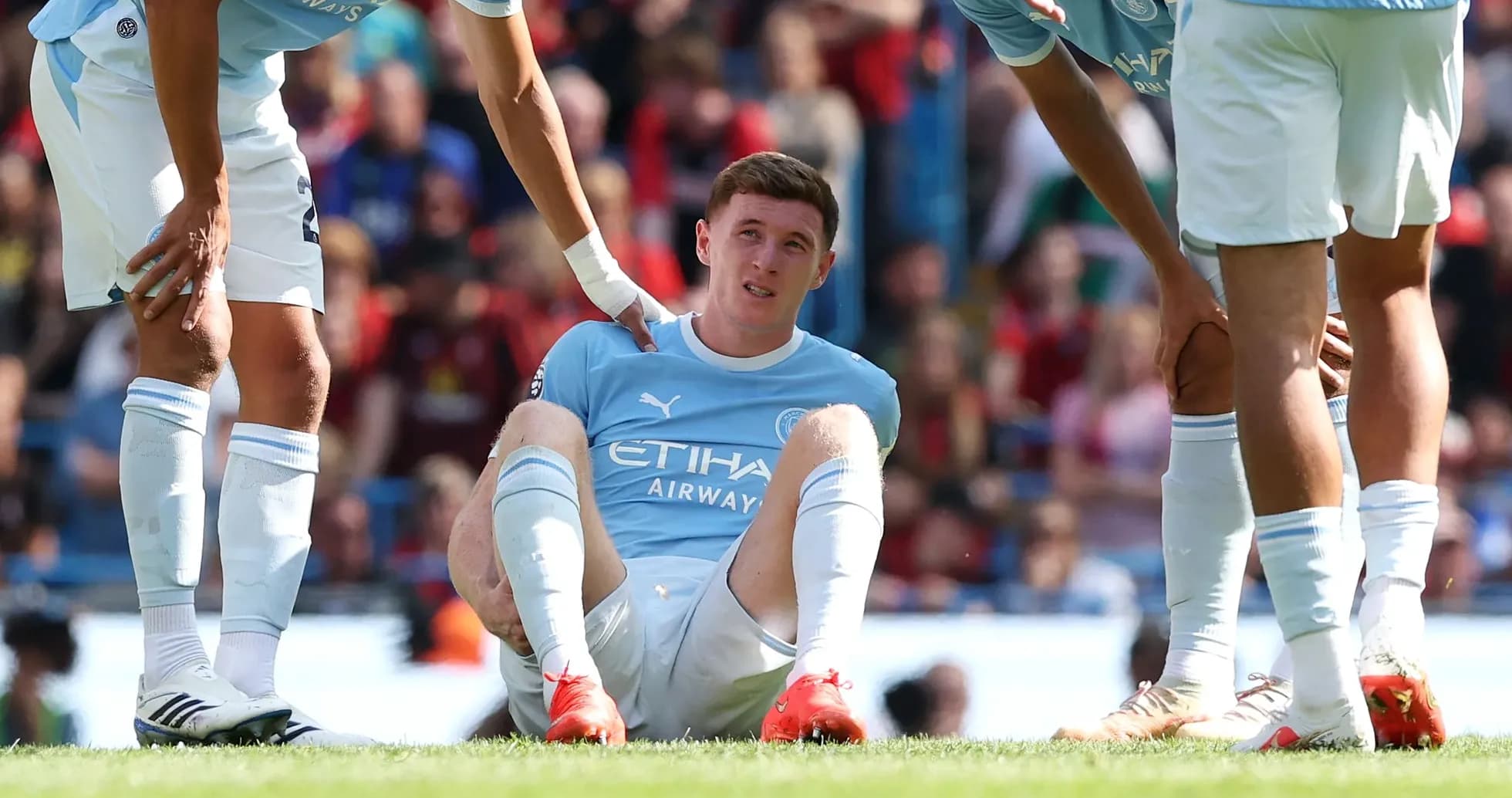
Midway through the second half, Elliot Anderson went down after a collision with Alex Scott. The midfielder, fresh from a World Cup where he started every England game but one, immediately reached for his hamstring. He tried to continue, but the signals were clear. After the hour mark, Maresca turned to Mateo Kovacic and Anderson’s afternoon was over.
Given the context, the concern was obvious. Anderson only joined City this summer in a record-breaking £116 million move from Nottingham Forest, arriving as a central piece of Maresca’s rebuild. An early muscle problem would have been a grim twist.
Maresca moved quickly to calm the mood.
“I think it was cramp,” the City head coach said afterwards, underlining that Anderson is one of several players still short of full sharpness. “We still have four or five players that are not 100 per cent and he is one of them.”
The Italian laid out the challenge plainly. A cluster of key figures have barely had time to breathe, let alone build rhythm.
“Today we had four or five players that arrived very late, 10 days ago, so for them it’s almost still pre-season,” he explained. “Erling [Haaland] is one, Elliot, Marc Guehi, Nico O’Reilly, so it’s complicated. But they’ve done a huge effort to help.”
Even so, Maresca’s praise for Anderson’s display before the substitution was emphatic.
“He was very good. Elliot was very good on the ball, very good off the ball,” he said. “I have a good feeling with Elliot that he’s going to be better and better. Again, for him this was like pre-season. He arrived 10 days ago but the feeling with him is that he’s going to be very good for this club in the future.”
That future is arriving fast.
City are back in action on Friday night with a tricky trip to Crystal Palace, a fixture that rarely offers comfort. Anderson’s condition will be monitored closely over the coming days as Maresca juggles a squad still peppered with players not yet at full match fitness.
All of this comes against the backdrop of a midfield in flux. Rodri, Bernardo Silva and Tijjani Reijnders have departed, ripping out the core of the side that dictated so many of City’s biggest nights. The club have reportedly agreed an £85.6m deal for Lille teenager Ayyoub Bouaddi, another bold piece in a rapidly evolving puzzle.
A late winner, a limping record signing, a reshaped midfield and a manager insisting it still feels like pre-season for half his key men – City have their win. The real question is how quickly this new version can grow into something more than just dramatic escapes.