Manchester City's Cultural Shift: A New Era Begins
For years, Manchester City were the easy, almost lazy, pick to finally crack Chelsea’s grip on the WSL. The talent was there, the football often sparkling, the predictions generous. The endings? Brutal. Late collapses, strange off-days, title challenges that dissolved just when they should have hardened.
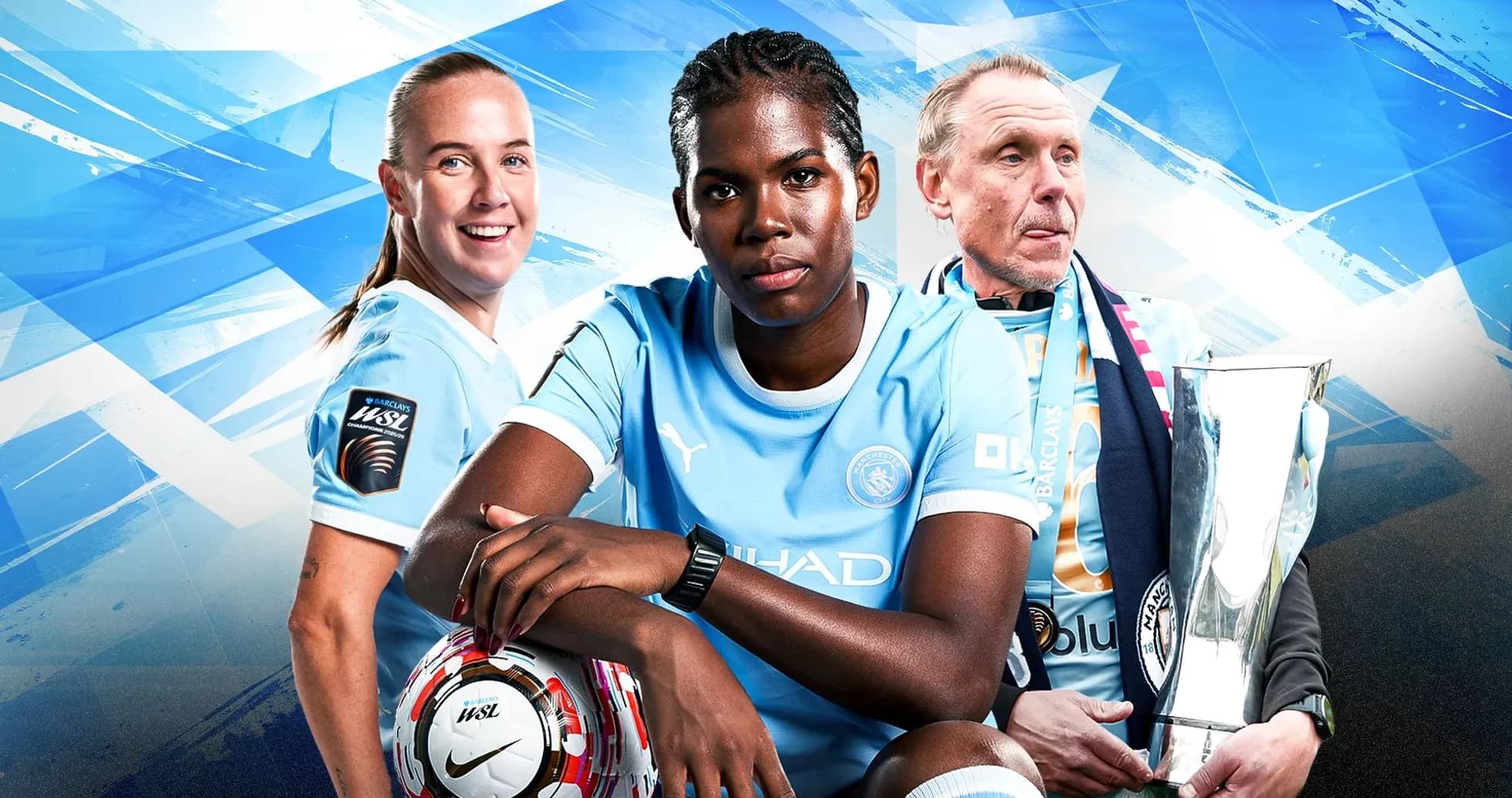
Jonas Jeglertz walked into that pattern and broke it.
In his first season in charge, City didn’t just win. They changed who they were.
A different City
Alex Greenwood called it a “shift in culture”. Not a buzzword, but a daily reality. Players started to change “the language used” around the place – how they spoke about trophies, about pressure, about themselves.
“It’s a little bit uncomfortable sometimes,” she admitted, “but crossing that hurdle and being able to do that has shifted so many mindsets in this building.”
That discomfort delivered something concrete: a WSL title and City’s first silverware in four years. Suddenly, this wasn’t the nearly-team anymore. It was a champion that looked like it could do it again.
Mary Fowler felt that mental shift as clearly as anyone.
“In previous seasons, maybe we fell short because there was a bit of a lack in the mindset where we felt we were really capable of winning,” she told GOAL. “But I think now that we've done it, it feels like, ‘You are very capable and you can do that again’.”
The important part? Nobody inside the camp is treating last season like a finish line.
Hunger, not relief
Jeglertz returned from a short summer break and found no sign of a group easing off. The title hasn’t dulled the edge. It’s sharpened it.
“I've seen it already in the players,” he told GOAL. “They already have a confidence that is great, that is calm, but curious about how we take the next step. What do we do to become a little bit better? I already see it and that's something that we need to keep having the whole year.”
This isn’t just about “more success” in abstract terms. The conversations are specific. How do they improve? Where can they squeeze out another one per cent? That curiosity is now part of the club’s identity.
To that environment, City have added players who know exactly what a winning dressing room feels like.
Champions joining champions
Niamh Charles arrives from Chelsea, a club that turned domestic dominance into a habit. Five straight WSL titles. Seven domestic cups in six years. She has lived inside a machine that churns out trophies.
“That means that she has a little bit of a leader in her,” Jeglertz believes. “That is something that we are going to be able to use also in sessions and in how you win from one year to the next year.”
Beth Mead brings a different kind of pedigree. Back-to-back European Championship titles with England. A starring role in Arsenal’s run to the 2025 Champions League triumph over Barcelona. Big stages, big moments, big expectations.
“You can see in her eyes, she's still very eager to be part of this and to learn more,” Jeglertz noted. That hunger, from someone with her CV, fits the new City perfectly.
On paper, the culture, the mentality, the environment – all those intangibles that coaches obsess over – look rock solid. The question now turns to something more tangible: is the squad deep enough to handle what’s coming?
The Champions League factor
Last season’s title win came without the distraction, or the drain, of Champions League football. Chelsea, Arsenal and Manchester United all had Europe to juggle. City didn’t. This year, that changes.
The calendar is fuller. The margins get thinner.
And the transfer window? It didn’t bring the volume of reinforcements some expected.
Beyond Mead and Charles, City’s only senior addition is Carlotta Wamser, a versatile full-back who strengthens both flanks. Useful, important even, but not exactly a flood of new faces. Nine first-team players have gone. The squad has been trimmed, not bulked out, even if there was never an intention to rip it up.
“The depth is there,” sporting director Nils O’Neill said at the end of last season. “It’s not about a squad transformation. It’s about adding in the key positions we need.”
That stance is about to be tested. Early injuries, most notably to Vivianne Miedema, are already biting. The Guardian understands she may not be back until 2027. City pushed to add on deadline day and couldn’t get a deal over the line. That alone hints at internal concern.
Left-back has been addressed after Leila Ouahabi’s departure, with Charles and Wamser covering the role. Mead arrives to fill the attacking void left by Kerolin’s move to Barcelona. Beyond that, Jeglertz is backing what he already has.
Banking on internal growth
Risa Shimizu returns from her loan at Liverpool and will be leaned on to cover full-back. Sydney Lohmann and Grace Clinton are expected to deliver far more than they managed last year, when injuries and inconsistency stopped either from truly grabbing their chances.
Fowler, back from an ACL injury and already showing flashes of her old self since February, is one of the most intriguing prospects in the league heading into a full, uninterrupted season.
Up front, there is flexibility everywhere. Mead, Fowler, Lauren Hemp, Aoba Fujino and Iman Beney can all shift across the line, several of them comfortable through the middle. That versatility means City don’t feel compelled to sign a pure centre-forward just to sit behind Khadija Shaw and wait.
Behind them, the academy conveyor belt is starting to feed into the senior picture. Sacha Lewis, Amelia Oldroyd and Aoibhe Brennan have all signed their first professional deals this summer. Mayzee Davies, already a senior Wales international and tied down last year, could become a meaningful depth option if she seizes her chance.
At the top end, the core remains untouched. Shaw, Greenwood, Hemp, Kerstin Casparij, Jade Rose and Yui Hasegawa form the spine of one of the strongest XIs in the WSL. Add a fit-again Miedema to that mix down the line and the starting line-up looks formidable.
If everyone stays healthy.
Walking the tightrope
That “if” hangs over the whole project. City’s injury record last season was almost spotless, a rarity in recent years. Repeating that, with Champions League travel and extra minutes piled on, is a serious challenge.
“We’ve learned and we will absolutely be ready next season,” O’Neill insisted. Jeglertz, for his part, felt the squad was actually too big last year. From his perspective, the expanded schedule is a blessing.
“We have too many good players to play these few games we are playing,” he said back in May. “Next year will be different because it's more games. The squad is built for that.”
Even so, there are pressure points. Certain positions look one injury away from a problem. Others rely heavily on players like Lohmann or Clinton taking a genuine step up, at a time when Lohmann is herself coming off hip surgery. And all of this starts with Miedema already ruled out for the beginning of the campaign.
The risk is obvious. The reward, if it all holds together, is just as clear.
Some rivals may boast deeper benches, but they carry their own doubts – about dressing-room chemistry, tactical clarity, or how quickly new signings can settle. City, by contrast, know exactly who they are.
Building a Chelsea-style dynasty in this era of the WSL, with more money, more contenders and more chaos than ever, feels unlikely for anyone. But City don’t need a decade-long reign to define this period. They just need to keep putting themselves where the trophies are handed out.
Last season, they were the best team in England by a distance. The belief that came with finally getting over the line, combined with the arrival of proven winners and the growth bubbling beneath the surface, suggests one thing.
If this really is the new City, how many titles can this group squeeze out of their peak years?