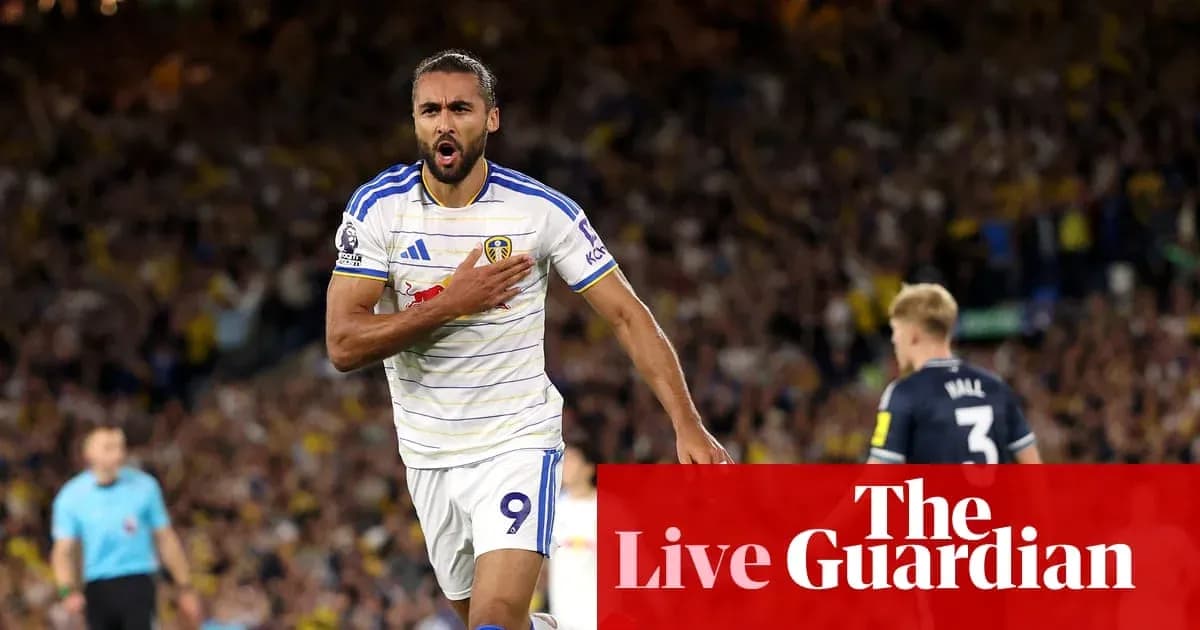
Leeds United vs Newcastle United: A Night of Tactical Chess
Elland Road crackled before a ball was kicked. Leeds United and Newcastle United, two clubs who wear their history like a scar and a badge, walked out into the noise with the sense that this season might just be opening up for them.
With Liverpool, Chelsea and Manchester United still fumbling through their early weeks, the door to Europe looks less like a fantasy and more like a gap you could drive a bus through. Neither Leeds nor Newcastle built their summers around continental dreams. Both can now see the possibility.
A bear‑pit under the lights
Elland Road under lights is never subtle. The old place felt like it was leaning over the pitch as the teams emerged, a proper bear‑pit for a fixture that always carries a certain edge.
Daniel Farke’s Leeds came into the night unchanged from last weekend’s 1-1 draw with Brighton. The midweek 6-3 collapse at Chelsea in the Rumbelows – after leading 2-0 – was parked as an anomaly; only three of this XI had started that one. This was the side Farke trusts.
James Trafford kept his place in goal, with a back three of Ricardo Pereira Justin, Nico Elvedi and Tarik Muharemović in front of him. The wing-backs, Jayden Bogle on the right and Jóhann Berg Gudmundsson on the left, were given licence to live high up the pitch. In midfield, Ethan Ampadu and Ao Tanaka were tasked with doing the dirty work and starting the play. Ahead of them, Anton Stach and Noah Okafor floated behind Dominic Calvert-Lewin, the lone striker and focal point.
On the other side, Newcastle arrived looking like a club that has somehow accelerated through upheaval. They dispensed with the manager who ended a 56-year trophy drought. They sold their captain and best midfielder, another first-choice midfielder and their most dangerous attacker. Yet the side that took the field at Elland Road looked sharper, more balanced, more dangerous.
Matthias Jaissle named a 4-2-3-1. Filip Hornicek started in goal behind a back four of Amar Dedic, Malick Thiaw, Sven Botman and Lewis Hall. In front of them sat Nico González and Lewis Miley, the latter growing rapidly into the all-round midfielder Newcastle always suspected he might become. Ahead of that pair, Jacob Murphy, Yoane Wissa and Harvey Barnes supported Matias Fernandez-Pardo, making his first start for the club as the central striker.
On the bench, there was a notable surname: Mason Miley, brother of Lewis, among the substitutes alongside the likes of Bazoumana Touré and Aladji Bamba. The future is already hovering close to the pitch.
Jaissle admitted before kick-off that Anthony Elanga’s injury could be long-term, pending an MRI next week. Elanga’s absence matters. His work-rate is ferocious and, after years of being more of a runner than a rounded footballer, he has begun to look like a genuine all-round threat. Still, Jaissle had choices. He could have thrown in Touré from the start. Instead, in a hostile arena and a tight contest, he opted for one new attacking face at a time: Fernandez-Pardo.
The plan is clear. Fernandez-Pardo was signed to start. He has had time to settle, to understand the club and the league. Now it is his turn to lead the line, with Wissa operating just off him, ready to dart into gaps and attack the box late.
Leeds fly out, Newcastle feel the storm
From the first whistle, Leeds attacked the game like a side that fancied it. Within seconds, a ball over the top into the inside-right channel found Stach. He had a sight of goal and probably should have taken it. Instead, he tried to square, the cross cut out and turned behind. The early corner came to nothing, but the tone was set.
Moments later, the first flashpoint. As Leeds cleared their lines and tried to break, the ball turned awkwardly off the turf on the edge of the Newcastle box and struck Fernandez-Pardo’s hand as he tried to bring it away. Leeds screamed for a penalty. It looked harsh. He was running, his arm at chest height, the ball bumping up off the grass. Referee Adam Herczeg and his team agreed: no spot-kick, play on.
The match crackled into life. Wissa chased down a dawdling Trafford, blocking his clearance and sending the ball looping to safety. Leeds sprang down the left straight away, Gudmundsson driving into the box. His low square smashed straight into Gonzalez’s face at close range. Elland Road howled again for a penalty, but Herczeg had already blown to halt play so the dazed midfielder could receive treatment. Gonzalez, after a brief check, staggered back into the game.
The pace refused to drop. Leeds pressed high, their wing-backs pinning Newcastle back. The back three and double pivot behind them allowed Farke’s side to leave Bogle and Gudmundsson high and wide, stretching the visitors and creating lanes inside for Okafor to attack.
Okafor, starting from deep, repeatedly tried to burst beyond the last line, his pace a constant threat. Stach, by contrast, dropped off to help overload midfield, forcing Newcastle to defend with fewer numbers in the middle of the park than they would have liked.
Newcastle’s response was to try to slow the storm. They began to knock the ball around their back four, looking to draw Leeds out and create space for Wissa and Barnes to exploit on the break. Leeds refused to cooperate, shutting down passing lanes and forcing Hornicek to go long.
The game had barely settled when another half-chance came and went. Tanaka stood up a cross to the far post, Justin doing well to nod it back across goal from the byline. Bogle, now at the near post, spun and snapped a low shot towards the corner. Hornicek flung himself down, a strong right arm clawing the ball away. It was a sharp save, the kind that calms a defence and quietens a crowd for a moment.
At the other end, Newcastle finally landed a punch. Okafor, dropping deep and drifting left, sensed space and went. He surged down that flank before cutting the ball back inside, Stach arriving on the edge of the box. The midfielder teed up Ampadu, who hurled himself through the strike. The shot was on target but clattered into Calvert-Lewin, standing offside. Even without the deflection, Hornicek had read it and looked set to gather.
The pattern was clear. Leeds played with terrific energy, their confidence obvious. Newcastle tried to ride it out, conserve their shape and wait for the home side to tire.
Tactical chess in the noise
Underneath the chaos, there was structure. Farke’s plan was simple and aggressive: get at Newcastle down the flanks, keep the wing-backs high, and let Okafor’s pace disrupt the back line from deeper positions where no single marker could comfortably follow him. Stach dropped into pockets to create and link, looking to slide passes into Okafor and Calvert-Lewin, or to feed the wing-backs for low crosses and cut-backs.
Newcastle’s blueprint mirrored that ambition with its own. Jaissle wanted his team to attack the spaces outside Leeds’ wide centre-backs and in behind the wing-backs, the classic approach against a back three. Hall, on the left, had the licence to step inside and help Gonzalez and Miley match Leeds’ numbers in midfield. Wissa, starting nominally as the No 10, pushed up alongside Fernandez-Pardo whenever Newcastle had sustained possession, forcing Leeds’ back three to juggle two central threats rather than one.
The duel in midfield looked decisive. Gonzalez, already settled and influential in his new role, and Lewis Miley, the teenager blossoming into the all-court presence Newcastle hoped he would be, were asked to wrestle control against Leeds’ box of four: Ampadu, Tanaka, Stach and Okafor drifting infield. If Newcastle could hold their own there, their pace on the break could flip the night.
Farke, speaking beforehand, had praised his side’s start to the season – strong performances, solid points – but warned of Newcastle’s threat in transition. He pointed to the legacy left by Eddie Howe and the way Jaissle has built on it, loading his attack with pace and direct running. Lose the ball cheaply against this Newcastle, and you might not see it again until it is nestling in your net.
Jaissle, for his part, spoke of fine margins. Newcastle’s summer surgery has been drastic, but his early work in the “big chair” has been impressive. Gonzalez has slotted into central midfield with authority. Miley has grown beside him. Elanga, Willock and Wissa have seized chances they never quite received under the previous regime. The question now is whether this early surge can be sustained once the grind of the season bites.
Old rivalry, new stakes
That is what gave this fixture its edge. Leeds, who stayed up comfortably last season and then strengthened with Trafford, Muharemović, Elvedi and the mercurial Harry Wilson, look more complete than they have for some time. Newcastle, stripped of star names but arguably improved as a team, are trying to prove that a summer of big decisions has made them leaner, not weaker.
Between them, they carry decades of noise and narrative. Elland Road and St James’ Park are not just stadiums; they are stages for cities that live their football loudly. Leeds v Newcastle might never be marketed as one of English football’s “classics” in the way of Manchester United v Liverpool or Arsenal v Spurs, but it belongs in that other, equally important category: evocative fixtures that define the soul of the game.
Under the Elland Road lights, with the league’s traditional powers still searching for themselves, the question hung in the air: which of these two restless clubs will seize the moment and turn nights like this into something bigger?