Kompany’s Strategy Ends Bayern’s 59-Game Scoring Streak
Vincent Kompany walked into the Veltins-Arena with a plan. He also walked into a storm.
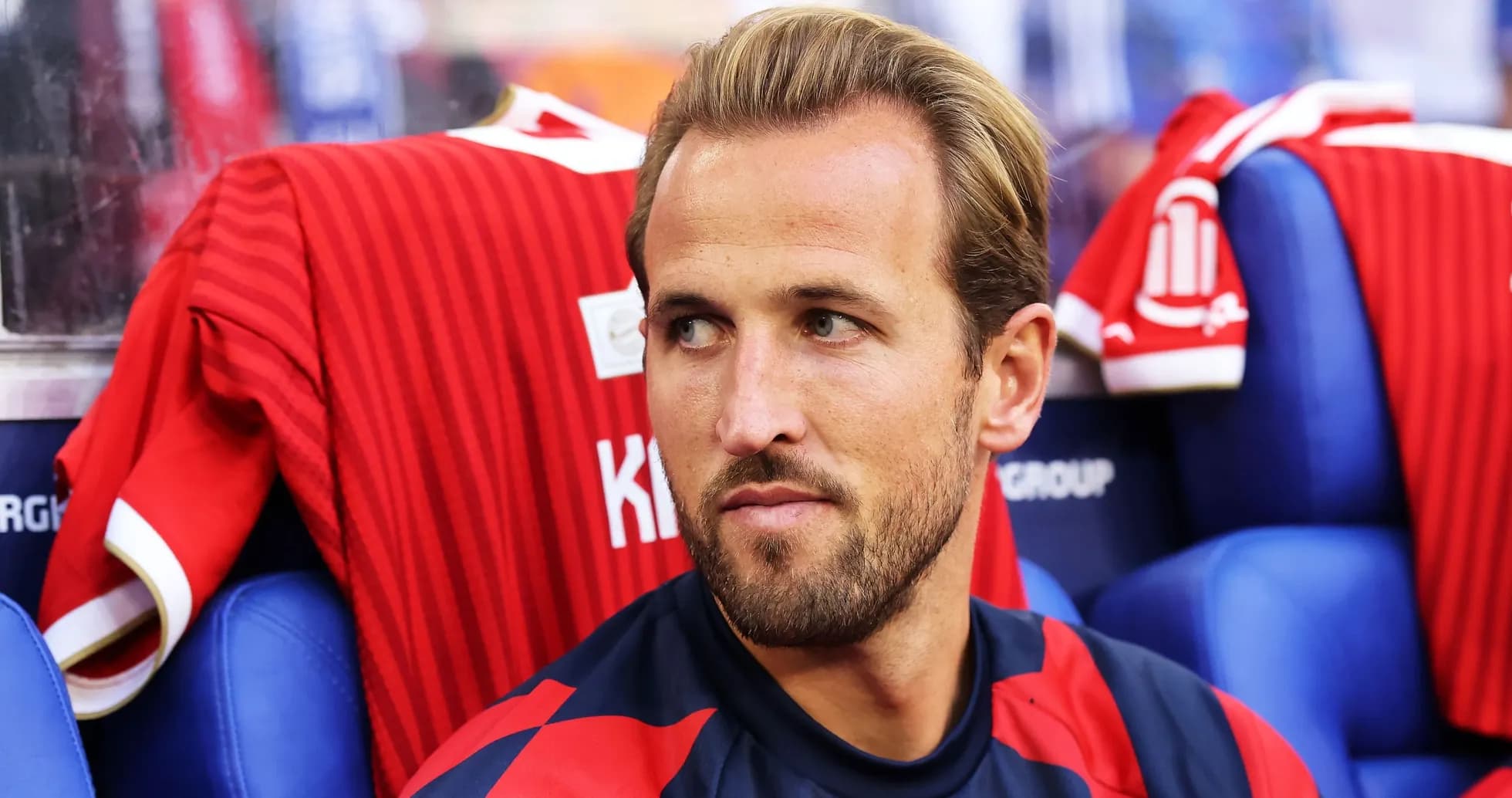
Harry Kane and Michael Olise on the bench for kick-off? For Bayern, that’s not rotation, that’s a statement. As the minutes ticked by and the champions toiled without reward, that decision loomed larger over a cold, unforgiving night in Gelsenkirchen.
Kane and Olise Held Back – Then Unleashed
Bayern’s attack, usually a metronome of movement and goals, stuttered. The visitors probed, passed, and pushed Schalke back, but the final punch never landed. The Rekordmeister, so often ruthless, looked oddly blunt.
Kane entered at half-time, replacing Nathaniel Brown, and the tempo instantly shifted. The England captain dropped deep, linked play, then almost stole it at the death. He picked up the ball in space, stepped into range, and unleashed a thunderous strike that screamed towards the top corner.
It looked in. Everyone thought it was in.
Loris Karius had other ideas. A fingertip, a touch of steel, and the ball was clawed over the bar. The Veltins-Arena erupted.
Olise followed shortly after, coming on for Lennart Karl. He went hunting from the right, cutting into tight spaces, twisting into a shooting lane from a narrow angle. Again, Karius stood tall, smothering the effort and Bayern’s growing desperation.
Outside, the debate had already started: why did two of Bayern’s biggest weapons begin the game on the sidelines?
Kompany Stands Firm on His Call
Kompany didn’t flinch when the question came. For him, it was simple management, not a gamble gone wrong.
“The decision with Michael and Harry was simply completely rational,” the Belgian explained. “The two of them only came back very, very late from their holiday after the World Cup. It’s not a given that you can just say: ‘You play 90 minutes, 90 minutes, 90 minutes.’ The cup match in Osnabrück also took energy. You can’t always put that full workload on these guys.”
This wasn’t about resting stars for the sake of it. It was about the long season, the accumulated miles, the demands of modern football. Kompany backed his squad, trusted the rotation, and lived with the consequences.
A Record Shattered in Silence
The consequence was more than two dropped points. It was the end of an era.
Bayern arrived in Gelsenkirchen having scored in 59 consecutive competitive matches. Fifty-nine. A run stretching back to July 2025, when Paris Saint-Germain shut them out 2-0 in the Club World Cup. Since then, every opponent had felt the weight of their attack. Someone always found a way through.
Not this time.
By failing to beat Karius, Bayern’s extraordinary streak died under the floodlights of the Veltins-Arena. No late deflection, no scruffy tap-in, no trademark surge in added time. Just mounting pressure, rising tension, and a goalkeeper in inspired form.
Kompany acknowledged exactly what had gone missing.
“Every game has its own story,” he said. “Our story was that we didn’t score and the opponent went home without a shot. But that shouldn’t take anything away from Schalke. I’ve seen games like this plenty of times. You need 90 minutes of pressure against defenses like this until they crack. We didn’t quite manage that today because we took the tempo out of the game several times.”
Bayern had the ball. They had territory. What they lacked was that relentless, suffocating intensity that usually breaks a low block apart piece by piece.
Karius Steals the Night
For all the tactical debate, this match belonged to Loris Karius.
Once defined by his lowest moment on the biggest stage, the German goalkeeper has rebuilt himself quietly in the Bundesliga. Here, against the champions, he didn’t just make saves. He made statements.
He read crosses, commanded his box, and reacted with razor-sharp reflexes when Bayern finally broke through the defensive line. Kane’s drive, Olise’s angled effort, the constant stream of half-chances – Karius met them all with a defiance that grew with every stop.
While the spotlight shone on Bayern’s selection choices, Kompany made sure the story of the night wasn’t lost.
“It was a beautiful football match with emotion and passion,” the Bayern coach said. “There were also plenty of defensive situations in which something special always had to happen. Schalke managed that this evening, so congratulations. They did a great job and gave everything. You could see that.”
Schalke didn’t register a shot, yet left with a result that will live long in their memory. It was pure resistance, backed by a crowd that sensed history turning in their favour with each Bayern miss.
Eyes Turn to Europe
There is no time for Bayern to lick their wounds. The calendar won’t allow it.
Next week, the Allianz Arena opens its doors to Bodo/Glimt as Bayern launch their European campaign. The goalless stalemate in Gelsenkirchen now becomes a test of character as much as quality. Was this just a freak night against an inspired goalkeeper, or the first hint of a deeper problem in breaking down stubborn opponents?
Kompany’s side will expect to answer that quickly. The record is gone, the streak is over, but the demands remain the same: score, win, dominate.
Bodo/Glimt arrive on Thursday. The Champions League lights go on.
We are about to find out how fast Bayern can rediscover their ruthless edge.