Kobbie Mainoo's World Cup Journey: A Missed Opportunity for England
Thomas Tuchel’s World Cup call on Kobbie Mainoo is starting to look like one of the defining subplots of England’s campaign – and not in a way that flatters the England manager.
Mainoo arrived at the tournament on a surge of momentum. He had driven Manchester United through the sharp end of the 2025/26 season, helped drag them back into the Champions League, and forced his way into the England squad on merit, not reputation. For a teenager, he looked ready. For a squad short of craft in tight games, he looked necessary.
He never kicked a ball.
Tuchel’s preference in midfield was clear from the start: Declan Rice as the anchor, Elliot Anderson as the energetic foil, with Jordan Henderson as the experienced option around them. Mainoo was always unlikely to walk into that trio. But zero minutes? Not even when England’s play grew stale and predictable, when legs tired and ideas ran dry?
That’s where the questions have grown loudest.
A chance that never came
According to reporting from The Daily Mail, Mainoo came close to a breakthrough before England’s second group match against Ghana. With Rice struggling physically in the build-up and Henderson carrying an injury, the door appeared to open.
In training that week, Mainoo was used in central midfield alongside Anderson. Inside the camp, there was a sense he was being lined up for a role, that Tuchel was preparing him for meaningful minutes. This, finally, might be his window.
Then the manager shut it.
The Mail’s report outlines how Tuchel “had not liked what he saw” in that period. The details are not tactical diagrams or numbers on a GPS tracker, but something more human and more visible: body language and demeanour.
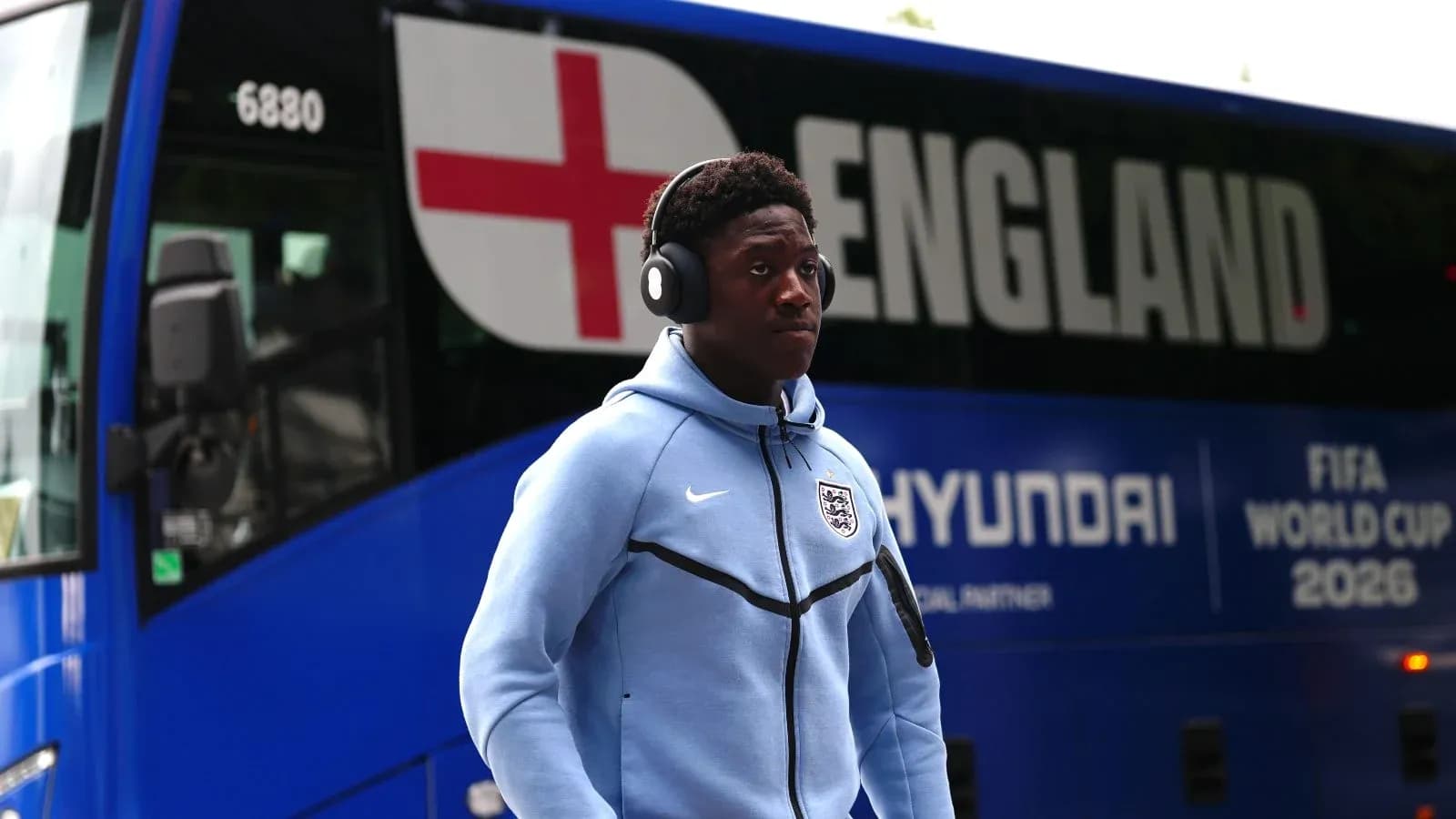
After almost every match, Mainoo was said to be the first England player to leave the stadium. No entourage. No lingering in the mixed zone. Headphones on. Alone. For some coaches, that kind of withdrawal reads as focus. For others, it can look like detachment.
Tuchel clearly leaned towards the latter interpretation.
An unhappy passenger
The Athletic has echoed that picture. Their reporting describes Mainoo as “unhappy” at the World Cup, often the first player back on the team bus after games. Not disruptive. Not outspoken. Just distant.
Inside the squad, there was uncertainty about what Tuchel actually wanted from him. One source suggested the manager might have viewed Mainoo as a young player content simply to be part of a World Cup squad, to soak up the experience without demanding a role. Others felt the opposite – that the United midfielder had not convinced Tuchel he could be trusted when it mattered.
Either way, clarity never arrived. A plan never emerged.
While Rice laboured through fitness issues, while Henderson dealt with injury, Mainoo watched from the bench. He watched as Tuchel turned to Reece James, a defender by trade, and pushed him into midfield in the closing stages of the tournament instead of calling on a natural central midfielder.
That decision cut deepest. Not just for Mainoo, but for those around the camp who believed he had trained well enough to warrant at least a cameo. A few minutes to breathe, to show, to belong.
He never got them.
Trust, talent and a missed opportunity
This was not a case of a youngster out of his depth. Mainoo arrived in form, hardened by a demanding Premier League run-in, trusted at club level in high-pressure matches. He is not a prospect in theory; he is a player in practice.
Tuchel, though, operates on conviction. When he trusts a player, he leans on them relentlessly. When he doesn’t, the door can feel bolted. At this World Cup, Mainoo found himself on the wrong side of that line.
The optics are brutal. A midfield crying out for fresh legs and fresh ideas. A gifted young playmaker sitting idle. A manager choosing a right-back in the centre of the pitch while a specialist watched on.
For Mainoo, this World Cup becomes a scar and a lesson rather than a platform. For Tuchel, it leaves a lingering question: in a tournament defined by fine margins and faltering rhythm, did England’s manager misread not just a player’s mood, but his moment?