All-Ireland Final Ticket Distribution Explained
Outside Croke Park, the soundtrack is always the same on All-Ireland final weekend.
“Anyone buying or selling tickets?”
It’s as much a part of the occasion as the march of the bands and the roar for the first high ball. But behind that familiar cry sits one of the most tightly controlled ticket operations in Irish sport – and the GAA is adamant: buy from unofficial sources and you’re taking your chances.
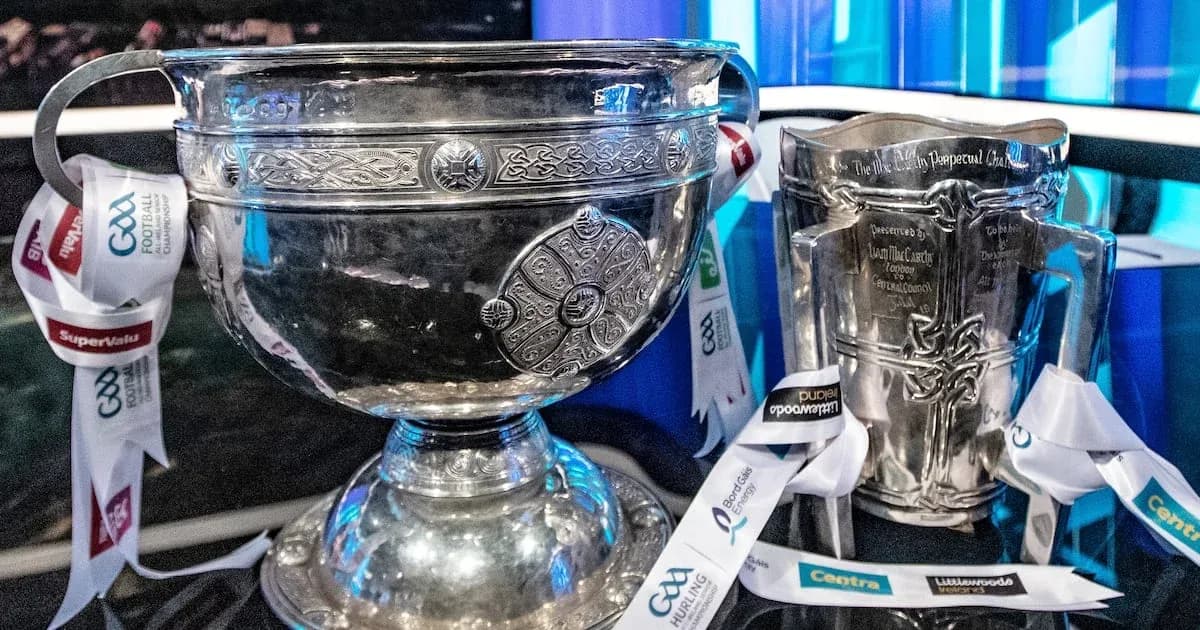
No golden window opens for the general public. There is no online scramble, no open sale. All-Ireland hurling and football final tickets never hit the high street. They move instead through a carefully managed network run from the GAA’s ticket office, with county boards acting as the main arteries and clubs as the capillaries that carry them out into every corner of the association.
The two counties in the final receive the biggest allocations, but they are far from the only ones at the table. Every club in the country, from the smallest rural outfit to the sprawling urban giants, gets a slice based on size, membership and the range of codes played. It doesn’t matter if their county hasn’t seen Croke Park since the league. The All-Ireland finals are treated as national events, belonging to the whole organisation, not just the lucky two who make it to the last Sunday.
Croke Park can officially hold 82,300. Of that, 82,006 tickets are issued for each final. Every year, demand eats that supply alive.
Where the tickets actually go
Strip it back and 71,478 tickets are available for distribution, with another 10,528 ringfenced for premium and corporate holders. The detail is laid out in the GAA director general’s annual report, with the latest figures in the 2025 edition covering the 2024 All-Ireland finals.
County boards take the lion’s share: 59,212 tickets in total. That includes the competing counties, who in previous years have each received in the region of 13,000 tickets. When counties with no skin in that year’s final don’t use their full allocation, those precious slips are quickly rerouted to the counties who are in the decider.
The spread beyond that underlines just how many groups lay claim to a piece of All-Ireland Sunday.
- Provinces receive 380 tickets.
- Overseas units get 480.
- Ard Chomhairle and former presidents are allocated 800 between them.
- The sister codes are represented too: 140 for Camogie, 100 for Ladies football, and 212 for Rounders and Handball.
- Sponsors are handed 1,250.
- The press pack gets 258, with a further 74 going to TV and radio broadcasters.
- Schools and education bodies receive 1,666, and third-level institutions – colleges and universities – get 240.
- The people living in the shadow of the stadium are not forgotten: 200 tickets go to Croke Park residents.
- Match officials and the national referees panel share 228.
- Health bodies and Sport Ireland take 60.
- Another 148 are assigned under the Match Day/Vertigo heading.
- Inside the association’s own structures, 820 tickets are set aside for staff and subcommittees.
- The Jubilee teams – the anniversary sides honoured on the day – receive 70.
- The young players in Go Games get 188.
- Then there are the loyalists who commit before a ball is thrown: 2,358 term tickets and 2,594 season tickets complete the picture.
Each figure is small on its own. Together, they explain why so many supporters are left empty-handed every July and August.
The cost of a golden ticket
The price of entry to the showpiece climbed again in 2024. A stand ticket now costs €100, with terrace spots priced at €55. The last time the GAA nudged those numbers up was in 2019, when stand tickets rose to €90 and terrace tickets to €50.
It hasn’t slowed the chase. If anything, it has sharpened it.
Any hope of a late miracle?
Officially, the answer is no. Realistically, people will still ask.
Clubs sit at the centre of the scramble. How they carve up their allocation is their own business, and practices vary wildly. Some will ringfence a number for long-serving officers, coaches and volunteers, a nod to the hours put in under floodlights and in committee rooms. Others will lean into the demand and use a handful of tickets as fundraising fuel – top prizes in raffles that can transform a balance sheet overnight.
Creative ideas surface too. In Limerick, ahead of the All-Ireland hurling final against Galway, the county board has launched a competition for the best-decorated home and business, with two tickets to Sunday’s game as the reward. For a county chasing more glory, bunting has rarely felt so high-stakes.
All of this lands squarely on the desk – and phone – of the club secretary. This is the time of year when every favour is called in, every connection tested. “Any chance of one more?” comes from every direction. If there is such a thing as earning your keep in the GAA, it happens in the week before an All-Ireland final.
Inside the inner circle
While supporters chase seats, those inside the county setup are guaranteed their place. Croke Park confirms that everyone who is part of the official county panel is accredited in advance of the game.
Where they end up on the day depends on their role. Managers and selectors patrol the sideline. Analysts and statisticians are housed in a dedicated stats box in the lower Hogan Stand, with more space reserved in the upper Hogan for those handling analysis and recordings.
They are the unseen layer above the chaos, working in the background while 82,006 sets of eyes are fixed on the field.
Outside, the calls will still go up: “Anyone buying or selling?” Inside, every seat has already been spoken for.