Joshua Kimmich Hits 500 Games as Bayern's Future Shines
Joshua Kimmich slipped off the bench and straight into history. On a tricky afternoon at SV Elversberg, with Bayern Munich still searching for control, Vincent Kompany turned to his captain in the 65th minute. The game changed – and so did Kimmich’s place in the club’s record books.
Kimmich joins Bayern’s 500 club
The appearance was his 500th competitive game for Bayern Munich, a milestone that places him in one of the most exclusive circles at the German champions. Only 12 players have ever reached that mark for the club. Kimmich, signed in 2015 as a promising youngster from RB Leipzig, now stands level with Bastian Schweinsteiger on that total.
Eleven years in Munich have produced a trophy cabinet that reads like a club museum label.
- Ten Bundesliga titles.
- Four DFB-Pokal triumphs.
- One Champions League crown, the 2020 win that completed the treble.
Across those seasons, Kimmich has become the heartbeat of Bayern’s midfield and, increasingly, its voice. The 31-year-old has contributed 47 goals and 122 assists in all competitions, numbers that underline how much more he offers than just organisation and aggression in the middle of the pitch.
At Elversberg, his introduction was part of a four-man change from Kompany that dragged Bayern’s performance up a level. The captain’s milestone came not with a grand ceremony, but in the heat of a game that still needed winning – exactly the environment in which he has built his reputation.
Karl’s first Bayern goal, first controversy
If Kimmich provided the history, Lennart Karl supplied the raw edge of the future.
Handed his first start for Bayern, the 18-year-old marked the occasion with his first goal of the season. In the 26th minute, he finished off a flowing move sparked by Ismael Saibari and Harry Kane, sliding Bayern into a 1-0 lead and announcing himself on the senior stage.
The finish was composed. What followed was anything but.
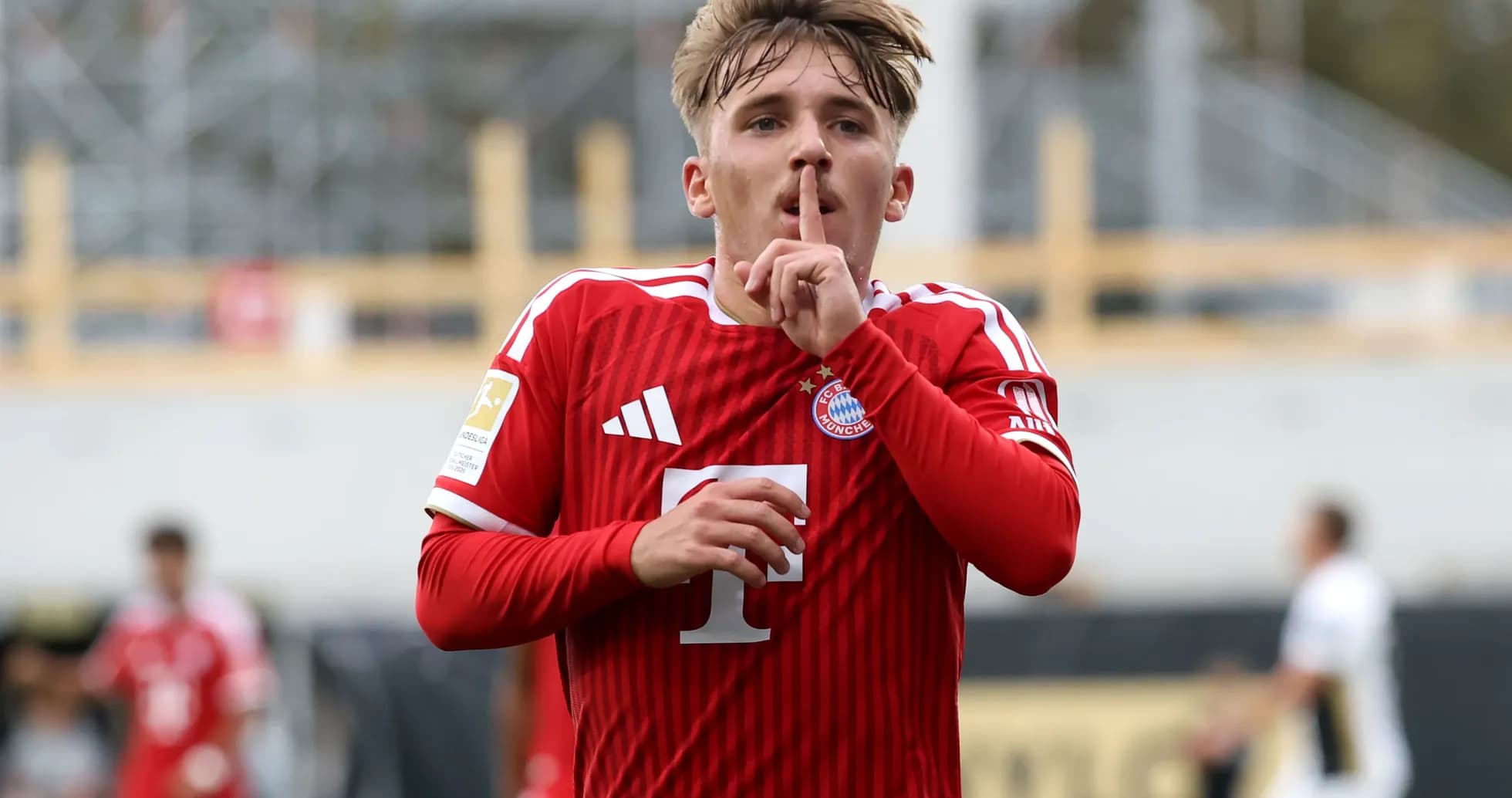
Karl sprinted towards the Elversberg end, stood in front of the home supporters and put a finger to his lips. The “be quiet” gesture was followed by hands cupped to his ears, a celebration guaranteed to inflame an already charged crowd.
From that moment on, every touch brought a chorus of boos from the Elversberg stands. The teenager stayed on until the 65th minute, then made way as Kompany reshaped his side.
After the final whistle, Karl moved to defuse the situation. He apologised to the Elversberg fans, saying he was sorry if they had misunderstood him and stressing he “didn’t mean it like that”. He pointed to the emotions of the moment, noting that most football supporters know such reactions are part of the game.
It was a sharp lesson in how quickly a dream first start can turn into a talking point – and how thin the line is between passion and provocation at this level.
Gnabry steps back into the frame
While Karl wrestled with the spotlight and Kimmich wrote another line in Bayern’s history, there was a quieter but significant name back on the team sheet: Serge Gnabry.
The winger had not featured in a competitive match for more than five months. A muscle injury in the adductor area in April had halted his season and cost him a place at the World Cup, a brutal blow for a player who had been a regular for both club and country.
At Elversberg, Gnabry returned to Bayern’s matchday squad for the first time since that setback. Kompany kept him on the bench, choosing not to risk him on his first day back, but simply being involved again marked an important step in his recovery.
For Bayern, it was a snapshot of three different timelines converging in one afternoon:
- Kimmich, the established leader hitting 500 games.
- Karl, the teenager tasting the intensity of top-level scrutiny for the first time.
- Gnabry, the proven attacker edging back towards the pitch after months of frustration.
The season will decide how those stories develop. But on a testing trip to Elversberg, Bayern saw their past, present and future share the same stage.