Jackie Bachteler's Inspiring Return as Burnley Women's Team Manager
On Sunday afternoon at Turf Moor, Jackie Bachteler will finally take her place in the home dugout as Burnley’s women’s team manager. Nine months ago, she was wondering if she would live long enough to see another game at all.
The 37-year-old American arrived from San Diego in December, buzzing about a new role that straddled Burnley’s women’s first team and the men’s academy. New country, new club, new chapter. She put the early exhaustion down to jet lag and the usual grind of a packed football schedule.
Then one morning the floor went from under her.
She walked into the training ground and the room began to spin. Fresh air didn’t help. Breathing became a struggle. She called for the club doctor, knowing instantly that this was no cold.
Her blood pressure crashed. Her oxygen levels plunged. The men’s team doctor moved quickly and she was rushed to hospital. Fear set in.
“To be honest, I thought I was going to die. I just had this feeling in my body like ‘this is it’,” she told BBC Sport. “I knew something was wrong.”
Doctors treated her lungs and tried to discharge her. She refused. Her body was screaming at her that something was badly off.
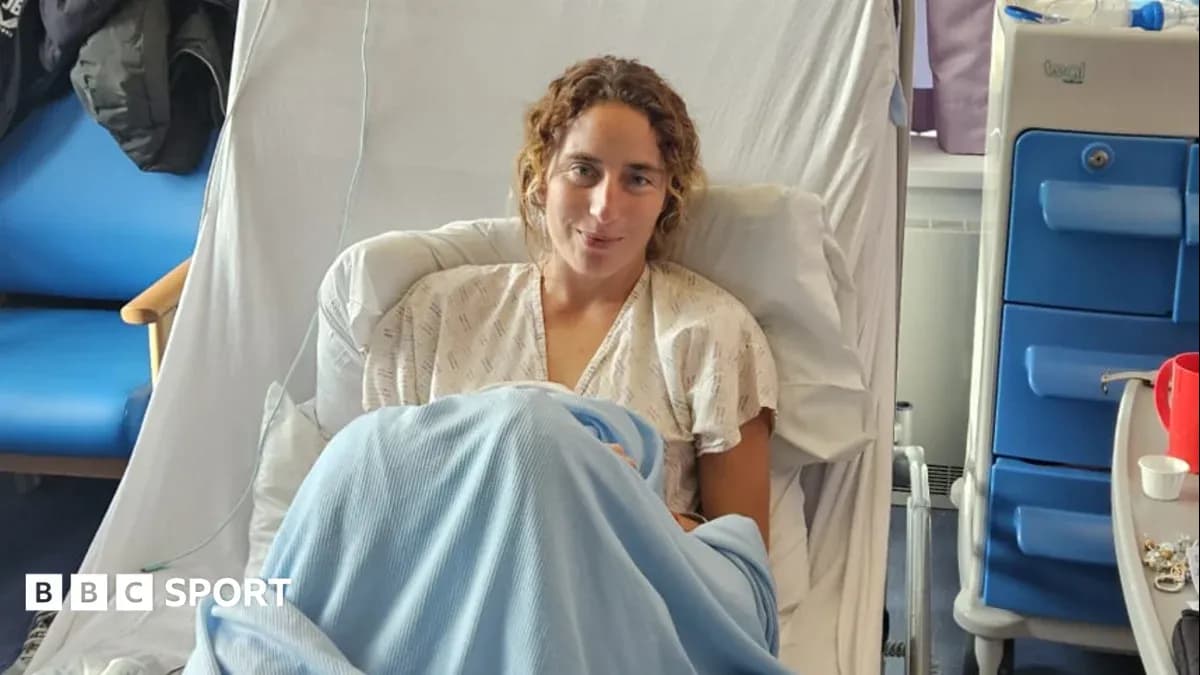
They checked her blood pressure again. It plummeted. She couldn’t walk. Dizziness, confusion, blotches on her skin. A blood test followed and suddenly four or five doctors were sprinting towards her. Two IV lines went in, pumping fluids and antibiotics. An oxygen mask was strapped on.
The diagnosis: sepsis. A life-threatening reaction to infection that can shut down organs within hours.
She was moved into intensive care. For a couple of days, staff checked her blood every 20 minutes and monitored her organs. Her family were thousands of miles away in the United States. Her wife, in Finland, was trapped by a snowstorm.
Bachteler lay in an ICU bed, alone, with little idea how close the margins were.
“On my third day in hospital, I tried to stand up and I couldn’t,” she said. “The nurses told me not to walk and when you hear that it’s a bit of an alarm bell.
“It was just lung treatment after lung treatment, fluids after fluids, antibiotics and everything else. I had to get help to use the bathroom.
“It was close to when you face your mortality. It just gives you another perspective on life.”
That perspective has shaped everything since.
She had to learn to walk again. Coaching, the thing that had driven her across continents, stopped overnight. Months later, in July, Burnley brought her back and handed her the women’s team manager’s job. It was a return, but not a full recovery.
Post-sepsis syndrome still shadows her days. Dizzy spells. Crushing fatigue. Mental fog. Memory lapses. Tremors when she pushes too hard.
During a pre-season friendly this summer, the sun beat down on the dugout and her body buckled.
“It was so hot with the sun facing the bench,” she recalled. “I got up in the second half and it was like when you have too much wine, you get up and you’re like, ‘woah!’
“I was just so dizzy. I gave the instruction, talked to the team and then I went to the cafe on site and said to them: ‘Can I sit in your freezer?’
“I just needed to calm down. Then I started crying because my nervous system is still recovering and it’s just been really, really hard.”
Burnley’s medical team, she says, “saved her life”. They pushed for answers, put her in touch with a respiratory specialist and have stayed close throughout her rehabilitation. The club’s staff have taken on extra responsibilities. The players have sent messages and stepped up. She calls her coaching group “phenomenal”.
The support at home has been just as fierce, but no less painful.
She remembers a Sunday in May when her parents flew over from the US. They went out for dinner. The noise in the restaurant overwhelmed her. The dizziness surged.
“We went for Sunday dinner and it was loud. I just got so dizzy and they could see it,” she said. “As we were walking back, I was shaking and I didn’t know where I was.
“They started crying, both of them. I think it was even harder for them. I get emotional any time I talk about my family with this.
“When my wife was able to see me [in hospital], she just started crying because of the amount of weight I lost.
“I’m really athletic and I’m really fit, but then I wasn’t able to walk. She had to hold me up going down the stairs.”
She continues respiratory therapy to rebuild lung function. The fatigue lingers. The mental fog drifts in and out. When she overextends, the tremors return. The dizzy spells haven’t gone away.
Yet she knows how fine the line was.
“I’m definitely in a good way though. I’m about 70 to 80% Jackie again and that’s thanks to the club, the doctors here and the NHS – but it was close.
“If I had gone home that day when the emergency room tried to send me back, I wouldn’t be sitting here today.”
Every day she leaves Burnley’s training ground with the same thought: this is borrowed time. A second chance. Football, once all-consuming, has shifted in her mind.
“A loss is a loss. I really believe in what I’m doing and in the people that I’m doing it with. Now the worst thing that will happen is that we lose a game,” she said.
On Sunday, Burnley host Sunderland in the Women’s Super League 2 at Turf Moor (14:00 BST). It falls on World Sepsis Day. For Bachteler, the symbolism is impossible to ignore.
She wants the occasion to carry a message beyond the touchline.
“I realised it’s a leading cause of death. I didn’t even know what sepsis was before. I thought it was something you heard on Grey’s Anatomy,” she admitted.
“I didn’t understand the severity of it and how much it’s missed by doctors. The amount of people that have been affected really shocked me. It’s a silent killer.
“Hopefully I can use the game as a tool to help others recognise the signs and let them know they are not alone. Over 50% of survivors have [post-sepsis syndrome].”
So when she steps out at Turf Moor, tracksuit on, technical area marked out in front of her, it will be more than a managerial debut. It will be a quiet act of defiance against an illness that almost stopped everything.
“To be standing on the pitch, doing something that I love, that I’ve dreamed of doing every single day and knowing that wouldn’t have been the case almost a year ago, it’s a bit poetic it’s on World Sepsis Day.”